

A garage project that became an export business
In 1992 Phil Melrose broke his spinal cord in a power boat accident, found the wheelchairs on offer inadequate, and started building his own. Three decades later the Christchurch firm he founded with fabricator Mike Turner employs about 50 people and ships custom day and sport wheelchairs around the world.
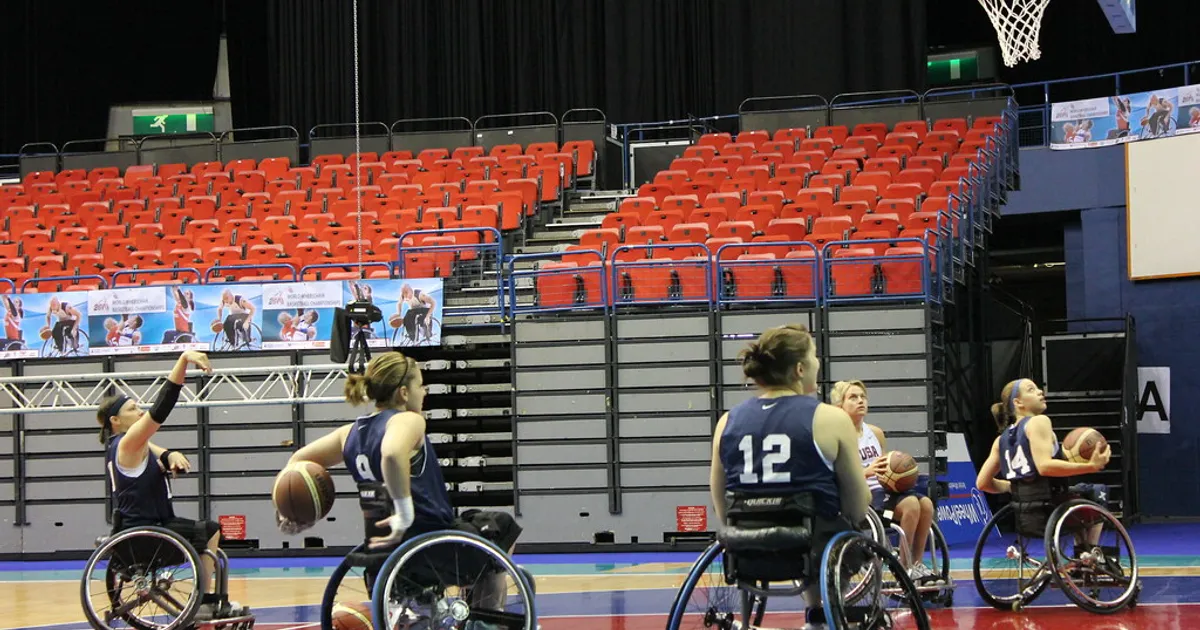
The latest proof of reach came at the Commonwealth Games in Glasgow, where Melrose chairs were used by a New Zealand lawn bowler and members of both the Australian men’s and women’s wheelchair basketball teams. That is a small Christchurch workshop supplying rival nations’ elite athletes on a global stage. The inspirational headline writes itself. The business story underneath it is the one that should interest anyone running a manufacturing operation in this country.
Beating the volume game by refusing to play it
New Zealand’s wheelchair market, like most manufactured goods, is dominated at the volume end by cheap imports. World Bank trade data for 2023 shows the country imported nearly $9 million worth of wheelchairs that year, with China the single biggest supplier at $3.1 million across more than 3,000 units. On price per chair, no local maker wins that fight, and Melrose has never tried to.
Instead it competes on performance and fit. The chairs are built from titanium, which a February 2024 BuyNZ profile noted makes them lighter than carbon rivals while being easier to customise to individual measurements. Everything from powder-coating to upholstery stitching is done in the Christchurch workshop. When a product is engineered to one person’s body and one sport’s demands, price stops being the deciding factor. That is the entire premium-niche playbook in one sentence, and Melrose has been executing it for 30 years.
Sport was the door to the world
The export pathway did not open through day chairs, which in New Zealand are largely funded institutionally through the Ministry of Health and ACC. It opened through sport.
“We do wheelchair basketball, wheelchair tennis, wheelchair table tennis and wide range of sport wheelchairs. We started that back in the 1990s and that kind of got us around the world to export wheelchairs,” says Philippa Melrose, the company’s sales manager. Sport chairs make up roughly 30% of output in peak years, and the Rhino rugby chair is used by wheelchair rugby players internationally, including New Zealand’s Wheel Blacks. Elite users are demanding customers and effective marketing rolled into one. Win their trust and the reputation travels.
As of early 2024 the sales split ran about 50% New Zealand, 40% Australia and 10% the rest of the world. That Australian share matters. A firm that can win on the other side of the Tasman, where the same cheap imports are available, is winning on merit rather than home advantage.
Employing your own customers as R&D
The detail volume manufacturers cannot copy is who Melrose puts on its payroll. South Island sales representative Curtis Smith, a wheelchair user since age four, is also on New Zealand’s wheelchair basketball team. Assembly worker Finn Richardson came to the company after buying a Melrose mountain bike following the crash that paralysed him at 17.
Hiring people who live in the product is not window dressing. It is design intelligence a Shenzhen factory floor cannot buy. Smith describes customers who “have not been outside for 10 years, literally stuck in their bedroom” ringing up to say they have finally been to the mall or the supermarket. That feedback loop, from user to builder and back, is a genuine competitive moat.
The transferable lesson
The growth arc here is not a venture-backed rocket. It is 30 years of compounding reputation and relationships, from around 30 staff in 2012 to roughly 50 today. That is exactly what durable manufacturing looks like when it is built on product rather than hype.
For every New Zealand manufacturer staring at Asian volume producers and concluding the price war is already lost, Melrose is the counterargument. You do not compete on the buyer’s terms. You make the product so specific that the buyer competes on yours. The Commonwealth Games appearance is the applause. The export business behind it is the point.
Sources
- NZ wheelchair designs go around the world (2026-08-03)
- Melrose Wheelchairs: rolling out chairs for over 30 years (2024-02-18)
- New Zealand Wheelchairs (871390) imports by country 2023 (2023)
- One In Five for Sunday 12 August 2012 (2012-08-12)