

MBIE has launched a trial of the NZBN Business Passport, the first government-issued digital credential and the second accredited under the Digital Identity Services Trust Framework. It lets a business share verified information, including proof that a person can act on its behalf, with multiple organisations without the usual paperwork and manual checks.
That is a genuinely useful idea. But the value to business owners will not come from the cryptography. It will come from whether government agencies actually accept the credential and retire their own duplicate verification processes. On that question, the launch says nothing.
One bank, one wallet, one trial
The scope is deliberately narrow. The passport is initially available only to selected Westpac business customers through the Govt.nz app’s digital wallet, connecting to their banking services. It will sit in digital wallets on smartphones alongside Westpac’s own business credential, announced in September.
Alan Carnaby, MBIE’s acting head of digital business enablement, says the passport will “allow businesses to securely reuse trusted information, reducing paperwork and improving productivity and efficiency.” Feedback from Westpac and participating businesses will guide decisions on a wider rollout. No timeline has been given.
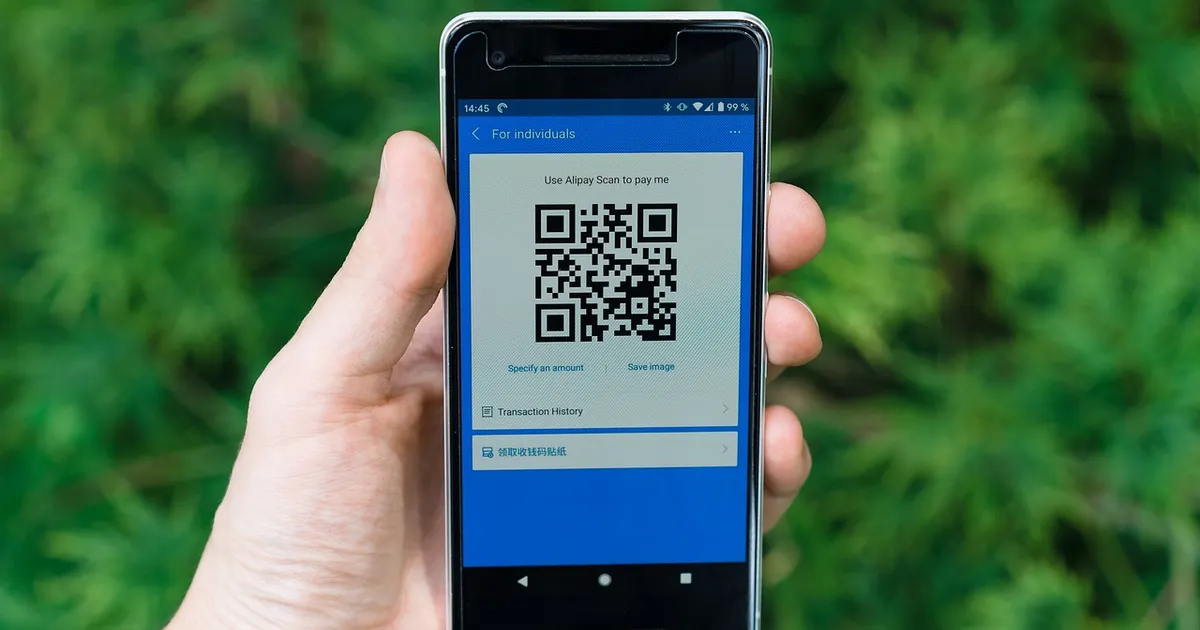
Westpac has already shown the mechanics work. Its business bank account credential, valid for 72 hours, lets a seller prove account ownership to a buyer via a QR code and text confirmation. Russell Jones, Westpac NZ’s chief data, digital and AI officer, said it means businesses “don’t need to download a bank statement, redact information by hand or send documents using less secure methods such as email.”
The delays sit with government, not the tech
The slow part of this story has been Wellington. The Govt.nz wallet, built by MATTR, went live in April 2026 with no credentials available to add at all. Website archives showed the credentials rollout slipping repeatedly, from early 2026, to June, to August. In September, MBIE’s then head of digital business enablement, Daryl Pettitt, said the NZBN credential was expected to go live in October. It arrived in November, as a trial for selected customers of a single bank.
Meanwhile, the underlying technology is already doing real work elsewhere. The Verify Whakatūturu app is verifying overseas digital driver licences for rental car companies, and the same Listener analysis flagged the NZBN credential as something that “could remove significant obstacles faced by small businesses.” The legal framework has existed since 2023. The bottleneck is coordination.
Businesses asked for this a decade ago
The demand for “tell us once” is hardly new. Back in 2014, an MBIE survey of more than 600 firms and sole traders found 82% valued providing basic information once for use across government, and 86% wanted every department holding the same accurate details.
The scale of the problem has not shrunk. In 2025, Digital.govt.nz found more than 20 agencies deliver over 300 services to businesses each year, with some firms dealing with eight or more agencies annually. That analysis identified seamless cross-government services as the single biggest opportunity to lift business satisfaction.
For a sole trader or micro-business, every duplicated identity check is unpaid admin time. A credential that only works with one bank does not move that needle. A credential IRD, ACC, the Companies Office and councils all accept would.
Europe has already named the trap
The EU is wrestling with the same problem across 27 national systems. In April 2026, BusinessEurope warned that the proposed EU Business Wallet “should not become an additional administrative requirement” and must instead replace overlapping procedures. It estimated savings of 150 to 160 billion euros a year, but only if the network effect is maximised.
That is the risk here. If agencies bolt the passport on as one more optional input while keeping their existing forms, document uploads and phone checks, businesses gain nothing. They simply get another login.
What would make this worth having
Phil Weir, Deputy Secretary at the Digital Delivery Agency, says wider adoption “will mean simpler, more efficient services and better protection against fraud.” He is right, with the emphasis on wider.
Three tests matter over the next year. Does MBIE bring other banks and private organisations on board? Does at least one non-banking agency commit to accepting the NZBN credential as sufficient proof, and drop its own check? And does the rollout escape the pattern of slipping dates that defined 2026?
The passport is a sound piece of infrastructure. Its success will be measured not by how many firms download it, but by how many government forms quietly disappear. Until an agency other than a bank says yes, this remains a pilot in search of a system.
Sources
- RNZ: Ministry of Business, Innovation & Employment launches trial of digital business passport (2026-11-03)
- 1News: Digital ID – First government-issued credential revealed (2026-11-03)
- BusinessDesk: Slate of new digital credentials planned amidst delays in filling Govt.nz wallet (2026-09-30)
- 1News: Major bank to start issuing digital ID credentials for businesses (2026-09-17)
- NZ Herald/The Listener: OK computer – The coming revolution in digital IDs (2026-08-24)
- MBIE: Extending the New Zealand Business Number – Regulatory Impact Statement (2014-08-25)
- Digital.govt.nz: Unique insights into the cross-agency business customer experience (2025-08-11)
- BusinessEurope: Proposal for a Regulation on EU Business Wallets – Position Paper (2026-04-22)
Join the discussion
Add useful context, ask a good question, or challenge an idea — keep it specific and respectful.