

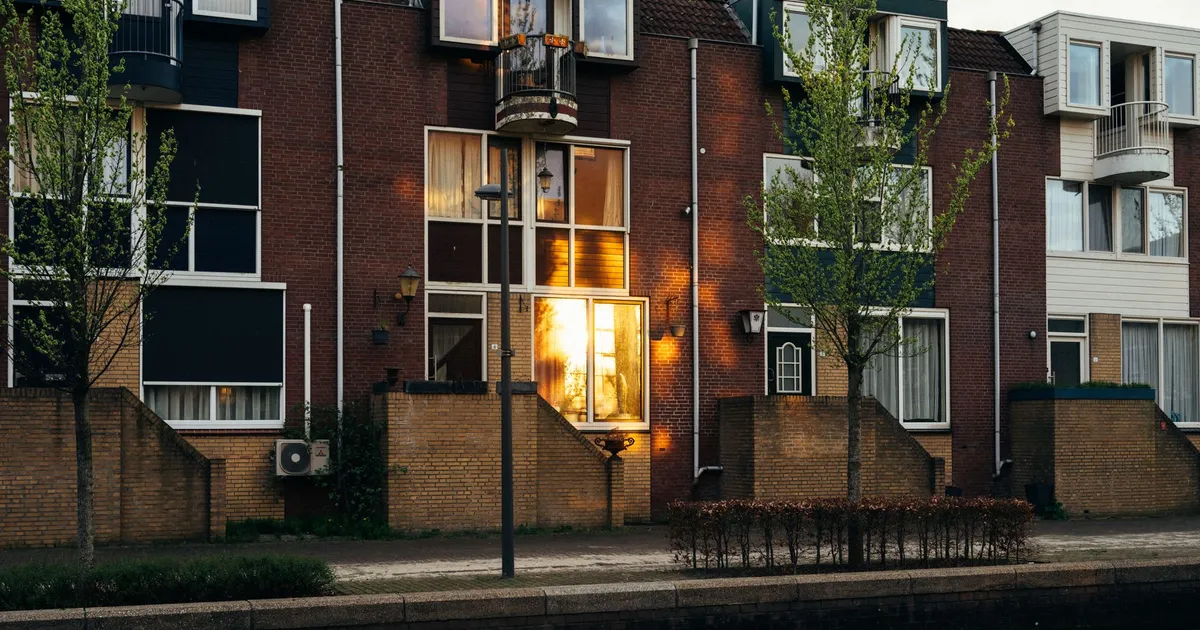
Upstairs in Jared Laidlaw’s west-facing Auckland townhouse, the temperature hit 35°C during the day and stayed in the high 20s late into the evening. His aluminium front door reached 60-70°C on summer days. Floor-to-ceiling windows, minimal ventilation, no eaves, no external shading. It is not a freak build. It is a template, and it is entirely legal.
That is the real problem. The Building Code has no controls on overheating or maximum internal temperatures at all. MBIE has now confirmed detailed rules won’t be considered in the 2028 Code review, and will instead wait for the 2031 cycle, as NZ Herald and others reported this week. Five years, for a problem the ministry has understood for some time.
A cycle skipped, not a deadline missed
The Code runs on a three-yearly review cycle. MBIE’s own programme of work, updated in November 2025, confirms the next review is due in 2028 and says the ministry is focusing on developing a methodology for assessing overheating risk. Focusing on, but not committing to.
MBIE manager for building performance and engineering Dave Gittings says overheating “is a complex issue without a single fix” and that changes need to “work together as a package” to avoid “unintended consequences elsewhere in the building system.”
That caution has some merit. BRANZ technical analysis commissioned by MBIE on the H1 energy efficiency settings found the Code does not aim to manage overheating and permits designs likely to overheat regardless of insulation levels. It also found some insulation choices, such as extra slab insulation, can actually worsen overheating by cutting the cooling effect of the ground. Get the rules wrong and you trade winter problems for summer ones.
But that same body of work shows the science is not the bottleneck. The ministry already knows what it wants to do. Officials confirmed they are looking at requiring designers to demonstrate through modelling that a design won’t exceed a maximum indoor temperature. The five-year gap is a process timeline, not a knowledge gap.
The cheap fix nobody is required to use
BRANZ senior building physicist Stephen McNeil told Mike Hosking that modelling how a house will perform is cheap at the design stage but has low uptake, and that simple rules are needed to force it. BRANZ and the Green Building Council both back an interim requirement: model the design, and adjust it until it passes.
McNeil has suggested staging the changes, with simple measures introduced now to catch the riskiest buildings early. He also warned that without regulation, “people would suffer even more as average temperatures increased”.
This publication is usually the first to object to new compliance layers. But a design-stage check on the highest-risk typology is not gold-plating. It is the kind of targeted, low-cost rule that stops a much bigger cost landing later on someone else.
Who ends up holding the heat
McNeil identifies townhouses and multi-unit buildings as the highest-risk typology, thanks to lots of glass, poor ventilation and no shading. That is precisely the product intensification policy has been pushing into the market. So the shelving of the fix coincides with a building boom in the exact category it was meant to cover.
The cost allocation looks like this:
- Developers face no compliance signal to design better, so the cheapest glazing-heavy option stays the rational choice. But the defect is now nationally documented, which weakens any future claim that nobody knew.
- Landlords are acquiring stock with a known, unpriced performance problem. Tenants will notice even if valuers don’t, and cooling retrofits are not free.
- Buyers purchase blind. There is no maximum-temperature disclosure, no modelled rating, nothing on a LIM to warn them.
- Insurers and valuers have no benchmark to price the risk against until 2031 at the earliest.
Overheating depends on solar gain, shading, materials, ventilation, airtightness and orientation. Almost all of those are cheap to change on paper and expensive to change once the concrete is poured.
Five years of stock that can’t be un-built
MBIE wants a coherent package, and a rushed rule would be its own mess. Fair enough. But the choice was never between a perfect 2031 package and a botched 2028 one. A modelling requirement for multi-unit and glazing-heavy designs could land in 2028 and be refined in 2031.
Instead, every year of delay adds another cohort of homes that will be too hot for their entire lives. Smart developers won’t wait for the regulator. Running the model now is cheap, and in a softer market, a townhouse that can prove it stays cool is a selling point. Everyone else is building tomorrow’s retrofit bill, and the ministry has just told them they can keep doing it until 2031.
Sources
- RNZ: Ministry delays rules on too-hot homes (2026-09-28)
- RNZ: No regulations on too-hot homes likely until 2031 (2026-09-28)
- 1News: Ministry delays rules on too-hot homes (2026-09-28)
- NZ Herald: Ministry delays rules on too-hot homes (2026-09-28)
- Newstalk ZB: Hot houses – How do we solve the overheating problem in new-builds? (2026-09-29)
- Building Performance: Programme of work (2025-11-27)
Join the discussion
Add useful context, ask a good question, or challenge an idea — keep it specific and respectful.