

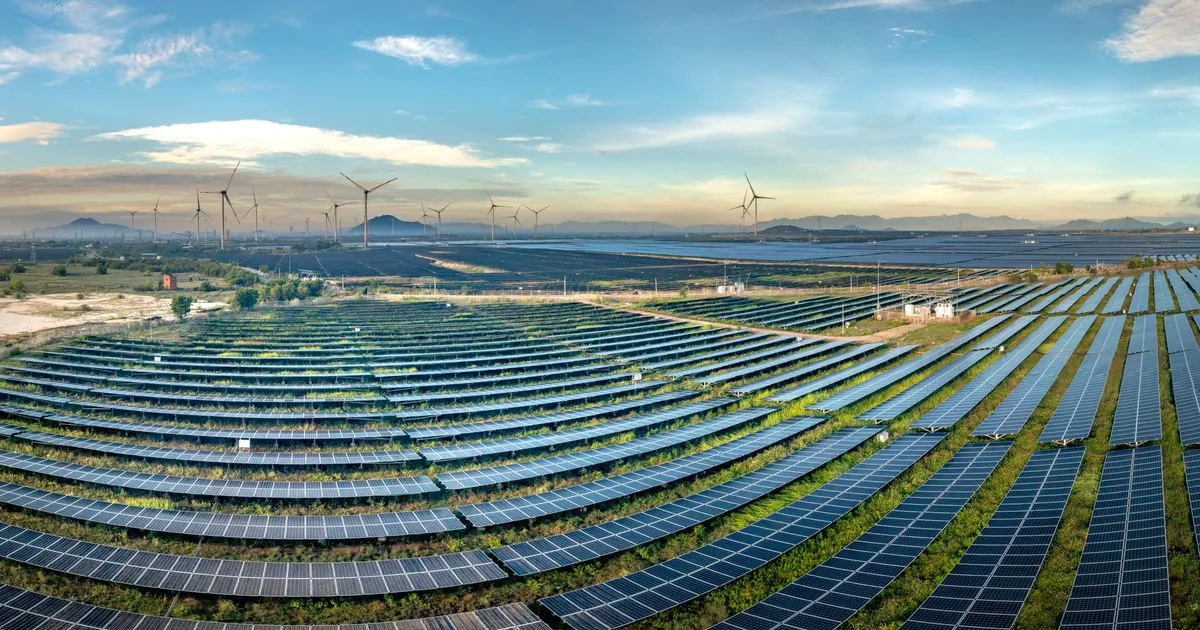
Abu Dhabi’s Masdar wants to put up to $1 billion into New Zealand wind, solar and battery storage. The government’s own investment agency says the thing most likely to stop it is not consenting, the grid or the Cook Strait wind. It is the power price.
That is an unusually candid admission, and it should reframe how this deal is read. The money is real and willing. Whether it turns into megawatts depends on market design decisions that sit entirely in Wellington’s hands.
A memorandum, not a cheque
Masdar, formally the Abu Dhabi Future Energy Company, signed a memorandum of understanding with Invest New Zealand on 28 October. It sets up a steering committee and project team to build a prioritised pipeline in solar, wind and batteries, including co-investment with local companies and Māori businesses, before moving to commercial due diligence. One outlet, pv-magazine Australia, put the figure at $800 million, but the government release and other coverage use $1 billion.
Masdar is no tyre-kicker. It runs more than 65 gigawatts of clean energy across four continents and is targeting 100GW by 2030. Trade and Investment Minister Todd McClay called the MoU “exactly the kind of investment we wanted to see come out of our trade agreement with the UAE”, and he is right to claim it. The New Zealand-UAE CEPA was sold on investment flows, and this is one.
But an exploration agreement is a promise to look hard, not to spend.
The resource is the easy part
Why is global capital circling at all? Because New Zealand’s fundamentals are excellent. In 2025, 88.5% of electricity generation came from renewables, and in April 2026 Simpson Grierson’s Energy Outlook recorded a record quarterly share of 94.4%, against roughly a third across the Tasman. Demand is rising too, up 1.3% in 2025, with EV-driven transport demand up 18% and a government target to double renewable generation by 2040.
Utility-scale solar is still in its infancy here, with the first grid-connected solar farm only switched on in 2025. For a developer chasing 100GW, that is open territory.
Volatility is the real tariff
Invest New Zealand chief executive Robert Wall told the NZ Herald that renewables are “the largest investment opportunity in New Zealand at present”. Then the catch: “The challenge we have in finalising and getting them built is the uncertainty of the power price.” He called it “fundamentally one of the biggest decisions that can impact this economy and the attraction of investment”.
Investors have long memories. In 2024, a dry winter and short gas supply sent wholesale prices spiking between July and early August, and the renewable share of generation fell to 85.5% as thermal plant filled the gap. That episode is exactly what an offshore credit committee models when it asks what a New Zealand megawatt-hour will be worth in year 12.
The contracts that don’t exist
The structural problem is old news. Back in 2024, Minter Ellison found offshore investors typically wanted power purchase agreements of 10 years or more, while only a handful of New Zealand corporates had the credit to sign them. Developers wanted up to 20 years; buyers preferred three to five. Two international developers had told the Electricity Authority New Zealand’s consenting was the most complex they had seen anywhere.
The firm also flagged a fix then under consideration by the Energy Competition Task Force, requiring gentailers to offer minimum volumes of flexible electricity in long-duration contracts so independents could secure bankable offtake. Two years on, there is no clear sign it has landed.
The gap between interest and delivery shows up in the numbers. In 2025, the Electricity Authority counted 289 projects totalling 44.29GW in the pipeline, against roughly 10.6GW of installed capacity, while warning that many would not be built because of viability concerns. Paper megawatts are cheap.
What this means for business
For large energy users, this is not an abstract policy debate. More independent generation is the most credible route to cheaper, steadier industrial power. Every project that stalls for want of an offtaker keeps the market tighter and the gentailers more comfortable.
It also cuts the other way. Corporates with strong balance sheets are now the scarce ingredient. A business willing to sign a long-dated PPA has real negotiating leverage with developers who have capital but no buyer.
The decision sits in Wellington
Wall says Invest NZ is also talking with renewable investors from Australia, the US and Malaysia, per the Herald. The capital is lining up. What it needs is a market where long-term contracts can be written and trusted, and consenting that doesn’t rank as a world-beater for complexity.
The CEPA got Masdar to the table. Whether it stays depends on whether the government treats contract-market reform as the investment policy it actually is, rather than another review to be revisited after the next dry winter.
Sources
- NZ Herald: Abu Dhabi’s Masdar explores up to $1b investment in New Zealand renewables, power prices hold the key (2026-11-11)
- Invest New Zealand: Masdar signs agreement to explore up to NZ$1 billion of renewable energy investment in New Zealand (2026-10-28)
- Energy Digital: Masdar to Explore Renewable Energy Projects in New Zealand (2026-11-03)
- pv-magazine Australia: NZ clean energy pipeline set for $800 million boost from UAE investor (2026-11-05)
- Electricity Authority: Generation investment pipeline updates and insights (2025-09-16)
- Simpson Grierson: Energy Outlook April 2026 (2026-04)
- Minter Ellison: What are the constraints with linking offshore capital with New Zealand based renewable energy projects? (2024-11-25)
Join the discussion
Add useful context, ask a good question, or challenge an idea — keep it specific and respectful.