

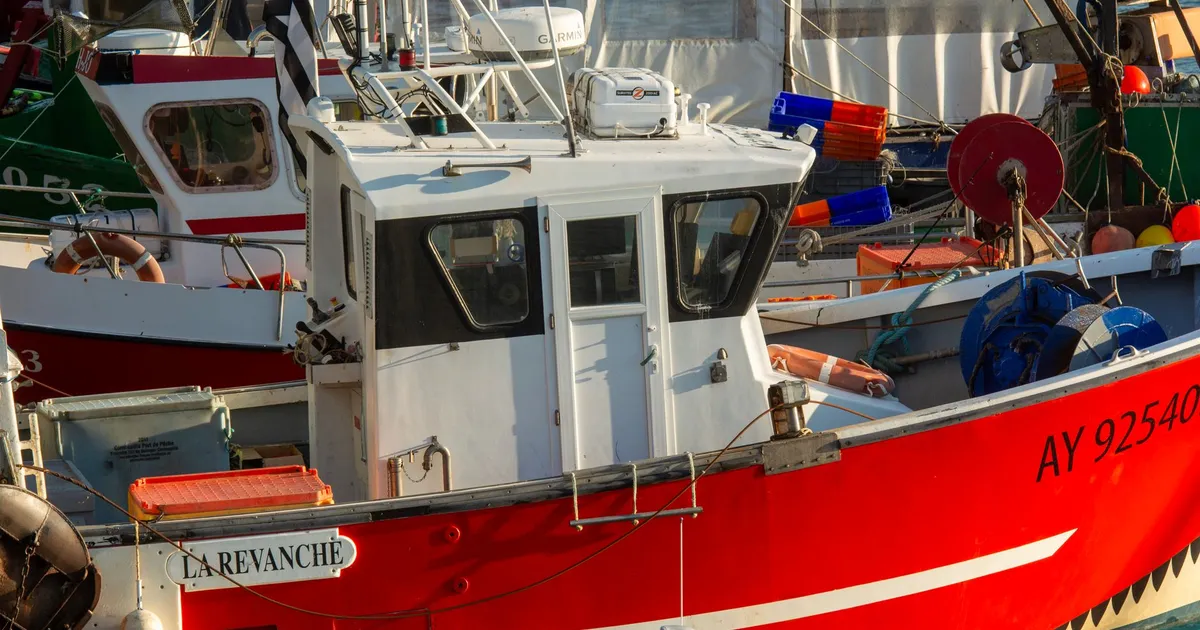
The boats are ageing, the margins are thinning, and nobody wants the job
New Zealand’s inshore fishing fleet is caught between rising costs and a workforce that is quietly walking away. Seafood NZ put it bluntly in a June 2026 commentary: “Our inshore fleet is ageing, costs are going up and, like many in the primary sector, finding enough workers has been tough.” The industry body called the moment “an inflection point” and said the sector could either invest seriously or “fail to change with the changing tides.”
BDO’s 2026 aquaculture analysis filled in the commercial detail. Input-cost inflation across fuel, labour, plastics, freight and cold storage is “squeezing margins across seafood farming and fishing,” particularly when export prices soften. For crayfish operators specifically, BDO noted that demand is shifting toward smaller-sized product, forcing longer seasons to land the same tonnage while costs keep climbing.
Muka Tangata workforce data from May 2025 showed median quarterly earnings in aquaculture and seafood processing sitting below the national average. When the pay is below average and the work involves weeks at sea in rough conditions, recruitment problems are structural, not cyclical.
Into this environment steps Maidenfleet, a Nelson firm led by boat builder and composite technician Dan Burrows. The company is developing what it describes as a new class of commercial inshore fishing platform designed to operate without crew, combining vessel design, onboard sensor systems and operational workflows to cut labour dependence and lower cost per kilogram harvested.
This is a business model question, not a robotics demo
The temptation is to frame crew-free fishing as a technology curiosity. It is not. The question that matters is whether the economics of inshore fishing have deteriorated far enough that removing the crew is the only way to keep the boats viable.
The numbers suggest the answer is yes, or close to it. A 2022 BERL report found that inshore finfishing generated $1.3 billion in output and contributed $533 million to GDP, supporting 4,158 FTEs. Total commercial fishing supported 16,522 FTEs across the economy. Those are significant numbers, and they are under pressure. MPI’s December 2025 SOPI recorded $2.224 billion in seafood export revenue for the year to June 2025, with a forecast dip to $2.150 billion for the year to June 2026.
Revenue falling while costs rise is the definition of a margin squeeze. Automation is not a nice-to-have in that environment. It is the maths.
Nelson is quietly building the tech stack
Maidenfleet is not operating alone. Nelson and the wider South Island have developed a cluster of marine technology companies with real-world deployment. Seaweave, based in Nelson, has built AI camera and sensor systems that can now recognise nine fish species individually, enabling fish-by-fish identification through the supply chain. UWAI Robotics, a Canterbury University spin-out, has developed an underwater drone using AI and advanced imaging to scan mussel lines in real time.
Seafood NZ’s June commentary also highlighted AI-enabled bycatch detection being trialled by Nelson fisherman Dom Talijancich through Advanced Conservation Solutions. The technology is moving from laboratory to water.
Regulation is shifting, but not fast enough
The Fisheries Amendment Bill 2026 is a meaningful tailwind. It amends the Fisheries Act to allow commercial fishers to return quota management system species to the sea when monitored by on-board cameras or observers rather than requiring physical crew for compliance. If a vessel can satisfy monitoring obligations through cameras, the regulatory pathway for uncrewed operations becomes clearer.
Seafood NZ CEO Lisa Futschek said in March 2026 the amendments were “designed to improve efficiency and clarity within the system, while maintaining strong sustainability outcomes.” Fisheries commentator Francisco Blaha offered a more cautious read in May 2026, noting that discard reforms and management procedure changes “aim to reshape incentives at the operational level” but that “the reality is usually messier.”
He is right. The Bill addresses catch monitoring, but Maritime NZ’s safety framework for uncrewed commercial vessels, insurance underwriting for boats with no crew aboard, and MPI’s catch reporting requirements all remain open questions. Nobody has written the rulebook for a fishing boat with no one on it.
The gap between wanting automation and affording it
The hardest part of this story is not the technology. It is the capital. BDO’s analysis noted that after record 2025 aquaculture export revenue of $650 million, the sector now faces “softer overseas demand, order cancellations, and reduced pricing visibility.” A sector under margin pressure may embrace automation in theory while lacking the funds to build it in practice.
Maidenfleet’s timeline of three to five years before vessels are on the water is honest, but that window depends on funding that has not yet materialised at scale. The 4,158 FTEs working in inshore finfishing are not all skippers. Many are crew, processors and support workers in port communities like Nelson. Removing the crew from boats does not automatically create equivalent jobs monitoring screens ashore.
What it might do, though, is keep the boats fishing. And for an industry that has spent a decade watching its workforce shrink, its costs climb and its fleet age, that could be enough.
Sources
- Opinion: On Changing Tides – Why Fishing Welcomes an AI Future (2026-06-08)
- Aquaculture in 2026: Navigating a tide of uncertainty (2026)
- Seafood Labour Market Dynamics – Muka Tangata (2025-05-07)
- Maidenfleet – Autonomous Commercial Fishing
- BERL 2022 Commercial Fishing Economic Contribution Final Report (2022-09)
- Situation and Outlook for Primary Industries (SOPI) December 2025 (2025-12)
- Christchurch robotics company making waves with underwater drone (2026-04-17)
- Seafood NZ calls for fact-based discussion on Fisheries Amendment Bill (2026-03-23)
- The Fisheries Bill Debate We Should Actually Be Having (2026-05-08)