

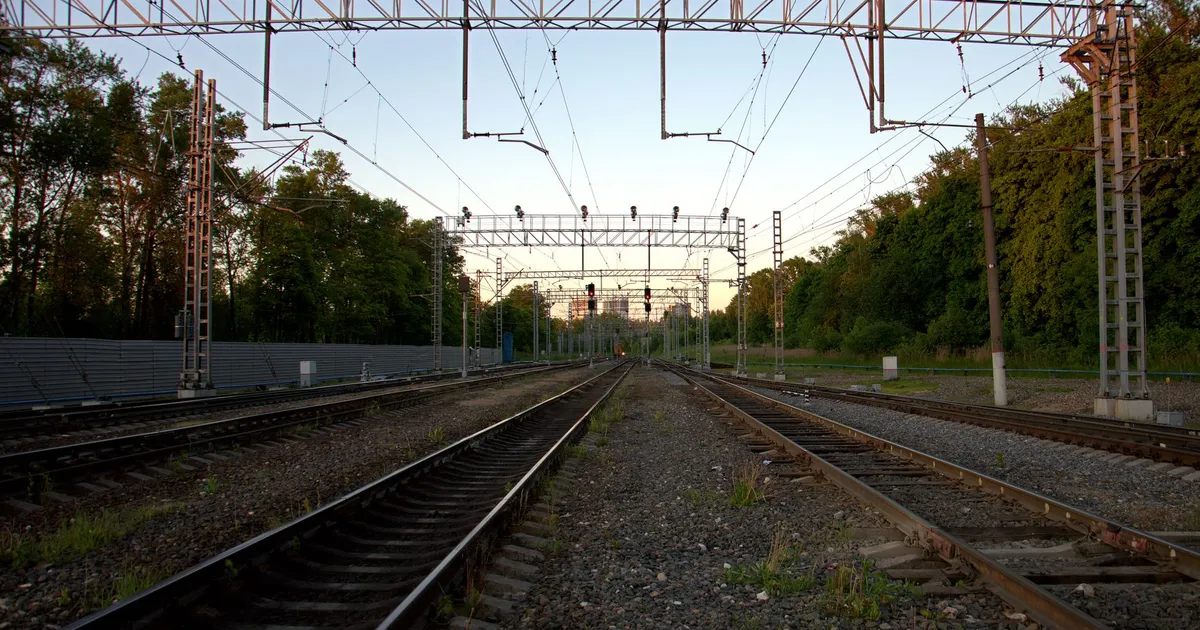
Two KiwiRail workers were burned in a 25,000-volt arc flash because a 1.14-kilometre stretch of overhead line stayed fully live inside an authorised, “protected” work area. That is the central finding of the Transport Accident Investigation Commission’s final report. KiwiRail’s response is the part boards should read closely. It accepted the easy recommendation and rejected the one that matters.
A changed job and no fresh briefing
At about 1.04am on 4 September 2024, an elevated work platform basket was raised into a live overhead line at Parnell, Auckland. The traction electrician needed three surgeries and skin grafts for burns to his face, neck, upper body and left arm. The platform operator was also burned.
The trigger was mundane. The crew had been redirected from the Waitematā Tunnel to the Newmarket Branch Line because their hi-rail vehicle lacked a tunnel diesel permit, and no fresh safety briefing was given for the new site. In 2024, on the day of the incident, KiwiRail’s Jon Knight said power had been isolated for routine maintenance. At the time, the Rail and Maritime Transport Union’s Todd Valster said an electrocution with the power off “doesn’t make sense”. He was right. The power was never off where the men were working.
The records put the wires in the wrong place
TAIC found that train-protection boundaries and electrical-isolation boundaries did not line up. Workers had no physical warning markers, no diagrams of the live zone and no voltage testing equipment. KiwiRail’s infrastructure records misstated the position of overhead line assets by up to 460 metres in places.
“Keeping trains out doesn’t make live wires safe,” said Chief Investigator of Accidents Louise Cook. “The isolation team had tested the electrical isolation. But the line maintenance team had no way to check the line where they were about to work.”
In September, Cook set out a four-part test for safety-critical organisations, asking whether controls are practical, understood, followed and checked. Parnell failed all four. KiwiRail’s own monitoring and assurance processes never spotted the unsafe practice.
Sentencing did not close the defect
In May, Judge Nevin Dawson set a $425,000 starting point and, after discounts, fined KiwiRail $290,000 plus $42,200 in reparations. He stressed the very high risk of a fatal outcome and said employees are entitled to rely on their employer for safety. The injured electrician described ongoing “pain, stress and emotional harm”.
Chief metro officer David Gordon apologised, admitting “our systems and processes were not sufficient to keep workers safe”. He listed fixes including banning changes to planned work, blue lights to mark isolation limits and extra checks that lines are de-energised. Personal voltage detectors are now required even in areas believed to be fully isolated.
Those are real improvements and they deserve credit. But they treat the symptoms.
Arguing against its own policy
TAIC made two recommendations. KiwiRail accepted the first, to standardise track distance referencing across all disciplines, which goes straight at the 460-metre error. It rejected the second, that electrical isolation should cover the whole of any protected track work area. KiwiRail argues worksites can be managed safely through limits that are “clearly defined, communicated, and verified”.
Cook dismissed that defence, pointing out that KiwiRail’s own internal guidance already required worksites to be protected from train movements and electrical hazards at the same time. Parnell had defined limits on paper. The workers still could not see them, test them or trust the records behind them. A state-owned operator resisting a recommendation that would simply enforce its own rulebook is a poor look, and a worse risk.
The lesson for any board running energised assets
This is not only a rail story. Lines companies, ports, mines and contractors working near powerlines face the same failure modes.
- A guilty plea is not a closed file. Sentencing settles liability. It does not prove the system defect is fixed.
- Asset data is a safety control. A location error that looks like IT housekeeping becomes lethal when three teams depend on the same reference point.
- Change of work must reset the risk check. As Cook put it, “When the job changes, stop. Check the risks again.”
- Verify, don’t trust. Relying on another team’s isolation test, with no tool to confirm it on site, is a structural gap.
KiwiRail has fixed much of what went wrong at Parnell. What it has not done is accept that a “protected” worksite should actually be protected end to end. Directors under the Health and Safety at Work Act should ask themselves the same question about their own operations, before an investigator asks it for them.
Sources
- Stuff: KiwiRail left kilometre overhead lines live inside ‘safe’ work area, badly burning worker (2026-11-05)
- TAIC: Protected from trains, exposed to live wires (2026-11-05)
- TAIC: Safety controls must be practical, understood, followed and checked (2026-09-03)
- NZ Herald: KiwiRail sentenced for safety breaches after two workers burned by electric shock in Parnell, Auckland (2026-05-14)
- RNZ: KiwiRail fined nearly $300,000 after two workers receive electric shocks (2026-05-14)
- HCAMag: KiwiRail ‘sincerely’ apologises for incident that electrocuted 2 workers (2026-05-15)
- 1News: Two rail workers suffer electric shock at Auckland train station (2024-09-04)
Join the discussion
Add useful context, ask a good question, or challenge an idea — keep it specific and respectful.