

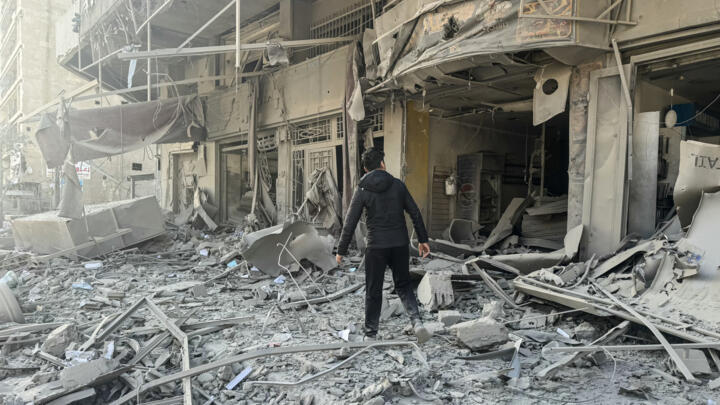
Iran has fired missiles at American military facilities in Bahrain and Kuwait after the United States launched another round of strikes inside Iran, raising fears that a fragile ceasefire could unravel.
U.S. Central Command said American forces had completed a second consecutive day of “self-defense strikes” against Iranian targets. The operation followed a warning from U.S. President Donald Trump, who said Tehran had taken “too long to negotiate a deal” aimed at ending the conflict.
Iran responded by targeting bases used by U.S. forces in the Gulf, including sites in Bahrain and Kuwait that had also come under attack a day earlier. The latest exchange has renewed concerns that the fighting could spread across a region already facing heightened instability.
The Strait of Hormuz has emerged as a central flashpoint. The narrow shipping route connects Gulf oil producers with global markets and remains one of the most important waterways for international energy trade.
Iranian state media reported that the Islamic Revolutionary Guards Corps had struck two oil tankers passing through the strait, although the claim was not immediately independently confirmed.
Reports also suggested that the waterway had been closed to maritime traffic. U.S. Central Command disputed that account, saying commercial vessels were continuing to pass through the area.
Oil markets reacted quickly to the uncertainty. Brent crude climbed above $95 a barrel as traders assessed the risk of further disruption to shipments from the Gulf. A prolonged interruption could push up fuel prices, transport costs, and inflation in countries already facing pressure from higher living expenses.
The latest confrontation followed the downing of a U.S. Apache helicopter in an attack blamed on Iran. Washington responded by striking radar systems, air defence infrastructure, and other military sites near Iran’s southern coastline.
Iranian President Masoud Pezeshkian said the country “will stand firm against any pressure or threat.”
Meanwhile, UN Secretary General António Guterres warned that the Middle East was “being pulled deeper into crisis” and urged both sides to return to diplomacy before the violence escalated further.