

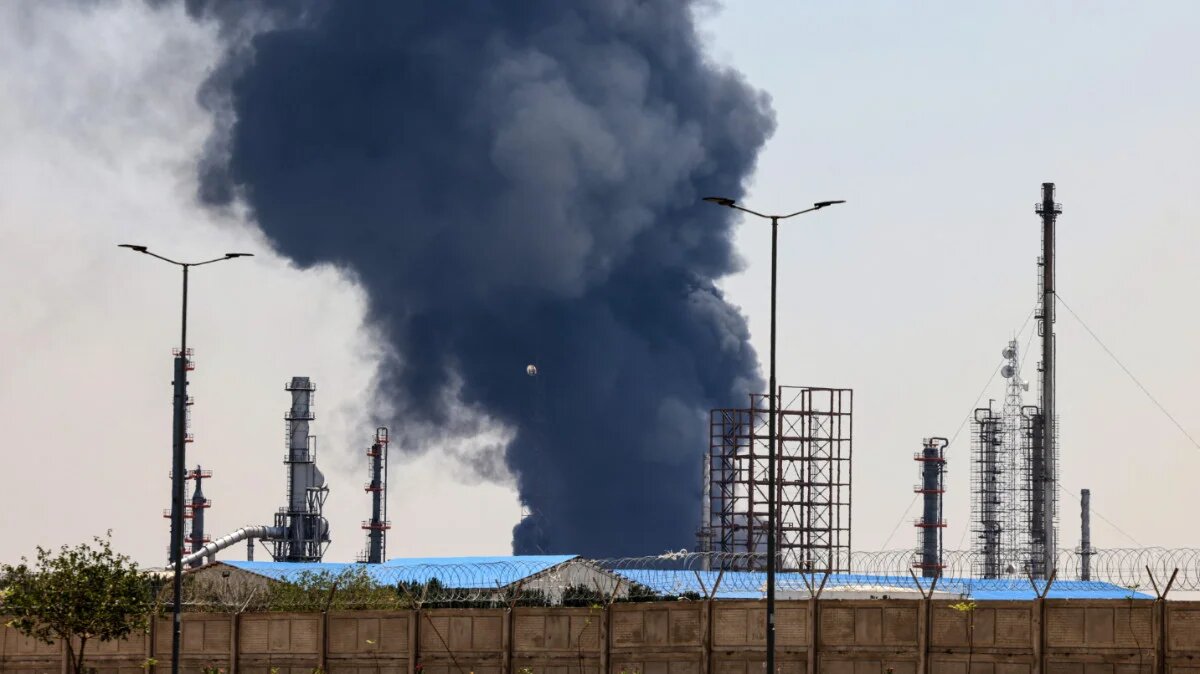
The recent U.S.-Israeli attack on OPEC member Iran has ignited fears of severe oil disruptions in the Middle East that could trigger a worldwide recession.
Iran, the cartel’s fourth-largest producer at over 3 million barrels daily in January per OPEC data, borders the Strait of Hormuz. This vital passage carried 14 million barrels a day in 2025, one-third of seaborne crude exports, with three-quarters heading to China, India, Japan, and South Korea.
Markets have long dismissed regional risks, but Bob McNally, former White House energy adviser under George W. Bush, says traders underestimate Iran’s retaliation potential.
“This is the real deal,” said McNally, founder and president of Rapidan Energy. “Crude oil future prices will likely rise by $5 to $7 per barrel when trading opens at 6 p.m. ET Sunday as the market prices are at some risk,” he said.
Brent crude closed Friday at $72.48 per barrel, up 2.45 per cent, while West Texas Intermediate settled at $67.02, gaining 2.78 per cent.
Iran could mine the Strait, spiking prices above $100 per barrel with its missile stockpiles. China sources half its oil imports from there.
“A prolonged closure of the Strait of Hormuz is a guaranteed global recession,” McNally said.
Over 20 million barrels loaded for Gulf export recently, but tankers are diverting, says Kpler’s Matt Smith. Spare capacity would be cut off, including Qatar’s 20 per cent share of global LNG.
“What you would see is hoarding, especially by Asian countries that were big importers of oil and gas when they realised that Hormuz is closed,” McNally said. “You would see the mother of all bidding wars.”
Prices would surge until recession balances rigid demand. “There just isn’t enough discretionary or elastic demand for oil,” he said.
Limited bypasses exist via Saudi and UAE pipelines. Iranian missiles hit U.S. bases in Qatar, Kuwait, UAE, and Bahrain per state media.
“The attack by Iran on other neighbours in the Persian Gulf changes the calculus and the extent of the assaults put pressure on insurers to either aggressively raise tanker rates for Strait of Hormuz travel or balk at underwriting any traffic,” said Tom Kloza of Kloza Advisors.
The U.S. could tap its 415 million-barrel strategic reserve, but Kevin Book of ClearView Energy Partners warns of limits.
“But we’ll say it again: in supply crises, duration matters. Scale does, too,” Book told clients Saturday. “A full Hormuz crisis could outstrip offsets provided by strategic stocks in the U.S. and International Energy Agency members.”
A sustained $10 price rise might shave 0.5 per cent off global GDP, per Reuters models.