


Iran briefly limited passage through the Strait of Hormuz on Tuesday for safety reasons during Revolutionary Guard naval drills in the area, state media confirmed.
This vital chokepoint between Iran and Oman funnels about 13 million barrels of oil daily, making up 31% of global seaborne crude shipments in 2025 according to Kpler data.
The Revolutionary Guard’s “Smart Control of the Strait of Hormuz” exercise tests rapid threat responses and boosts maritime defence posture.
Such restrictions mark the first since President Donald Trump warned of strikes against Tehran in January, heightening scrutiny as U.S. and Iranian envoys meet in Geneva via Omani channels to tackle nuclear disputes.
“The progress does not mean an agreement will be reached soon and more work still needs to be done,” Iranian Foreign Minister Abbas Araghchi told reporters.
The talks cover Iran’s enrichment programme versus Washington’s push for strict limits to prevent weapons development.
Oil benchmarks eased amid watchful trading. April Brent crude futures dropped 1.8% to $67.48 per barrel. March West Texas Intermediate futures fell 0.4% to $62.65.
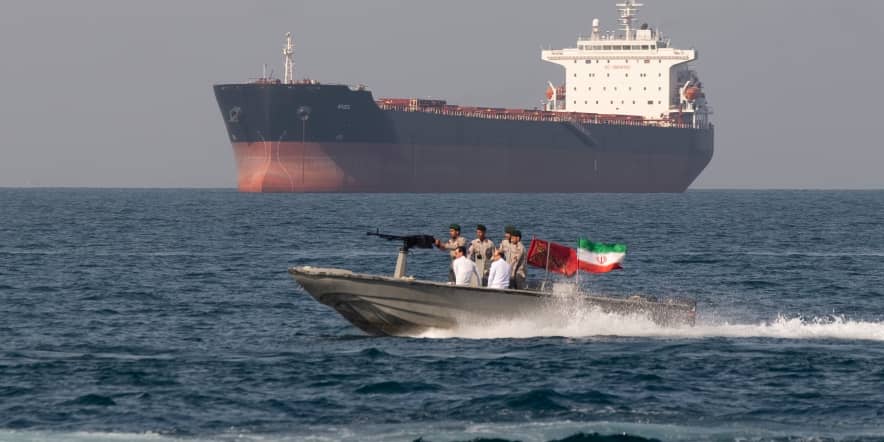
Jakob Larsen, chief safety and security officer at Bimco which represents global shipowners, said the temporary closure of the Strait of Hormuz was likely to cause “minor nuisance and delays” to inbound shipping headed for the Persian Gulf—but no major disruptions.
“The exercise establishes a live firing exercise area overlapping the inbound part of Strait of Hormuz’s Traffic Separation Scheme, and requests that shipping keeps clear of the area for the duration of a few hours,” Larsen said.
“Given the level of tension in the area, it is expected that commercial shipping will comply with the Iranian request to keep clear of the exercise area,” he added.
The strait also carries over a fifth of the world’s petroleum liquids and key LNG cargoes from Qatar, amplifying its role in energy security.