

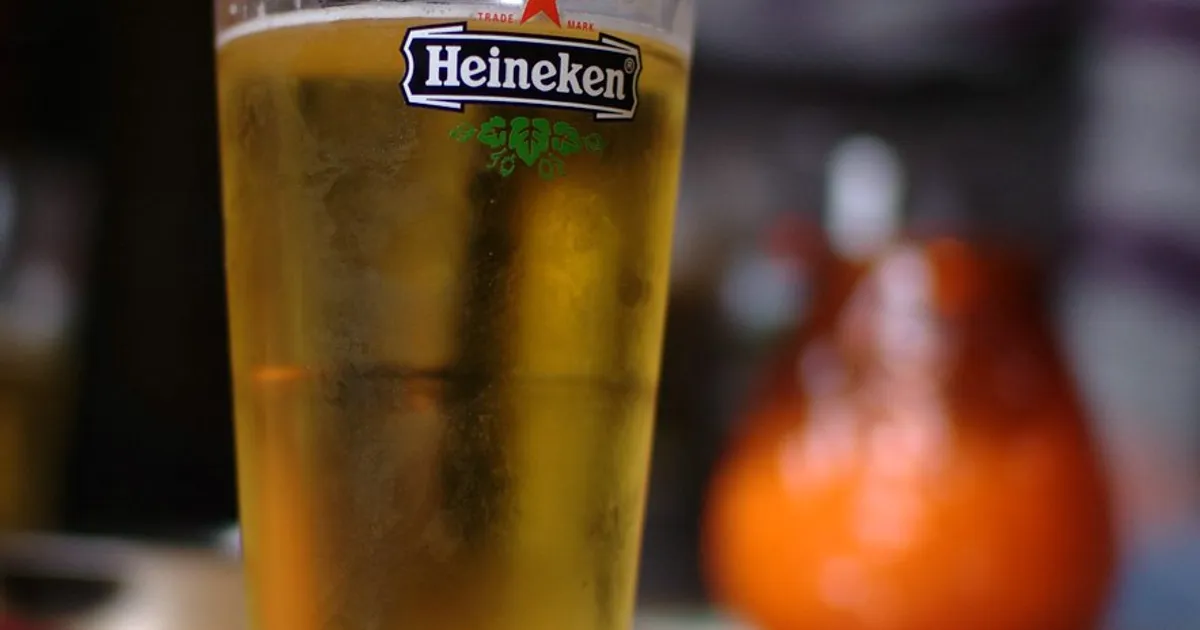
When a brewer that owns more than 2000 British pubs starts telling its customers to sell less beer per glass, it isn’t a health campaign. It’s a margin defence. Heineken has advised UK pubs and bars to push half-pints, low-alcohol beers and smaller food portions because GLP-1 weight-loss drugs such as Ozempic and Wegovy are quietly dismantling the multi-pint session.
For New Zealand hospitality, the message is blunt. The drugs are not killing demand for a night out. They are shrinking what each customer spends once they sit down.
The brewer is planning for 2027, not reacting to a fad
In a presentation seen by Reuters, Heineken told hospitality customers that GLP-1 users feel fuller and are less inclined to keep ordering. A Heineken spokesperson said the company sees “some changes in consumption behaviour among users and will continue to monitor how these behaviours evolve in 2027”, adding that users are becoming “more purposeful”, choosing “smaller quantities, lower-ABV beverages or more premium options”.
The stakes explain the urgency. Beer generated almost £14 billion ($32.9 billion NZD) in British on-premise sales in the year to February 2026, with less than £300 million from low- and no-alcohol variants. PwC estimates around 3 million British adults already use the jabs, potentially rising to 7 million as pills arrive.
The evidence base Heineken is responding to is not subtle. A KAM and Drinkaware survey published in April 2026 found GLP-1 users cut drinking frequency by 29%, from 3.1 to 2.2 days a week, and spent 30% less per visit to a pub, bar or restaurant. That last number is the one that should worry an operator. Fewer visits hurt; a 30% smaller tab on the visits you keep is worse.
New Zealand was already drinking less before the jabs
Local operators can’t treat this as a British curiosity. In 2025, Stats NZ found total alcohol available for consumption fell 8.3% to 442 million litres. Beer dropped 10% and wine 11%, while spirits edged up 1.3%. Standard drinks per adult per day fell 8.4% to 1.6, after 4.4% declines in each of the two previous years. The pace of decline roughly doubled.
That data largely predates mainstream GLP-1 uptake here. The drugs are accelerating a moderation trend, not inventing one. That makes the problem structural, not cyclical, and nobody should be waiting for volumes to bounce back.
Kiwi diners are already ordering differently
The Restaurant Association’s member survey of 70 restaurants found about 30% said customers directly cited GLP-1 use as shaping their order. Chief executive Nicola Waldren called that “much higher than expected”. Around 40% saw customers swapping full meals for small plates or sharing, and 24% reported fewer courses ordered.
Yet two-thirds had made no menu or service changes at all.
That is the gap. The signal has arrived, it has been measured, and most operators are still running a menu built for a customer who orders three courses and a bottle of wine. Across the Tasman, which is slightly ahead on adoption, 44% of GLP-1 users are dining out less and prioritising quality over quantity when they do. That is a preview, not a forecast.
Smaller serves only work if the price holds
The lazy response is to halve the portion and halve the price. That simply locks in the revenue loss. Heineken’s play is cleverer: smaller serves, premiumised, paired with food, so revenue per visit holds even as volume per visit falls.
The Restaurant Association made the same point in August, warning that smaller portions must feel intentionally designed and appropriately priced, “not simply like less food on a plate”. Its recommendations include two portion sizes, combinable small plates, protein-rich options and a serious alcohol-free list.
There is upside here too. NielsenIQ’s 2026 research found 35% of GLP-1 users strongly agree they like to keep up with trends, 16 points above the average consumer, and 27% order small plates instead of a main. These are not customers who have stopped spending. They are customers who will pay for a better, smaller thing, and who walk past a venue that only offers the old format.
What happens next
For brewers and distributors, the question is whether pack sizes, keg mixes and no-alcohol ranges are being planned for a 2027 market that looks like Heineken’s forecast. For bar and restaurant owners, it is simpler: look at average spend per head, not just covers. If that number is sliding, the menu needs redesigning before the next price review, not after.
Heineken has done the maths and decided half a pint at a good margin beats a pint nobody orders. New Zealand operators would be wise to run the same numbers while they still have time to choose their response.
Sources
- NZ Herald: Heineken urges pubs to sell half-pints to cope with fat jabs (2026-10-23)
- The Guardian: Boom in weight-loss drugs could lead to fall in beer sales, Heineken warns UK pubs (2026-10-23)
- The Pharmacist: Weight loss jabs may reduce alcohol consumption, study finds (2026-04-09)
- Stats NZ: Alcohol available for consumption, year ended December 2025 (2026-02-25)
- The Post: How weight-loss jabs are changing the NZ dining out experience (2026-09-16)
- RNZ: New report shows influence of weight loss medication on shopping habits (2026-07-20)
- Restaurant Association: GLP-1s and changing dining habits (2026-08-27)
- NielsenIQ: What GLP-1s mean for hospitality (2026)
Join the discussion
Add useful context, ask a good question, or challenge an idea — keep it specific and respectful.