

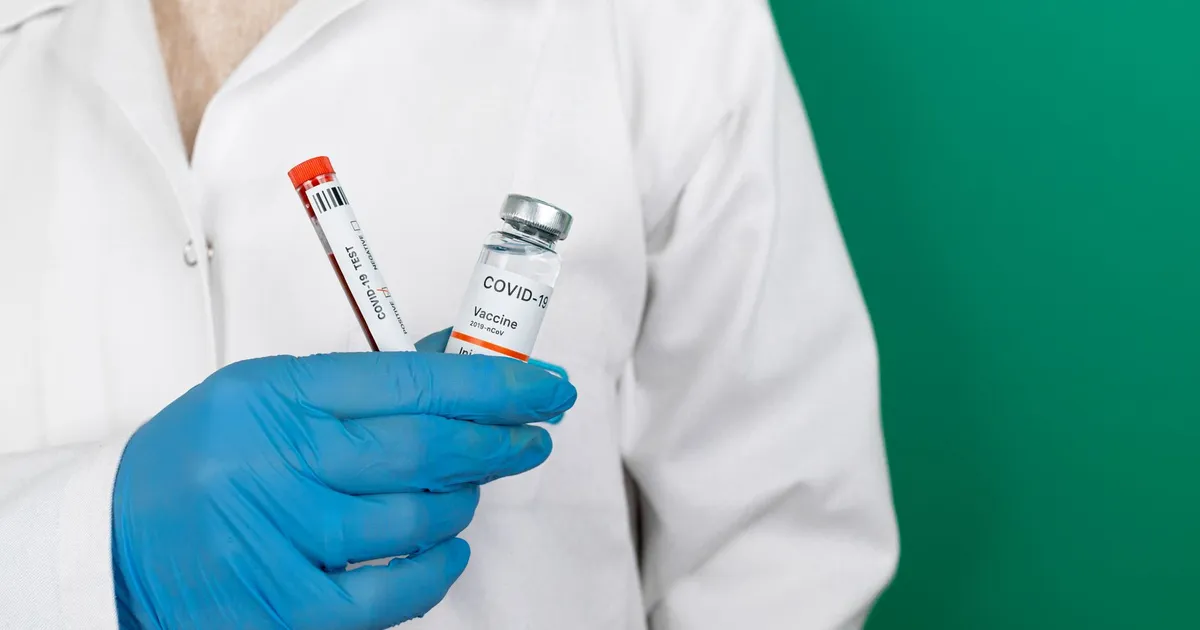
The University of Otago has landed a $13.2 million grant to prepare phase 3 vaccine efficacy trials across sub-Saharan Africa. Most coverage will treat it as a global health story, and it is one. Business readers should look at it differently. The grant is a bet on a specific, sellable national capability: running multi-site clinical and epidemiological work to international standards. That capability can be licensed, contracted and built into companies. The open question is whether New Zealand will bank any of that upside.
What the money actually buys
Professor John Crump, director of the Otago Global Health Institute, leads the international project, funded by Wellcome. The target is invasive non-typhoidal Salmonella (iNTS), a major cause of bloodstream infection and sepsis in infants and young children. It caused more than 76,000 deaths in 2023 in sub-Saharan Africa, and two candidate vaccines are now in phase 2.
Otago is not making either vaccine. Its job is to measure disease incidence and outcomes with standardised methods across sites in the Democratic Republic of Congo, Gambia, Ghana, Kenya and Malawi. It works alongside the International Vaccine Institute, Amsterdam University Medical Center and the University of Oxford. The team will also collect samples to develop antibody-measuring tools that governments need before deciding to introduce a vaccine nationally.
Crump describes the goal as building the data to enable phase 3 trials and “a network of African sites with the data, infrastructure, and expertise to deliver them”. Put that in commercial terms and it is trial design, site development and diagnostic tooling. The pharma industry pays heavily for all three.
A 2010 playbook that finally fits
None of this is a new idea. A 2010 government-commissioned review of the human therapeutics sector argued that investment “up to phase IIA clinical trial” should be the state’s focus. Its reasoning was that returns at that stage were best relative to the money spent. It also pointed to New Zealand’s strengths in research and international collaboration, and to the value of retaining world-class knowledge workers.
The Otago project stretches that logic slightly, into the planning for phase 3, but the principle holds. A small country cannot outspend Pfizer on factories. It can be the team global funders trust to tell them where, how and whether to run a trial.
Six years of quietly building the platform
The pandemic turned vaccine science into a capability play. In 2020 the Government put $10 million into Vaccine Alliance Aotearoa New Zealand, a partnership including Otago, and $3 million into upgrading Biocell’s manufacturing facilities. Budget 2022 followed with $40.7 million over four years for RNA research, which then-minister Megan Woods called “potentially transformative”.
By 2023, cumulative RNA platform funding had reached almost $70 million. The University of Auckland’s then-dean, Professor John Fraser, forecast at the time that “homegrown therapeutics and clinical trials” would be underway within seven years. Whether that forecast holds is still being tested. The Otago grant at least shows that international funders now treat New Zealand teams as credible lead investigators.
Proof the science can be sold
The commercial pathway exists. In 2023, RNZ reported that Victoria University researchers Mattie Timmer and Bridget Stocker had licensed their vaccine adjuvants to a US biotech for human clinical trials. They were also preparing a spin-out to supply animal vaccine makers. Otago’s pipeline is not a one-off either. In 2025 it won a $1.2 million Health Research Council grant for oral capsule vaccines, part of more than $13.3 million in HRC funding to its researchers that year.
Who banks the upside
This is where the story stops being a straightforward win. Foreign philanthropic money funds the work, and much of the commercial value sits with the partners. Vaccine developers, Oxford and future licensees are best placed to capture it. New Zealand keeps the jobs, the prestige and the expertise. Those are real gains, but they are not licensing income.
The opportunity is to turn expertise into revenue. Antibody-measuring tools could be licensed. A trial-design consultancy could serve global health funders. Spin-outs could sell standardised site methods to the next pathogen programme. That requires university commercialisation offices and policymakers to think like investors rather than grant administrators.
There is a fitting coincidence in the timing. In December the institute moves into Otago’s Wellcome Building, which was funded by a 1961 Wellcome Trust grant. Sixty-five years of foreign money has built Dunedin a world-class reputation. The next test is whether the country can turn that reputation into an export business, rather than simply renting it out.
Sources
- ODT: Otago vaccine efficacy trials receive $13.2m grant (2026-10-23)
- National Tribune: Children at heart of vaccination trial goal (2026-10-23)
- Review of the human therapeutics industry’s economic value to New Zealand (2010-03)
- Beehive: Progress on COVID-19 vaccine strategy (2020-08-27)
- ODT: Potential for novel vaccines, treatments and diagnostics (2022-05-19)
- University of Auckland: The story behind New Zealand’s mRNA platform (2023-10-03)
- RNZ: Academics bring immune boosting vaccine discovery to market (2023-06-08)
Join the discussion
Add useful context, ask a good question, or challenge an idea — keep it specific and respectful.