

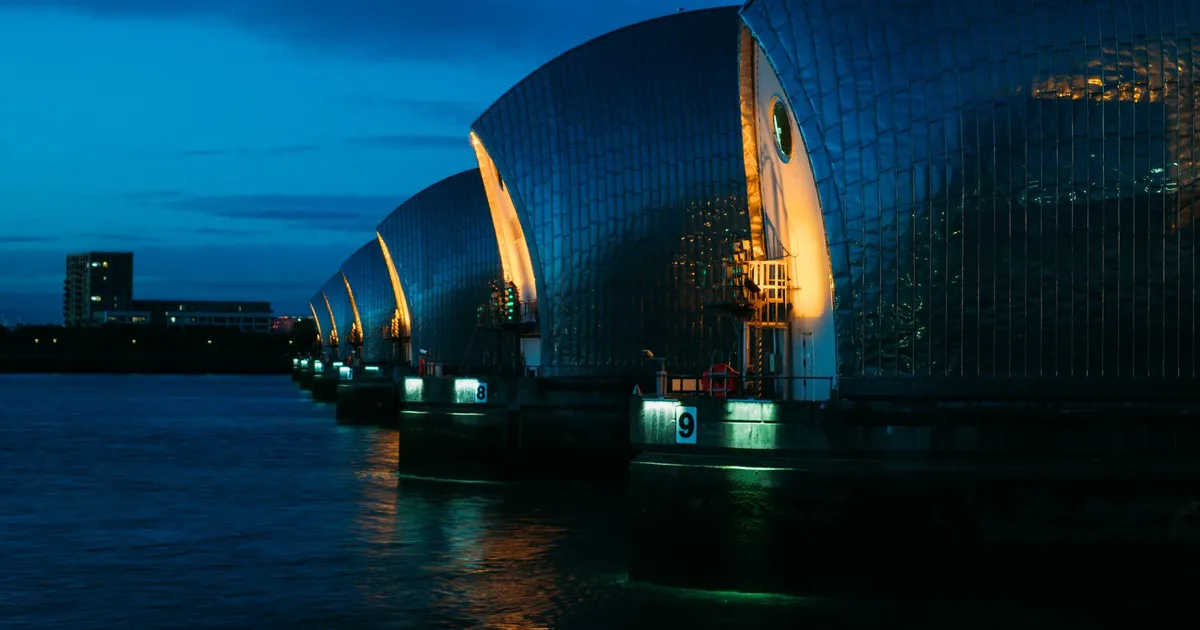
Hawke’s Bay is spending big to protect itself from the next flood. The catch, which the people running the programme are saying out loud, is that the new infrastructure reduces flood risk rather than removes it. For insurers, lenders, growers and processors still rebuilding balance sheets after Cyclone Gabrielle, that distinction is the whole story.
What $265 million actually buys
The 11-project, $265 million flood resilience programme is funded by roughly $214 million from central government and $50 million from Hawke’s Bay Regional Council ratepayers. The first project, the nearly $9 million Waiohiki stopbank, was completed last month, with all 11 targeted for completion by June 2027.
This is genuine progress. A June 2024 Order in Council created the fast-track mechanism to get the works built, and once complete, around 975 Category 2A and 2C properties can be reclassified to Category 1. For those households, the practical upside is large. As Insurance Business Magazine reported in February 2025, being in Category 2C “affects everything for the community: mortgages, insurance, and house prices.”
The number nobody is hiding
Here is where the candour gets uncomfortable. The programme is built to a one-in-100-year standard. HBRC chairwoman Sophie Siers put it plainly: “Stopbanks significantly reduce flood risk, but can never completely prevent it. In very large events, particularly when climate change is taken into account, floodwaters can still go over the top of stopbanks.”
Gabrielle blew through that standard. Post-cyclone modelling in the Hawke’s Bay Independent Flood Review found flood levels on the Tūtaekurī River exceeded both 100-year and 500-year levels in many areas, with the combined Tūtaekurī and Ngaruroro flow estimated at around a 1,000-year return period. The new stopbanks are designed for an event roughly ten times more common, and far less destructive, than the one that prompted them.
Regional councillor Neil Kirton named the trade-off directly: “Ratepayers across the region cannot afford gold-plated one-in-250-year flood protection. It’s just the reality of our region’s economy.” More alarming, he flagged that parts of Napier’s flood protection sit below a one-in-10-year standard, making the region’s largest city its greatest flood exposure.
Why the financial sector is watching
The gap between risk reduced and risk eliminated is precisely what determines whether capital flows into the region. The Insurance Council made hazard resilience a central plank of its April 2026 pre-election statement, pointing out that the $4 million Taradale stopbank upgrades completed before Gabrielle prevented billions in damage to around 10,000 properties. The council also warned that New Zealand relies heavily on international reinsurance markets that scrutinise how countries manage exposure.
The banks see it as a systemic question. In its February 2026 submission on the Planning and Natural Environment Bill, the New Zealand Banking Association argued that ambiguous or inconsistent natural hazard frameworks create financial system instability, affecting credit availability, pricing and long-term economic stability. It pressed for early, structured signalling where development should be restricted or staged.
IAG, the country’s largest insurer, has warned that ambiguous planning settings risk development that “can’t be insured”, and in a report identifying 42 gaps in New Zealand’s hazard risk management described the current approach as “complex, fragmented, and incomplete.”
A national bill that dwarfs Hawke’s Bay
The regional spend is a fraction of the national exposure. A 2024 Water New Zealand submission estimated the replacement cost of New Zealand’s 367 flood protection schemes at $2.3 billion, called for $197 million a year in central government co-investment, and noted these schemes are not even recognised as critical infrastructure under the CDEM Act. A 2021 Treasury assessment found 250,050 homes, 14.5% of the national stock, are exposed to flooding.
The Hawke’s Bay programme is a win worth banking. Properties will exit Category 2C, insurance and mortgages will return, and communities can move on. But the people signing the cheques are being honest about the limits, and that honesty has a price tag attached. Anyone financing a packhouse, advancing against orchard land, or weighing development in the lower-lying parts of the region should read the council’s own words carefully. $265 million buys time and reduced odds. It does not buy certainty, and the next big event will test exactly where that line was drawn.
Sources
- What Hawke’s Bay’s new $265m flood protection projects are – and aren’t – designed to do (2026-06-27)
- Whirinaki flood protection delays raise insurance worries for homeowners (2025-02-04)
- Act now or pay later: Hazard resilience policies a must in the 26′ election (2026-04-06)
- New Zealand Banking Association – Planning and Natural Environment Bill Submission (2026-02-13)
- Hawke’s Bay flood protection works – Order in Council (2024-06-07)
- Severe Weather Integrated Response (Hawke’s Bay flood works): Order in Council feedback – Water New Zealand (2024-03-18)
- A National Flood Risk Assessment of NZ – Residential Flood Insurance Issues Information Release (2021-09-01)
- Report of the Hawke’s Bay Independent Flood Review
- ‘Ad hoc and piecemeal’: Insurer IAG slams govt’s approach to natural hazards in new report
- IAG warns RMA wording could limit future insurability