

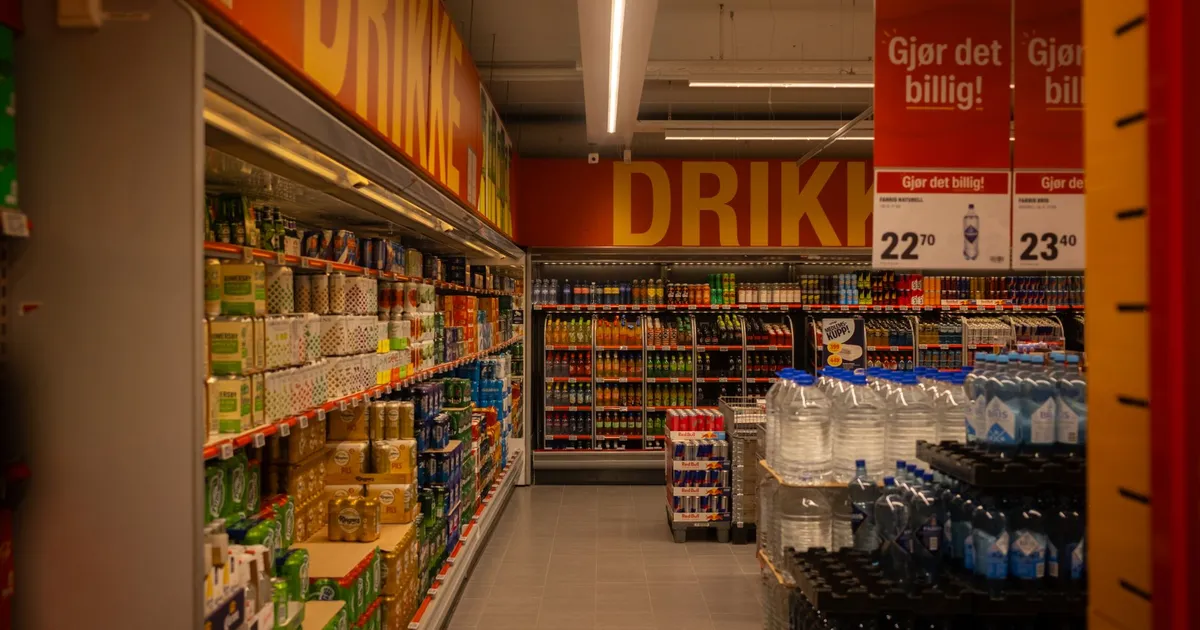
Same brand, same product, wildly different price
The supermarket competition debate has always been framed nationally. Two players, 82% of the market, three years of inquiry, not much movement. But new data from online grocer Paddock to Pantry, cited by Grocery Commissioner Pierre van Heerden on Mike Hosking Breakfast, reframes it as something more granular and more awkward. The same staple items, sold under the same supermarket brand, can vary by as much as 32% depending on location.
That is not a story about brand versus brand. It is a story about the same chain charging you more because of where you happen to live, and being able to do so because nobody else is competing on your street.
The 17-point gap the reports keep showing
The structural picture behind the price gap is well documented. The Commerce Commission’s 2025 Annual Grocery Report, published in June 2026, found the major retailers still hold 82% of the national market, unchanged from the year before. Retail food prices rose 4.6% in 2025 after easing the year prior.
The geography is the tell. In Auckland, the majors hold 71% market share. Across the rest of the country it is 88%, and in the top of the South Island and West Coast the duopoly reaches 92%. Roughly 90% of Kiwis live within a 10-minute drive of a major supermarket, but only 79% have a choice between competing retailers within that distance. That 17-point gap between having a store and having a choice is where the postcode premium lives.
Van Heerden put it plainly in 2025, noting that consumers in smaller towns and rural areas typically have “minimal to no choice within their locality, with some stores in small towns functioning as a localised monopoly”.
What it costs in the towns with one shop
Consumer NZ put real numbers on this. In 2025, it tracked a basket of 20 items over six weeks in single-supermarket towns. In Wairoa, served only by a New World, the basket cost $120.04 for Clubcard members, against $109.30 at Pak’nSave Napier. That is nearly $11 a week, or more than $550 a year, for the same shop. The point Consumer NZ made was subtle but crucial. Wairoa shoppers are not being charged more than other New World stores. They simply have no cheaper alternative to force the price down.
Grocery Action Group put its own figures on the gap. In 2025, chair Sue Chetwin said that in Te Anau, consumers were “paying 33% more for grapes, 15% more for Woolworths brand flour” than the national picture. She called the second annual report “devoid of any good news for consumers”.
A legitimate cost argument, up to a point
The supermarkets have a real defence. In 2025, Foodstuffs South Island chief executive Mary Devine pointed to the “unique logistical challenges” of a region with around eight people per square kilometre, including 37 stores serving communities of under 5,000 people. Serving thin, remote populations genuinely costs more.
But that is exactly where the Paddock to Pantry data lands its blow. If an online entrant can price competitively at those same locations, the margin premium in monopoly towns starts to look less like a cost recovery and more like what the market will bear when there is no one else on the shelf. Woolworths formalised localised pricing across 185 stores in 2024, with a Newsroom survey at the time finding South Islanders paying about $5 more for a basket at Woolworths and up to $15 more at New World.
The regulator is betting on entry, not intervention
Here is the interesting part for anyone who prefers markets to mandates. Van Heerden’s answer to a 32% price gap is not structural break-up. It is getting small players like Paddock to Pantry delivering nationwide and competing at the cheapest market price. The Commissioner has said the environment is “becoming more enabling for the entry and expansion of other grocery retailers”.
That is a market-led bet, and Paddock to Pantry is the living proof it can work. It is now simultaneously the whistleblower documenting the 32% gap and the proposed remedy. But it is one company. Consumer NZ chief executive Jon Duffy was blunt in 2025 that after three years “nothing is moving”.
The real test is whether online delivery can substitute for physical competition in exactly the low-density regions where physical entrants will never come, and where the logistics that online depends on still favour the incumbents. The 32% figure is not just the size of the problem. It is the measure of how far the market has left to travel.
Sources
- Pierre van Heerden: Grocery Commissioner on data revealing grocery prices vary by up to 32% depending on location (2026-08-27)
- 2025 Annual Grocery Report (2026-06-02)
- Little change in supermarket competition over past year, Commerce Commission report finds (2025-08)
- ComCom report highlights geographic inequities in groceries (2025-08-06)
- Grocery Action Group hits out at supermarkets as Kiwis keep paying high prices for groceries (2025-08)
- Are groceries more expensive in the regions? (2025-05-02)
- Big supermarket revamp lays groundwork for postcode price wars (2024-08-07)
Join the discussion
Add useful context, ask a good question, or challenge an idea — keep it specific and respectful.