

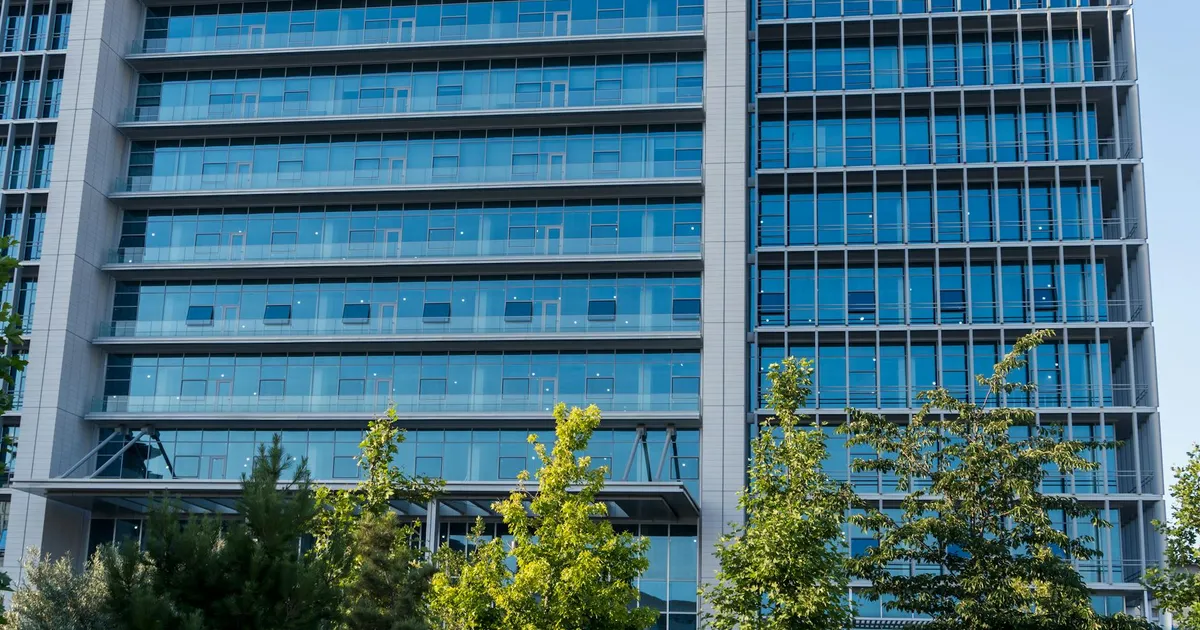
A counter-signal in concrete and timber
Most large New Zealand companies are cutting capital expenditure, deferring projects, and waiting for conditions to improve. Fisher & Paykel Appliances is doing the opposite. The company is completing a $220 million global headquarters at 830 Great South Road, Penrose, a three-building, 22,780-square-metre campus that ends a 50-year shared tenancy with Fisher & Paykel Healthcare at East Tamaki.
The timing is deliberate provocation. MBIE’s National Construction Pipeline Report 2025 showed non-residential construction fell from $14.1 billion in 2023 to $12.1 billion in 2024, with total construction activity down 7.7% in a year. A BusinessDesk analysis published in April described a broader deindustrialisation crisis in New Zealand manufacturing, with major firms retreating from long-term investment. Against that backdrop, a privately funded corporate campus of this scale is not just a building project. It is a statement about where the company sees itself in 20 years.
What is actually being built
The campus, designed by RTA Studio, is structured around three distinct buildings. The Home houses administration, research, design and product development, built with a fully engineered timber diagrid frame that makes it New Zealand’s largest mass timber project. The Shed contains appliance prototype laboratories and workshops. The Garage provides staff parking with solar panels and EV charging.
At the centre sits a 788-square-metre social kitchen where the Home meets the Shed, a deliberate design choice to force cross-functional interaction between the people who design appliances and the people who build prototypes. For a company whose entire product identity rests on kitchen culture, the symbolism is not subtle.
The campus is designed for roughly 700 desks serving approximately 1,000 staff, a ratio that acknowledges hybrid working without surrendering to it. The tagline “Come Home to Work” frames the building as a magnet, not a mandate.
The talent bet behind the bricks
In 2023, Mark Elmore, then Vice-President of Design and Brand at Fisher & Paykel Appliances, described the campus as “the next platform for Fisher & Paykel Appliances to grow globally, a purpose-built research and design facility very close to a train station.” That proximity to public transport is not an afterthought. It is a recruitment tool aimed at the design and engineering talent that premium appliance brands compete globally to attract.
The pātiki (flounder) diamond motif, developed through consultation with Ngāti Whātua Ōrākei, organises the cladding, diagrid and interior of the Home building. In 2023, Bruno Goedeke, then regional manager at builder Naylor Love Construction, said of the project: “I’m 58, and I’ve not seen a building like this in my career.”
Not consolidation but expansion
The Penrose campus is one node in a broader Auckland property strategy. Fisher & Paykel Appliances has also completed a $76 million warehouse in East Tamaki through Property For Industry, retaining distribution and operational capability in its historic home suburb. A Grey Lynn experience centre for international clients rounds out a three-site footprint. This is a company that is not pulling back. It is spreading its physical infrastructure across multiple specialised locations.
A Chinese parent backing New Zealand
Fisher & Paykel Appliances has been owned by Chinese white goods giant Haier since 2012. The $220 million headquarters investment is ultimately a decision by a Chinese multinational to plant a major global R&D and design hub in South Auckland. That carries a different weight from a locally owned company backing itself. Haier could have centralised these functions in Qingdao or anywhere else. It chose Penrose, which says something about the quality of New Zealand’s design and engineering capability that local policymakers might want to pay attention to.
The exception that proves the rule
The risk is reading too much into a single project. Fisher & Paykel Appliances is backed by a global parent with deep pockets. Most New Zealand manufacturers do not have that luxury. BusinessDesk’s April analysis of deindustrialisation described an economy where factories are closing, not opening, and long-term industrial investment is becoming rarer by the year.
But the lesson for business owners is not that everyone should spend $220 million on a headquarters. It is that the companies making aggressive capital allocation decisions during downturns, building when others defer, investing in talent infrastructure when labour markets are soft, tend to emerge from those downturns in a structurally stronger position. Fisher & Paykel Appliances is not waiting for conditions to improve. It is building the conditions it wants to operate in. That is a strategy worth studying, even if the price tag is not replicable.
Sources
- NZ Herald: Fisher & Paykel Appliances’ radical three-building $220m Auckland HQ (2023-10)
- RTA Studio: A Whare for Fisher & Paykel (2022-12-01)
- WoodCentral: Fisher & Paykel Picks Builder for Radical $220M Mass Timber HQ (2023-10-10)
- Woodworks: Fisher & Paykel to be Constructed with Engineered Timber Diagrid Frame
- BusinessDesk: The Business of Tech – Factories in retreat, inside NZ’s deindustrialisation crisis (2026-04-30)
- NZ Herald: Property For Industry finishes $76m Fisher & Paykel Appliances warehouse