

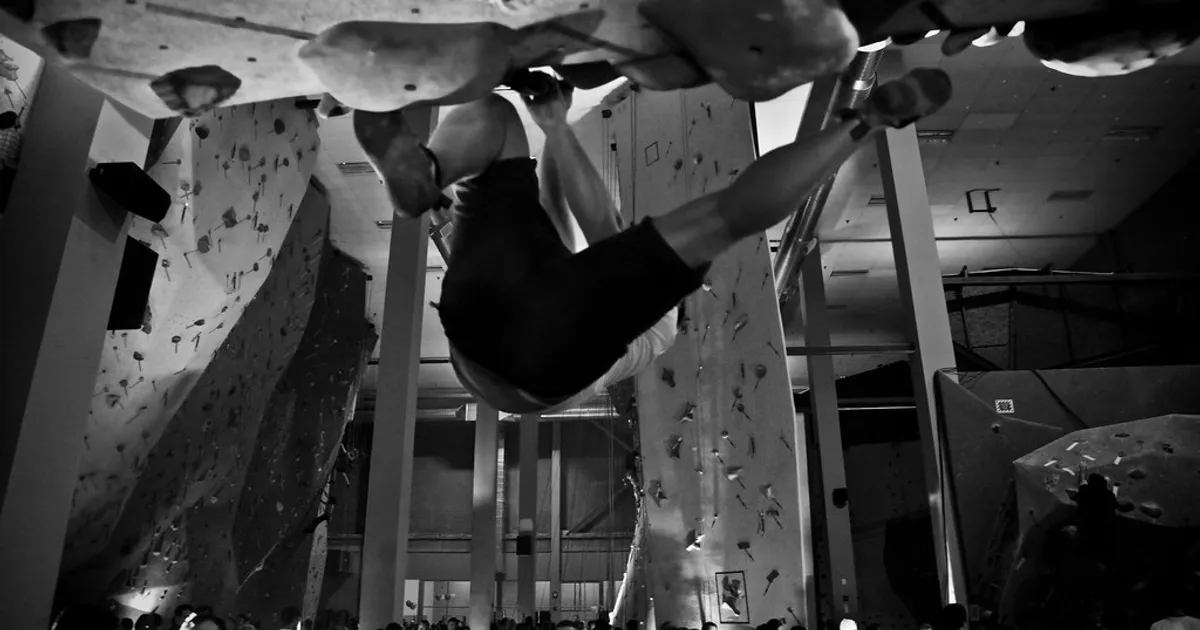
WorkSafe’s prosecution of Extreme Edge in Panmure looks, on the surface, like a story about two horrific accidents. In June 2022, Grace Thompson, 26, fell roughly 8 metres from the gym’s speed-climbing wall believing she was clipped to an auto-belay. She was not. She shattered bones in both feet and part of her spine and underwent eight surgeries. The wall reopened three days later with no additional controls. Eighteen days after that, a nine-year-old boy fell from the same wall for the same reason, spending months in a wheelchair after four surgeries.
New Zealand’s largest indoor climbing facility pleaded guilty to two charges of exposing people to risk of harm, was fined $175,000 per charge and ordered to pay more than $100,000 in reparations. Read as an isolated event, it is a tragedy with a court outcome. Read against the number that a Newsroom investigation surfaced, it is a warning to every operator running a high-risk leisure business.
The number that reframes everything
Between 2010 and 2025, WorkSafe received 37 notifications about Extreme Edge. That is not two accidents. That is a 15-year record a regulator can now read as a pattern. A 2022 notification explicitly sought “a full and thorough investigation of the entire Extreme Edge Ltd operation from a safety perspective” and the installation of a manager empowered to put customer safety at the centre of the operation.
Former staff describe concerns raised and dismissed. One employee who worked there between 2016 and 2021 flagged the “severely impacted” condition of 16 ropes that had swollen with moisture, plus staff cleaning gutters without proper equipment and using scissor lifts with minimal training. Another, who left in 2020, escalated concerns about inexperienced staff installing wall inserts with a harness and ascender and was told: “Why are you upset? Nothing happened.”
Extreme Edge director and majority shareholder Nico Buik denies the allegations from former staff and customers beyond what was admitted in the guilty plea.
When your own paperwork convicts you
The most instructive detail for any business owner is what Extreme Edge wrote down. Company documents created between the two incidents assessed a repeat event as possible on an ‘occasional’ basis, with an incident report describing potential injury as ‘very serious.’ The response was extra mats and signage rather than the belay gates that would have prevented a fall.
Judge Belinda Sellars was blunt that the company “failed to close the speed wall until appropriate controls were implemented including the installation of belay gates”. That gap between recognising a risk and acting on it proportionately is exactly where a WorkSafe prosecution lives. If you document a hazard and do nothing meaningful, you have documented your own negligence.
Policies are not a defence any more
The governing precedent is Gibson v Maritime NZ. As the EMA has noted in its analysis, the court found that safety steps, “while positive, did not go far enough,” with “gaps in how critical risks were controlled, and in how those controls were verified in practice”. The EMA’s conclusion is the one to pin above every board table: “Confidence should come from evidence, not assumption.” Boards cannot point to the existence of a manual. They have to prove controls work.
Not just a climbing gym problem
The pattern is not unique to Panmure. WorkSafe previously inspected Wellington gym Fergs after climbers raised safety concerns about bouldering areas where people could fall onto concrete and routes set above walkways, reporting that staff “did not seem bothered.” Same arc: concerns raised, concerns dismissed, regulator eventually involved.
It is the everyday hazards that compound. In 2024, Mike Cosman, board chair of the NZ Institute of Safety Management, warned that safety culture cannot be compartmentalised, noting that minor accidents such as slips, trips and strains generated 4.7 million days of weekly ACC compensation annually. The swollen ropes and the untrained scissor-lift users at Extreme Edge were precisely those small failures that precede catastrophic ones.
What operators should take from this
For gyms, adventure parks, trampoline centres, ski fields and water sports operators, three lessons carry real cost. Reopening after a serious incident without adequate controls is a separate, aggravating charge, not a shortcut. A culture that silences concerns becomes a liability under the Health and Safety at Work Act. And the $350,000 fine is a floor, not a ceiling, once legal costs, reputation and ongoing scrutiny are counted. For a single-site operator, that is existential. Safety culture is no longer branding. It is evidence, and the regulator has been keeping the file.
Sources
- Accidents at NZ’s largest climbing gym reflect safety culture problems – ex-staff (2026-08-04)
- Climbing wall fall shatters feet and spine sparking investigation by WorkSafe
- Climbers at Wellington climbing gym Fergs raise safety concerns
- What Gibson v Maritime NZ means for business leaders
- Workplace safety changes would create more confusion – health and safety expert (2024)