

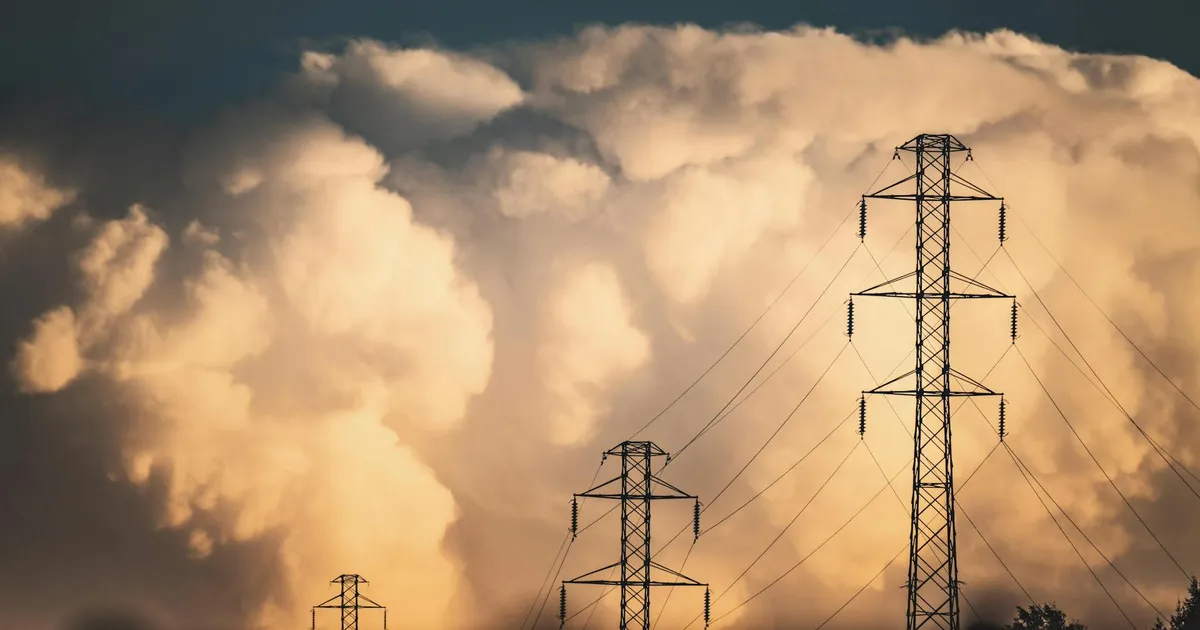
When a single fallen pylon cut power to nearly 100,000 Northland properties last year, the economic damage was estimated at $60 million to $80 million. Large industrial plants stayed shut for three or four full days because restored supply was still fragile. Some operators lost several hundreds of thousands of dollars each.
The regulatory figure that is supposed to capture that pain, and justify spending to prevent it, was set in 2005. It has not been touched since.
A number that drives billions in investment decisions
The Electricity Authority’s default Value of Lost Load sits at $20,000 per megawatt-hour, embedded in the Electricity Industry Participation Code 2010. VoLL is not a line item on anyone’s power bill. Its role is more consequential: it is the key input into investment and reliability assessments, the number that tells network operators how much it is worth spending to keep the lights on.
Transpower uses VoLL to assess the reliability benefits of different network investment options, multiplying unserved energy by the dollar figure to calculate the benefit of preventing an outage. If VoLL is too low, the benefit is understated, the business case weakens, and capital goes elsewhere.
Electricity Networks Aotearoa chief executive Tracey Kai described it as “a proxy that we use to value how painful a power outage is,” covering everything from loss of heating and refrigeration to business and banking disruptions. The EA’s general manager of wholesale and supply, Hayden Glass, conceded that “New Zealand’s economy, technology use and reliance on electricity have changed significantly” since the figure was set.
Everyone else moved on, the EA didn’t
The EA’s number is the outlier in its own system. The Commerce Commission updated its VoLL to $25,000/MWh in 2019. Transpower uses $25,000/MWh for some of its work and location-specific figures of $26,400/MWh for Bombay and $27,800/MWh for Wiri, which its own capex proposals describe as “a better representation of VoLL at these GXPs than $20,000/MWh.”
The EA’s own Market Development Advisory Group recommended an update in 2023. Two years later, the Authority has issued a Request for Information closing 8 May 2026 to assess whether consultants can deliver an updated study. That is step one of a multi-stage process. Any Code change is years away.
Businesses have no fallback
The legal framework offers commercial operators almost nothing. Consumer NZ spokesperson Jessica Walker noted that while residential consumers may have a case under the Consumer Guarantees Act, “the law did not protect businesses”. The insurance route is barely viable for small firms. NorthChamber president Tim Robinson put it bluntly: for losses of $1,000 to $5,000, factoring in excess and likely premium increases, “it’s a zero-sum game. It’s actually not worth lodging the claim.”
Wellington residents learned the same lesson this year when storm damage left some households without power for nearly a week. Wellington Electricity’s response: it is “not funded to offer compensation” due to Commerce Commission price regulation.
The broader cost of getting this wrong
The VoLL question sits within a wider story of electricity costs dragging on the productive economy. MBIE-commissioned modelling by Sense Partners found that high wholesale electricity prices between 2017 and 2025 reduced real GDP by 1.25%, or $5.2 billion. Real wages were 1.4% lower. Energy-intensive sectors were hardest hit, with primary metals production 15% below baseline and paper products 7% below.
Wholesale prices averaged $152/MWh since July 2022, peaking at $468/MWh in August 2024. Against that backdrop, a VoLL figure anchored to 2005 economic conditions looks less like an oversight and more like a structural disincentive to invest in resilience.
Infometrics chief executive Brad Olsen framed it directly: “Resilience is critical to ensuring the economy is able to function and that businesses can operate without constantly worrying about being disconnected physically and virtually.”
The regulator knew and still didn’t move
The charitable interpretation is that updating VoLL is technically complex and the EA wanted to get it right. The less charitable one is that an accurate number would raise the investment bar for network operators, strengthen the case for resilience spending, and potentially increase regulated costs. Every party in the system has mixed incentives to push for a higher figure, and the result is a two-decade stalemate.
The next Northland-scale outage is not a question of if. When it arrives, businesses will face the same position: significant losses, no legal recourse, and a regulator still pricing their pain with a number that predates the iPhone.
Sources
- Electricity Authority: Request for Information on Value of Lost Load study (2025)
- NZ Herald: Electricity Authority using 2005 costings to measure power-outage losses (2025)
- RNZ: The $60 million cost of the Northland power cut (2024)
- RNZ: Northland power outage – NorthChamber says businesses seeking compensation (2024)
- NZ Herald: Northland power outage – NorthChamber says businesses seeking compensation (2024)
- RNZ: Calls on Wellington Electricity for compensation after days with no power (2025)
- Transpower Resources: Value of Lost Load documentation (page 6)
- Transpower Resources: Value of Lost Load documentation (page 3)