


Canadian Prime Minister Mark Carney has voiced support for the U.S. and Israeli airstrikes on Iran’s nuclear facilities, though he admits to taking this stance “with regret” amid fears of a fraying global order.
The bombardment started on Saturday, focusing on deeply buried sites like those near Natanz and Fordow, as outlined in Reuters dispatches. Iran hit back hard, unleashing over 200 missiles and drones on Israeli cities and American outposts in the Gulf, which Al Jazeera reports left at least 15 people dead and triggered widespread evacuations in the latest flare-up of their shadow war.
In Sydney on his Indo-Pacific tour, which seeks to fortify alliances against rising Chinese influence, Carney told reporters that Canada “has long supported the imperative of neutralising this grave global threat” posed by Iran. “We do, however, take this position with regret, because the current conflict is another example of the failure of the international order.”
He sharply criticised the attackers for proceeding “without engaging the United Nations or consulting with allies, including Canada,” warning that a nuclear-armed Iran would represent a “massive threat” from “the biggest exporter of terror in the world,” a regime that has “murdered scores of Canadians.”
“Nobody has a civil nuclear programme that’s buried a mile beneath the desert,” Carney added. “That is a threat.”
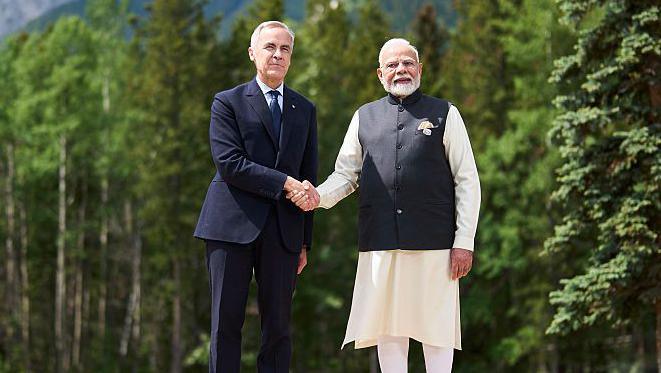
Pressed on his recent “frank” talks with Indian Prime Minister Narendra Modi, Carney addressed past strains. A Canadian official had suggested beforehand that India no longer ties to violent crimes or threats on Canadian soil, stating, “I really don’t think we’d be taking this trip if we thought these kinds of activities were continuing.”
Carney demurred, telling reporters, “I would not use those words,” but stressed the value of dialogue. “To engage, you have to be able to talk to countries, countries where there have been issues. And to raise issues, including at the highest levels, to ensure that the co-operation is there, whether it’s extortion or some other form of cross-border criminal activity or security risks.”
High-level contacts resumed “from the moment that we re-established a dialogue at the leader level with India.” Ties had crumbled under Justin Trudeau’s accusation of Indian involvement in the 2023 British Columbia killing of Sikh separatist Hardeep Singh Nijjar, which Delhi denied, leading to diplomat expulsions and visa freezes despite Canada’s large Indian community. Four suspects await trial.
This week brought a landmark nuclear energy deal, plus pacts on minerals, space, defence, and education, eyeing £10 billion in trade gains—echoing G7 restraint calls from leaders like UK Prime Minister Keir Starmer.