

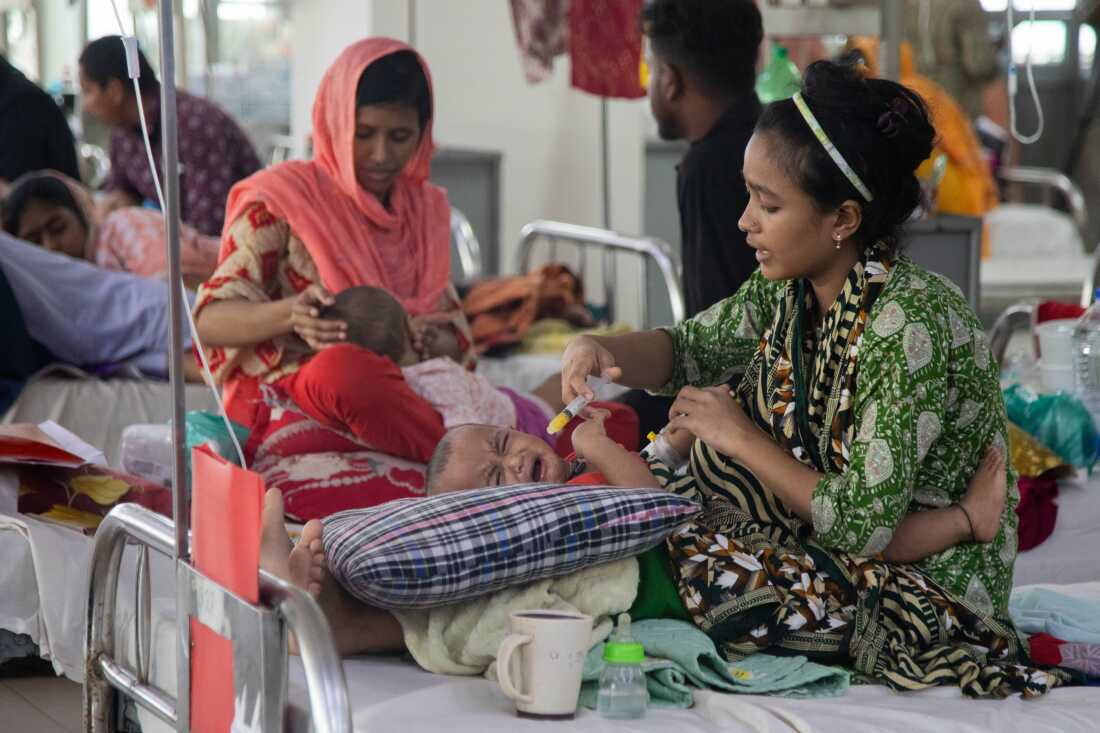
Bangladesh is struggling to contain a fast-moving measles outbreak that has killed more than 500 children in recent months, putting renewed scrutiny on gaps in vaccination coverage, hospital readiness, and vaccine supply.
Among the children who died was Akira, a four-year-old from Dhaka whose father, Al Amin, remembers her as bright, affectionate, and quick to learn. She had begun speaking as a baby and was already picking up English words before she fell ill.
“She was never short of love from both families. She was the crown of all.”
Al Amin says his daughter had received her routine childhood vaccinations, except for measles. Her parents tried several times to get the jab, but twice they were told to return because she had a cold. On later visits, he says, the vaccine was not available.
Akira was taken to hospital in early March with what first appeared to be a fever. She briefly improved and was sent home, but soon developed a rash, a high temperature, and sores in her mouth. Her father says she was discharged and readmitted several times before doctors finally diagnosed measles during her fifth hospital stay.
She was later placed on life support and died 27 days after her first admission.
Health officials have recorded more than 60,000 suspected measles cases since March, although many are still awaiting laboratory confirmation. Hospitals in several areas have been overwhelmed, with families reporting difficulties finding space for sick children.
Measles spreads through coughing and sneezing and is among the most contagious viral diseases. It can be particularly dangerous for unvaccinated young children, especially where crowded living conditions and limited access to healthcare allow infections to spread quickly.
Public health experts say the crisis reflects a combination of delayed vaccinations, reduced community outreach after the Covid pandemic, dense urban populations, and pressure on local clinics. UNICEF has also raised concerns about delays in vaccine procurement, although former interim government officials have disputed claims that any change in the purchasing process caused shortages.
Bangladesh began an emergency vaccination campaign in April with support from international agencies. Officials say infections have started to ease in some of the worst-hit areas, though immunity takes several weeks to develop.