

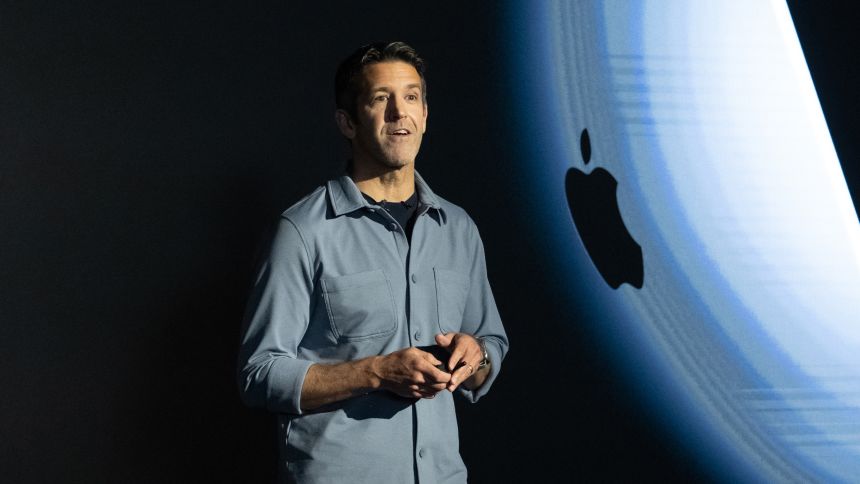
Apple has appointed hardware engineering veteran John Ternus as its new chief executive, marking the end of Tim Cook’s 15-year tenure at the helm of the world’s most valuable company.
Ternus, who has served as senior vice president of hardware engineering since 2019 and spent 25 years at the firm, will take over on 1 September 2026. Cook will shift to executive chairman, remaining through the summer to guide the transition and “assist with certain aspects of the company, including engaging with policymakers around the world.”
Cook stepped into the role in 2011 after co-founder Steve Jobs resigned due to illness. He transformed Apple into a $4 trillion giant, achieving the first $1 trillion valuation in 2018. Describing the job as “the greatest privilege of my life,” Cook lauded Ternus as a “visionary” with “the mind of an engineer, the soul of an innovator, and the heart to lead with integrity and honour.”
“He is without question the right person to lead Apple into the future,” Cook added.
Ternus contributed to landmark products including every iPhone since the 4, all iPads, AirPods, Apple Watch, and the Mac’s shift to Apple silicon. A Jobs-era engineer, he called Cook his “mentor” and said, “I am filled with optimism about what we can achieve in the years to come.”
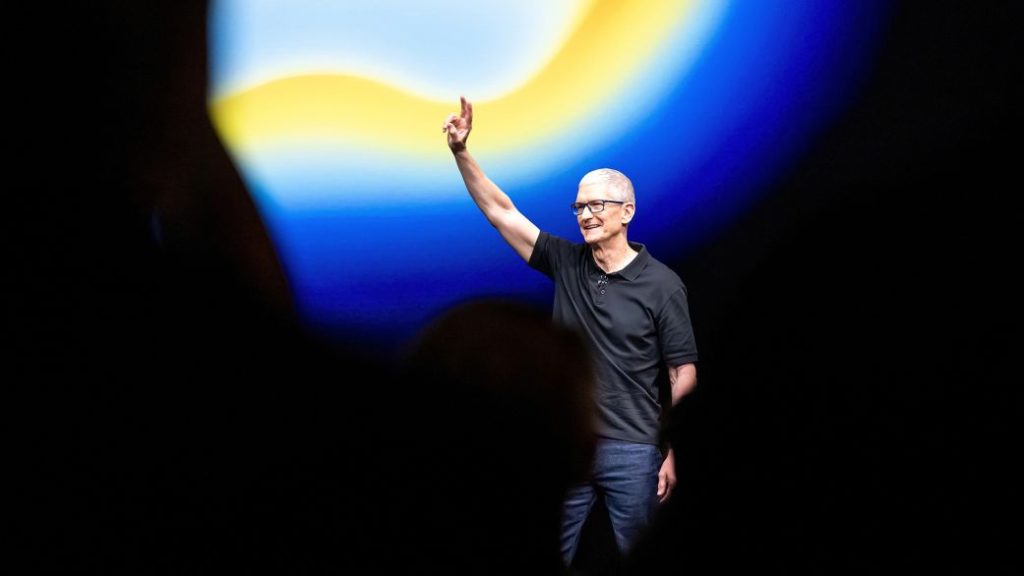
The announcement follows COO Jeff Williams’s departure last year amid speculation. Shares rose 3% after hours, reflecting optimism for innovation after critiques of Cook’s operations focus, which quadrupled profits but left the lineup static.
Forrester’s Dipanjan Chatterjee noted Apple remains structurally dependent on the phone as it searches for its next growth engine. He urged Ternus to resist incrementalism and escape the iPhone’s gravitational pull for true differentiation.
Analysts predict emphasis on AI-integrated hardware like foldables and wearables, addressing lags behind Google and Microsoft. OpenAI’s Sam Altman posted, “Tim Cook is a legend. I am very thankful for everything he has done and I am very thankful for Apple.”
Notre Dame’s Timothy Hubbard praised Cook’s scaling prowess but warned of pivoting to exploration. “The real question now is whether that same organisation can pivot toward exploration, where success depends on speed, uncertainty and a greater willingness to experiment,” he said. “That rapid innovation is where Apple started, and maybe that’s where the company needs to return.”