

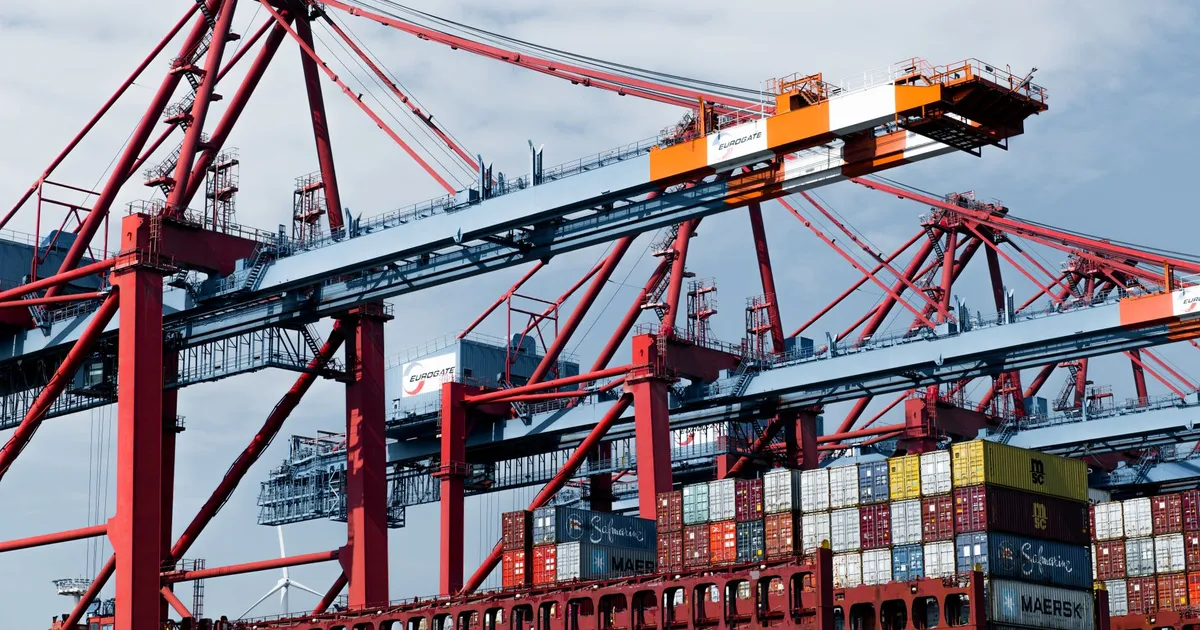
New Zealand’s trade problem has become a geometry problem. Our security instincts point towards Washington, our biggest customer sits in Beijing, and the US market that exporters spent a decade building is now the most volatile one we sell into. Apec in Shenzhen did not resolve any of that. It made the squeeze harder to ignore.
Twenty-three hours to manage 75 percent of exports
Christopher Luxon arrived in Shenzhen with caretaker Trade Minister Todd McClay for just 23 hours on the ground, squeezing in a plenary, a lunch with Australia, Canada and Singapore, and a McClay meeting with US Trade Representative Jamieson Greer. That is a short visit for a forum whose economies buy 75 percent of New Zealand’s exports.
The backdrop was a first-of-its-kind US, China and Russia trilateral on the sidelines, and a Xi Jinping charm offensive. “China will not only cut tariffs and expand market access, but also go a step further. We will carry out reform in challenging areas such as rules, regulation, and standards,” Xi told business executives. Apec leaders, tellingly, avoided criticising the US lurch into protectionism even as they preached openness.
The American pivot nobody stress-tested
The under-reported tension is how far New Zealand has leaned into the US. Stats NZ data published in early 2025 showed the US overtook Australia in 2024 as our second-largest export market at $9.0 billion, 12 percent of total exports and up from $4.7 billion a decade earlier. Meat exports to the US reached $2.6 billion that year, overtaking China, where meat sales fell 32 percent.
Then the tariffs landed. In March 2026, the Reserve Bank’s modelling found NZ exports to the US would be 13 percent lower in the first year, still 6 percent down by 2040. The bank also warned that goods diverted away from the US would compete harder in our other key markets, and that tariffs of this scale had not been seen in over a century. In other words, the historical playbook may not work.
Xi’s pitch deserves scepticism, not dismissal
Fran O’Sullivan rightly notes the irony of China casting itself as champion of the rules-based order given long-standing complaints about subsidies, state-owned enterprise favouritism and forced technology transfer. Xi’s US$20 million for Apec co-operation is pocket change.
But the commercial openings are real. Premier Li signalled interest in services trade, EVs and solar and wind technology under the existing FTA. And as George Chen of The Asia Group put it, “China wants to be seen as a partner in global technology development, in contrast to Washington’s more restrictive approach.” A small trading nation can take the deals without buying the rhetoric.
Concentration is the bigger enemy
The geopolitical noise obscures where the real risk sits. In 2025, Treasury found dairy made up around 20 percent of export values and nearly 60 percent of exports went to just four partners, with China slightly over 20 percent. Crucially, it judged product concentration riskier than market concentration, and rated a foot and mouth outbreak, at a 5.1 to 9.4 percent GDP hit, as bigger than any modelled trade shock. With commodity exports equal to about 18 percent of nominal GDP in the RBNZ’s 2025 estimate, a price or policy swing moves the whole economy, not just farmers.
Stop waiting for a referee
The sharpest advice is coming from economists, not diplomats. In March 2026, NZIER principal economist Chris Nixon argued that “tariffs are no longer the main barrier”, with the real fights behind the border in regulation and standards. With FTAs already covering over 70 percent of trade, he said the job was to extract more from existing deals, adding that “trade policy amplifies what the economy can already do.”
Alan Bollard is blunter. Southeast Asia “deserves far more attention from New Zealand exporters”, he argues, and ASEAN shows how to live with “the two big elephants in the room.” His dairy example should sting: Singapore buys our milk powder and earns far higher returns through processing, branding and distribution. Value now lives in IP and customer relationships, not tonnage.
The EMA has made the same case from the factory floor, pushing members towards strategy, diversification and agility and backup suppliers for critical inputs. The existing CPTPP architecture already gives exporters routes into Japan, Canada and Mexico that too few fully use.
None of this needs Washington or Beijing to blink. O’Sullivan frames the core question as whether New Zealand can still hedge intelligently. The answer will not come from 23-hour summit visits. It will come from boards that stop treating the US and China as permanent fixtures, add value before the product leaves port, and build a third and fourth market before the next tariff letter arrives. Whoever forms the next government should make that the trade agenda, not an afterthought.
Sources
- NZ Herald: Apec summit: New Zealand cannot afford to be squeezed between Washington and Beijing – Fran O’Sullivan (2026-11-20)
- NZ Herald: Christopher Luxon at Apec: Why New Zealand must navigate US-China trade rivalry (2026-11-13)
- NZ Herald: NZ’s big trade test at Apec (2026-11-15)
- 1News: China’s Xi says Asia-Pacific must embrace open trade, fair growth (2026-11-18)
- RNZ: Christopher Luxon set to arrive in Shenzhen for APEC, as Trump, Xi Putin prepare to meet (2026-11-18)
- Stats NZ: US now New Zealand’s second largest export partner (2025-01-30)
- NZIER: Living and adapting on the edge – New Zealand’s trade and trade policy in a changing world (Insight 125) (2026-03-26)
- EMA: Alan Bollard on the changing rules of global trade (2026-06-15)
- EMA: Strategy, diversification and agility – How NZ exporters can thrive amid disruption
Join the discussion
Add useful context, ask a good question, or challenge an idea — keep it specific and respectful.