

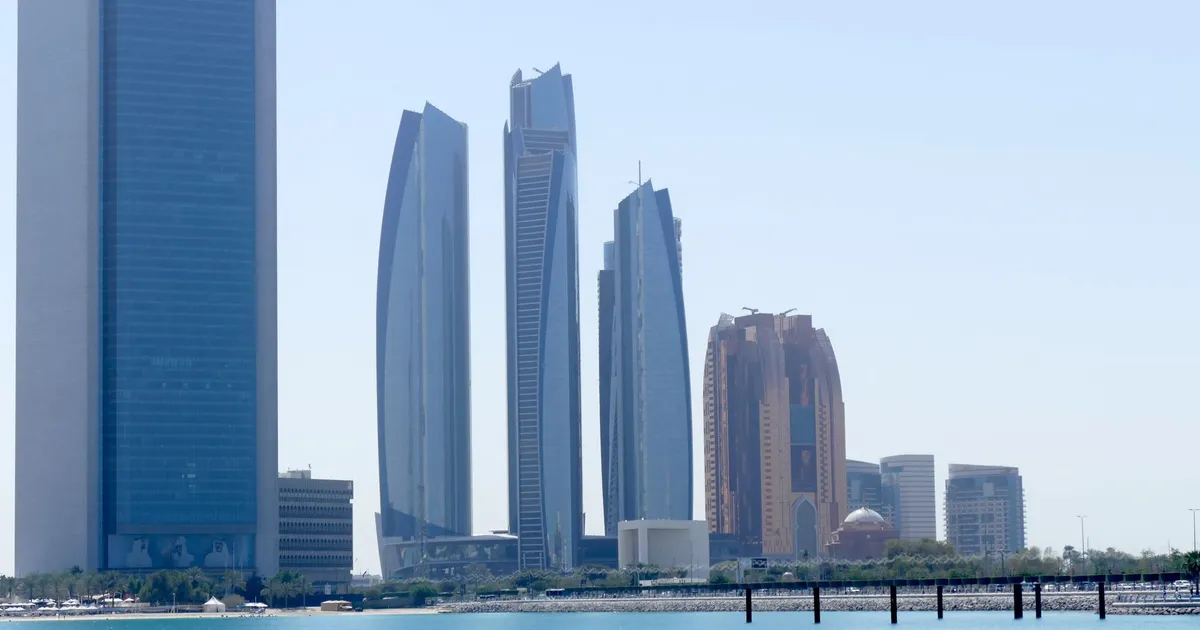
Morrison, the Wellington-founded manager behind Infratil, has opened an office in Abu Dhabi. On the surface it is an expansion announcement. It also shows where the capital for digital infrastructure, energy transition and supply chains now sits. That capital is less and less in Australasian savings pools and more and more in Gulf sovereign balance sheets.
Morrison has about US$35 billion in assets under management. The Post puts its total oversight at more than $60 billion in local terms. Abu Dhabi is its eighth global office. The firm has received in-principle approval from the Financial Services Regulatory Authority for a category 4 arranging and advising licence. Partner Vincent Gerritsen has moved to the emirate to lead Middle East growth while keeping his role as co-head of the Morrison Value Add fund.
Follow the sovereign money
The logic is simple. UAE state investors collectively manage roughly US$2.9 trillion, the largest concentration of sovereign wealth in the region. Major Emirati funds typically allocate up to 15% of portfolios to infrastructure. Even a tiny slice of that pool is bigger than anything New Zealand’s domestic capital markets can offer a manager of Morrison’s scale.
About 60% of Morrison’s portfolio is already unlisted pension and sovereign wealth fund capital, according to The Post. The remaining 40% sits within Infratil. In other words, this is a firm whose business model already depends on institutional money from offshore. Abu Dhabi is the next logical address.
Chief executive Paul Newfield is not dressing it up. He told The National that “the UAE is such a global centre, particularly for infrastructure investing”. He also said Morrison’s focus on digital infrastructure, energy transition and critical supply chains is “closely aligned with Abu Dhabi’s long-term economic priorities”. That alignment is real. The emirate’s Vision 2030 diversification push away from oil revenue needs exactly the asset classes Morrison specialises in.
A crowded doorway
Morrison is hardly alone. Assets under management in Abu Dhabi Global Market grew 54% year on year in the first half of 2026. The number of fund and asset managers rose 23% to 190, and the FSRA issued 50 in-principle approvals in the same six months. New Mountain Capital and Eurazeo are among the names that have set up in ADGM alongside it.
That matters. Being in the room is now the price of entry, not a differentiator. A manager that stays away from the Gulf in 2026 is effectively telling sovereign investors it doesn’t want their money.
The move also follows a clear pattern. In July, Japan’s Sumitomo Mitsui Trust Bank agreed to take a 15% stake in Morrison. It plans to put USD 500 million directly into Morrison-managed funds and has a joint target of USD 1.5 billion in incremental AUM. Japanese bank equity in July, a Gulf licence in November. Morrison is systematically widening its investor base, and it is doing so from a position of strength.
The deals are harder than the money
None of this means Gulf capital is free money waiting to be collected. ION Analytics research found infrastructure funds completed just 36 deals across the GCC in a decade. That is about 14% of regional deal activity, compared with roughly 43% in Europe. Gulf deals are big but scarce. James Varela, head of Middle East and North Africa at Rede Partners, said there is “still a shortage of institutional-quality, appropriately structured, repeatable deal flow” at the scale big investors need.
Geopolitics adds another layer of cost. Jahangir Aka of Aka & Associates told Infrastructure Investor that for 30-year Gulf bets, “you’re either going to have to make more money to underwrite the same deal, or you’re going to need more comfort and guarantees.” The same analysis points to inflated valuations and a stubbornly high cost of capital.
Morrison appears to understand this. Newfield said the firm is “a very long-term investor” that expects to spend a lot of time building relationships in any new region. That is the right posture. The prize is less Gulf assets than Gulf partners who will co-invest in Morrison’s strategies elsewhere. Its recent record includes a €3 billion data centre joint venture with Orange in France.
Why Wellington should care
For New Zealand business, the lesson is uncomfortable but useful. The capital that will fund the next generation of data centres, renewables and logistics assets, including those connected to Infratil, is being raised globally. Domestic savings, KiwiSaver included, are a rounding error against the pools now in play. Firms that want serious infrastructure capital have to go where it sits, and policymakers who want that capital deployed here have to make New Zealand assets competitive against everything else on a sovereign fund’s desk.
Morrison describes the UAE as a hub “at the intersection of global capital, trade and investment flows”. The test now is whether the Abu Dhabi licence turns into committed sovereign capital in Morrison funds over the next two to three years. If it does, a firm still headquartered in Wellington will have shown that a small market can produce a manager able to compete for some of the world’s largest capital pools.
Sources
- RNZ: Wellington-founded Morrison opens office in Abu Dhabi (2026-11-20)
- BusinessDesk: Infratil manager Morrison opens Abu Dhabi office in global expansion (2026-11-19)
- The Post: Wellington-born global powerhouse Morrison sets up shop in the Middle East (2026-11-19)
- The National: Global investor Morrison seeks UAE partners for renewables and data centres (2026-11-19)
- Economy Middle East: Abu Dhabi’s ADGM attracts $35 billion global infrastructure investment manager (2026-11-19)
- Sumitomo Mitsui Trust Bank: Notice regarding Investment in Morrison and Equity-Method Affiliation (2026-07-07)
- Infrastructure Investor: Testing convictions – The new Gulf risk premium (2026-11-03)
- ION Analytics: Why infra funds are struggling to find GCC opportunities (2026-07-22)
Join the discussion
Add useful context, ask a good question, or challenge an idea — keep it specific and respectful.