

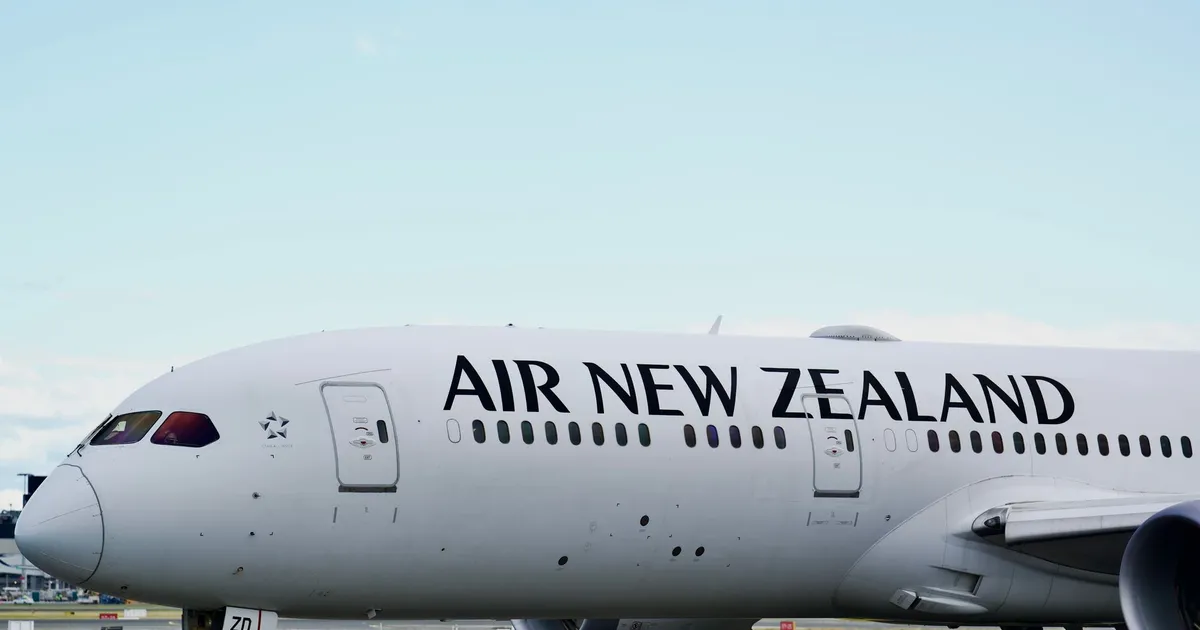
Domestic airfares booked in September were 5.1% higher than a year earlier, and international fares jumped 12.3%. The Christmas rush has not even properly started. The official explanation is fuel, and that is true as far as it goes. But Air New Zealand’s own traffic numbers tell a sharper story. The airline is cutting seats roughly in line with falling demand, keeping planes full and letting price do the rest.
That is not a scandal. It is what any business with dominant market share and a cost shock would do. But employers, regional operators and tourism firms should understand what they are actually paying for.
Fuel opened the door
No one disputes the cost shock. Economist Benje Patterson puts the rise down to the fuel crisis and expects domestic travellers to stay cautious given high living costs and a soft labour market.
What matters more is how the airline responded. Its June-year result, reported by RNZ in August, showed passenger numbers down 2% as jet fuel spiked on the Middle East conflict. Domestic available seat kilometres fell 3.6% even as group capacity rose 1.3% on international growth, and revenue per available seat kilometre climbed 2.2%. Read plainly, Air NZ shrank the part of the network where it faces almost no competition, grew where margins are better, and earned more from every seat it flew.
Full planes are the strategy
The September numbers confirm the pattern. Air NZ’s monthly traffic update to the NZX shows domestic passengers down 7% and domestic seat capacity also down 7%, leaving the load factor at a healthy 86%. Trunk routes carried 7% fewer passengers on 6% less capacity, an 87% load factor. Regional routes fell 9% on both measures, still running 83% full.
This is the mechanism mainstream coverage is missing. When an airline cuts capacity in lockstep with demand, there is never a glut of empty seats to discount. Fares stay high, and the dynamic pricing model does the rest. In 2025, Air NZ’s own fact sheet explained that fares are released roughly 12 months ahead and climb through price tiers as seats sell. Fewer seats means buyers hit the expensive tiers sooner.
Same trips, a fifth more per ticket
The clearest proof that demand can bear it comes from spending data. Analysis by Justin Lester of Dot Loves Data found total airline spend up 15.92% on 2025 and 16.54% on 2024, while booking transactions were essentially flat against 2024, up just 0.36%. Average spend per transaction is up 22.32% on last year.
Over two years, New Zealanders and their employers are booking roughly the same number of flights and paying close to a fifth more for each. That is textbook inelastic demand. For many businesses, the Auckland-Christchurch trip to see a client or fix a site problem is not optional.
A market built for this outcome
None of this is new. In 2024, ACI Asia-Pacific found Air NZ held 86% of domestic seats with no economic regulation, and said the market showed “how lucrative constrained capacity can be for airlines”. In 2025, the airports group reported NZ domestic fares had risen 63% in six years, the fastest rise in the world. Air NZ said at the time its own fares were up 35%, less than its cost base, and called the environment “extremely challenging”.
Both things can be true. Costs are real, and so is pricing power. The industry’s own forecasts also look shaky. A 2024 BIS Oxford Economics study commissioned by the airlines predicted domestic demand would pass pre-Covid levels by FY25 and grow 5.5% a year, while airport charges were proposed to more than double to $15.50 by FY32. Demand is now shrinking, and the cost stack is still rising.
Who wears it
The pain falls unevenly. Regional businesses face the deepest capacity cuts and the fewest alternatives. Tourism operators outside the international hotspots lose domestic visitors priced off the route. Queenstown is the exception, up 7% overall on 19% international growth, a reminder that the airline is chasing yield offshore, not volume at home.
For employers the practical response is unglamorous. Book Christmas and first-quarter travel now, consolidate trips, and treat the flight as the expensive line item it has become.
Fuel will fall faster than fares
The real risk is what happens when jet fuel eases. With capacity trimmed and load factors in the high 80s, there is little competitive pressure to hand savings back quickly. The answer is not price controls. It is the kind of transparent fare and market monitoring Australia already runs, cheap to operate and enough to show whether falling costs reach customers. Until someone is watching, expect fares to come down by the stairs long after fuel takes the lift.
Sources
- RNZ: Why you’ll be paying more for flights this Christmas (2026-10-25)
- Kilwhiss News: Fuel costs set to push New Zealand Christmas airfares higher, economist warns (2026-10-24)
- RNZ: Air NZ passenger numbers fall as jet fuel price rises hit (2026-08-04)
- NZX Announcement #481762: September 2026 monthly traffic update (2026-10-15)
- Air New Zealand Explains: Domestic Airfares (fact sheet) (2025-03)
- NZ Herald: Airports group says NZ had world’s highest domestic airfare increase since 2019 (2025-10-15)
- Comcom/BIS Oxford Economics: Flight Price Elasticity Study, Domestic Markets (2024-05-21)
- ACI Asia-Pacific: New Zealand’s domestic airline market the least competitive in the world (2024-02-21)
Join the discussion
Add useful context, ask a good question, or challenge an idea — keep it specific and respectful.