

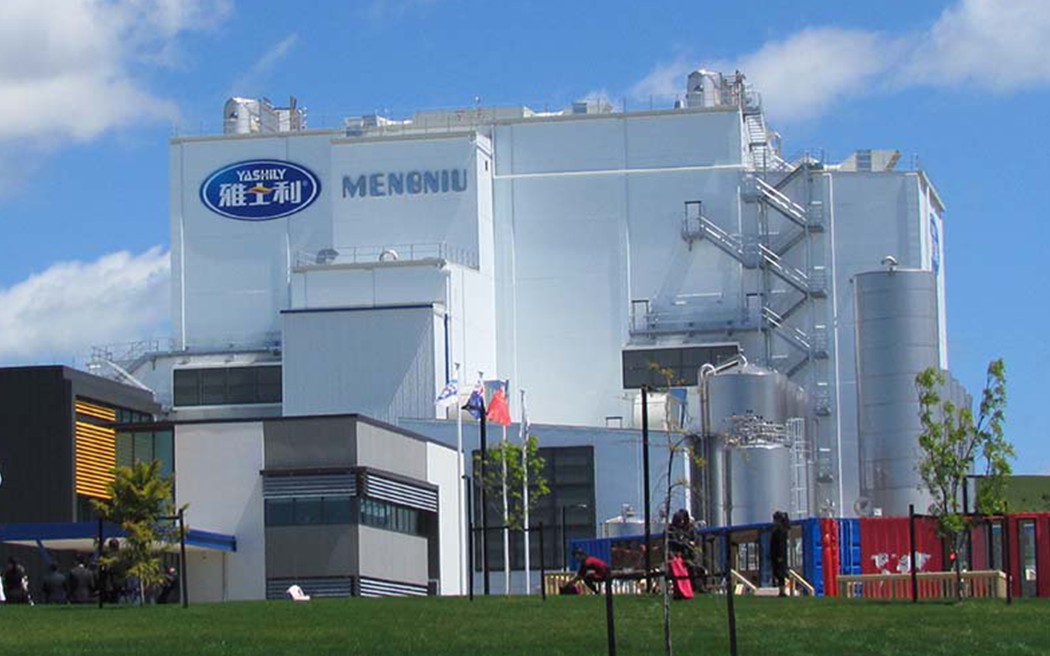
A2 Milk has cleared a major regulatory hurdle in China, securing approval to manufacture infant formula at its Pōkeno plant.
The company also confirmed it will press ahead with the $300 million special dividend announced earlier, a direct return to shareholders who backed the strategy.
A2 Milk bought the Pōkeno plant from China’s state-linked Yashili late last year, a deliberate shift from simply marketing products to actually manufacturing them on its own terms. That decision has now paid off: the company has received approval from China’s State Administration for Market Regulation to transition the two China-label infant formula registrations tied to the Pōkeno facility over to the a2 brand.
“This represents the final step pursuant to the terms of a2 Milk’s acquisition of the a2 Pōkeno facility for the relevant registrations to be utilised under the a2 brand,” the company said. Markets rewarded the news immediately — A2 Milk shares jumped 89c, or 11%, to $9.00.
The company expects to launch the new products later this calendar year, with no change to the timing or financial benefits it outlined when the acquisition was first announced.
Managing director and chief executive David Bortolussi called the approval an important milestone in the company’s China growth strategy and its broader supply chain transformation. “It supports long-term growth in our core infant formula business through market access and innovation, accelerates the development of advanced nutritional manufacturing capability, and captures attractive financial returns through incremental brand contribution and vertical margin capture,” he said.
“As indicated at the time of the a2 Pōkeno acquisition and following receipt of the required regulatory approvals in connection with the company’s China label registrations, it is expected that the board will convene soon with the intent to declare a $300m special dividend that will be fully franked and unimputed.”
Contrast that with the company’s prior arrangement. From the outset, a2 Milk relied entirely on Synlait Milk as its sole formula supplier, manufacturing out of Synlait’s Dunsandel plant in Canterbury – a single point of dependency that has now visibly cost shareholders. Synlait revealed early this month that between January 1 and April 30 it racked up a net loss of $12 million, with the bulk of the damage concentrated in January 2026 alone, the company citing headwinds beyond its control.
The cracks were already showing in April, when a2 Milk disclosed a significant backlog of unfilled purchase orders from Synlait – a backlog made worse by Synlait’s reduced capacity after offloading its North Island assets.
Synlait’s main plant in Dunsandel still makes and holds licences for the a2 Milk product destined for China. But it’s worth noting who actually controls that operation: Synlait underwent a major recapitalisation in 2024 and is now majority-owned by China’s Bright Dairy, holding 65.25%, with a2 Milk retaining just 19.8%.
In other words, a2 Milk’s decision to build its own manufacturing base at Pōkeno isn’t just a corporate milestone; it’s a hedge against exactly the kind of supply chain dependency and foreign-controlled bottlenecks that have just cost the company money through Synlait.