

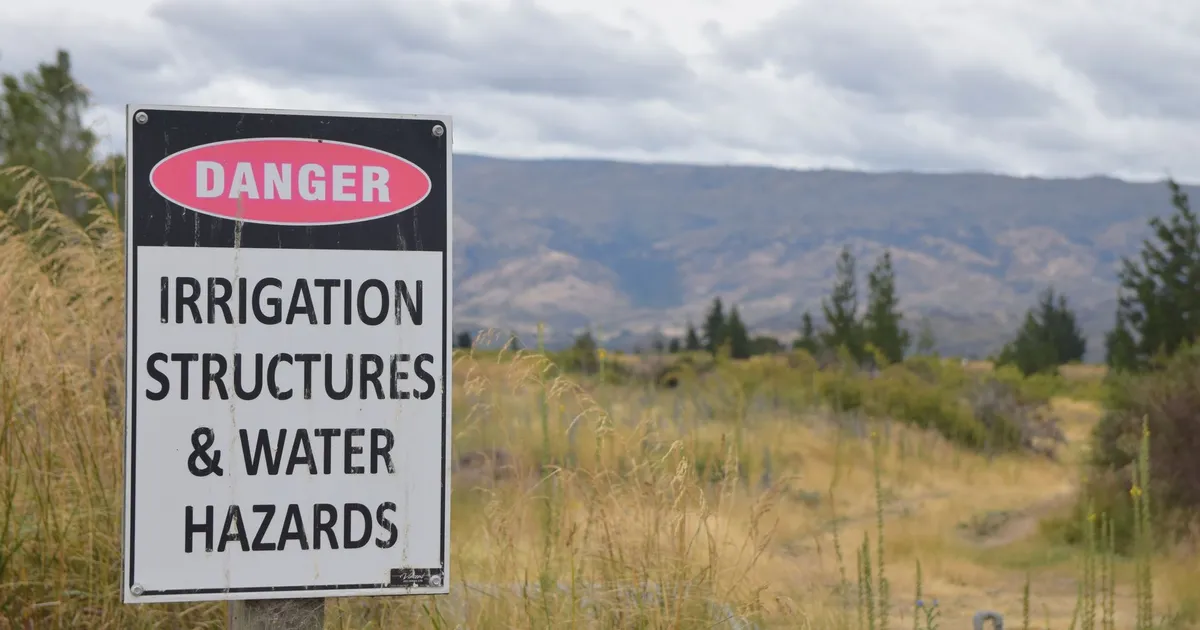
Santana Minerals has spent years proving there is gold at Bendigo-Ophir. It now has three weeks to prove the consent file will not kill it. A planner has recommended the proposed mine near Luggate be declined, ahead of a fast-track panel decision due on 29 October.
The recommendation is not final. The Expert Consenting Panel can still approve the project with conditions. But it is a sharp reminder of where the real risk in New Zealand mining sits. It is rarely the geology. It is the regulator.
The numbers were never the problem
In its June 2025 fast-track application, Santana’s subsidiary Matakanui Gold projected $5.8 billion in cumulative GDP over a 13.8-year mine life, $1.8 billion in government revenue through royalties, tax, PAYE and ACC, and around $533 million in capital investment. It forecast an average of 351 full-time jobs a year, peaking at 506, on an average salary of about $140,000, which the company said was 104% above the inland Otago average.
That was a big step up from the company’s 2024 scoping estimate, which pencilled in $250 million in initial capital and first gold in the December quarter of 2026. That date is now fantasy. Investors are paying for the delay before they have seen a single ounce.
Fast-track turned out to be slow-track
The Fast-track Approvals Act 2024 was sold as a one-stop shop, replacing a tangle of approvals under the RMA, Wildlife Act, Reserves Act, Crown Minerals Act and heritage legislation. The EPA’s own hearing record from April frames it as a way to reduce uncertainty, delay and complexity.
In practice, the clock kept stretching. In February 2026, panel convenor Jane Borthwick set 140 working days for the assessment, rejecting Santana’s hoped-for 60 days, itself double the 30 the company first floated. Her reasoning was procedural: Santana had not circulated its full application to interested parties before lodging. The Post reported at the time that even with approval, first gold would likely slip to late 2027 or 2028.
In 2025, then-Santana chairman Peter Cook called consenting an “extremely rigourous and difficult process” and blamed a shortage of fast-track consultants for slowing the project. Opponents were already signposting the line of attack. Environmental Defence Society’s Gary Taylor said in 2025 that Santana had “not done a proper cost-benefit analysis”, pointing to the Act’s provision allowing projects to be declined where adverse effects outweigh regional or national benefits.
That is the point. Fast-track did not remove the fight. It moved it into a single room and gave both sides a clear target.
A pattern across the gold belt
Bendigo-Ophir is not an outlier. In 2025, a Westcoast Mining alluvial operation at Kaimata stood down its workforce after a 17-month wait for resource consent, with the regional council conceding demand had outstripped staff capacity.
The same year, OceanaGold warned that failing to secure a Wildlife Act permit at Macraes would suspend over 700 direct staff and 200 contractors, after DOC declined it over lizard relocation. A June 2025 council planning report put Macraes’ wider Otago contribution at 354 jobs and $42.6 million a year in income through to 2029.
And in May, a planned gold mine on conservation land in Golden Bay was dead on arrival after NZPAM rejected its permit application under the Crown Minerals Act.
Four projects, four different regulatory choke points: council capacity, wildlife permits, Crown minerals tests, and now a fast-track planning recommendation. None of them failed for want of gold.
What capital allocators should take from this
The industry has been making this argument for a while. In February 2026, the New Zealand Minerals Council told Parliament’s Environment Committee that rigid environmental limits were “not a useful tool” for managing mining impacts and that a case-by-case approach would be preferable.
You do not have to want every mine approved to see the business problem. Investors can price geology, commodity cycles and construction risk. What they struggle to price is a process where the timeline triples and the outcome swings on a single planner’s report, even under a law designed to deliver certainty. That uncertainty gets charged back as a higher cost of capital, which means fewer projects make it to the starting line.
The panel may yet approve Bendigo-Ophir with conditions, and those conditions could be expensive. Either way, the 29 October decision will be read well beyond Luggate. If the government’s flagship consenting reform cannot give a clear, timely answer on a $533 million project with this level of documented benefit, every board weighing a New Zealand resource play will treat consent as the first risk to diligence, not the last.
Sources
- ODT: Planner says gold mine near Luggate should be declined (2026-10-05)
- Ministry for the Environment: Response to Fast-track Approval Application – Matakanui Gold Limited (2024-05-02)
- The Post: Fast-track panel to take its time on controversial Central Otago gold mine application (2026-02-04)
- RNZ: Santana Minerals close to lodging application for $4.4 billion Central Otago gold mine (2025-09-30)
- 1News: Goldmine shut down after 17-month wait for resource consent (2025-06-13)
- 1News: Hundreds of jobs at Otago gold mine in doubt over ‘business critical permit’ (2025-07-09)
- Otago Regional Council: Waitaki District Council Section 42A Report – Macraes Phase 4 (2025-06-09)
- RNZ: Gold mine on conservation land in Golden Bay denied permit (2026-05-20)
- NZ Minerals Council: Submission to the Environment Committee on the Planning Bill and Natural Environment Bill (2026-02)
Join the discussion
Add useful context, ask a good question, or challenge an idea — keep it specific and respectful.