

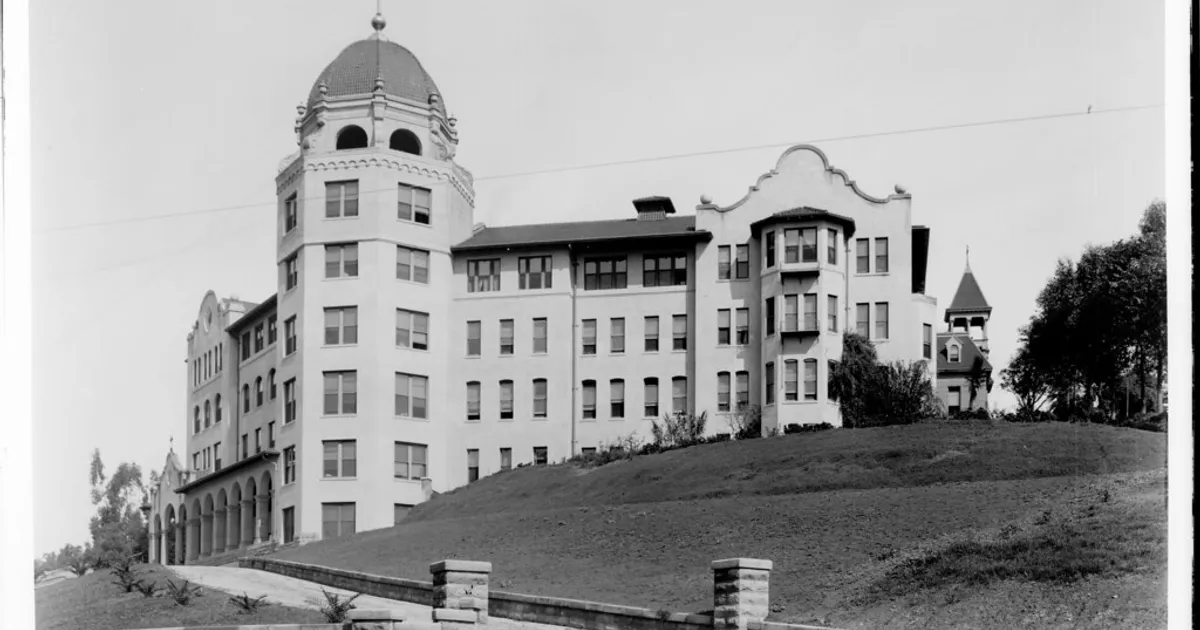
Southern Cross Health Trust wants to spend $150 million expanding its Brightside Hospital in Epsom. It has the money, the land and the demand. What it doesn’t yet have, roughly eight years after first proposing the project, is a finished consent. Parties in the Environment Court have until 30 November to agree final terms.
That is the real story for anyone who invests in New Zealand. The binding constraint on private health infrastructure here is not capital or patients. It is a planning framework that never imagined a hospital might need to grow.
A second building and a very long queue
The plan is a standalone three-level building on Gillies Ave, linked by airbridge to the existing hospital at 3 Brightside Rd. Southern Cross owns four adjoining sites and has already demolished a former boarding house at 149 Gillies Ave, which chief executive Chris White described as a fire risk. Mediation has locked in retention of basalt rock walls, protected trees and a street setback.
White says “the design and resource consent process is progressing, and an extended process of consultation with the Environment Court is concluding.” That is a diplomatic way of describing the better part of a decade.
The residents have a point, which is the problem
It would be easy to cast this as Nimbyism. Tony Randerson, president of the Eden Epsom Residential Protection Society and a retired Court of Appeal judge, rejects that framing, and he is persuasive. “Our approach was to do with the proper zoning. The Auckland Unitary Plan has provided for hospitals in a number of zones, but not residential zones like this,” he told the Herald. He says there has been considerable progress in the past two months, but negotiations are not done.
Take him at his word and the conclusion is worse, not better. If reasonable residents and a reasonable operator need years of litigation to expand an existing hospital on its own street, the rules are the failure. Brightside has operated in Epsom for decades. A zoning plan that treats its growth as an anomaly is planning for the city Auckland used to be.
Meanwhile the public system is paying for stopgaps
The pressure on capacity is not theoretical. Emergency department presentations rose 5.3% in 2025 to 1,467,543, and acute bed days now account for 76.1% of all hospital bed days, up from 72.7% in 2020. The Ministry of Health’s own report links that shift to pressure that is constraining elective treatment.
The Crown’s response has been to rent private capacity and buy temporary beds. Health NZ paid private hospitals $229.6 million in FY24/25 for outsourced electives, according to an Official Information Act response released this year. In March 2026, the government reported elective performance had climbed to 64.5% treated within four months, up from 59.2% a year earlier, with private partners doing much of the lifting.
On the public side, a December 2025 business case set out five 28-bed modular interim units at a whole-of-life capital cost of $914.9 million over 20 years. A March 2026 Cabinet paper showed Health NZ planning $2.869 billion of capital spending for 2025/26, an 85% jump on the previous year.
Set those numbers side by side. The state is spending close to a billion dollars on temporary wards because permanent capacity takes too long. A private operator offering permanent theatres and beds at no cost to taxpayers is stuck behind a zoning line.
Investors are watching the signal
The sector has been explicit about what it needs. In January 2026, Chris Roberts, chief executive of the NZ Private Surgical Hospitals Association, argued for multi-year contracts because members cannot work “flat out” and then be told to stop for six months. In March 2026, Westpac industry economist Paul Clark said the outlook for private health was positive, and the bank’s report urged government to encourage private investment in modern clinical facilities.
Contract certainty matters. So does consenting certainty. A board weighing a nine-figure hospital build will price in the Brightside timeline, and some will decide the risk is not worth it. Southern Cross is also fighting on other fronts, with nib warning the Commerce Commission that a gynaecologists’ collective bargaining bid against it would leave New Zealanders “paying more for healthcare.” The dominant private operator spends a lot of time with lawyers.
Fix the map, not the next case
If the parties settle by 30 November, Brightside will finally move to construction. Good. But a settlement in one Epsom street does nothing for the next hospital that needs to grow in a residential zone, and most established hospitals sit in exactly those neighbourhoods.
Auckland Council and the government’s resource management reforms should treat existing hospital sites as infrastructure, with a clear, pre-agreed path for expansion and sensible protections for neighbours baked into the rules rather than negotiated case by case. Health capacity is a national constraint. It should not be rationed by a zoning map drawn before anyone asked where the operating theatres would go.
Sources
- NZ Herald: $150m expansion of Epsom’s Southern Cross Brightside: Environment Court case concluding (2026-10-04)
- Ministry of Health: Health and Independence Report 2025 (2026-08)
- FYI: Health NZ further response to OIA request HNZ00090795 (2026-04)
- DPMC: Factsheet – Target 2 – Shorter wait times for elective treatment – March 2026 (2026-03)
- Health NZ: Appendix 1 – AtD Interim Inpatient Bed Capacity Programme (2025-12-03)
- Cabinet paper: Health NZ’s progress towards financial stability and improving delivery (2026-03)
- NZ Herald: Elective surgery waits – how private hospitals plan to cut backlogs (2026-01-27)
- NZPSHA: Westpac Economics – Healthcare in New Zealand, the changing role of the private sector (2026-03-10)
- Commerce Commission: nib submission on NZ Gynaecology Association application (2026-06-19)
Join the discussion
Add useful context, ask a good question, or challenge an idea — keep it specific and respectful.