

From 1 October, Auckland Council is the region’s road controlling authority, ending Auckland Transport’s 16-year hold on the job. AT keeps its brand but shrinks to a smaller council-controlled organisation focused solely on running public transport. Roading, planning, project delivery and maintenance all move in-house.
The new split matters more than the rebrand. Councillors on the Governing Body now control arterial roads. The 21 local boards take local and collector roads, parking, speed limits, traffic controls, cycleways and event road closures. That is 22 elected bodies running one network, and the network happens to be the country’s busiest freight corridor.
The accountability gain is real. Whether it comes at the cost of coordination depends on decisions councillors have not made yet.
Voters finally have someone to blame
AT was created in 2010, during the Super City amalgamation, to keep day-to-day transport calls away from politics. The flaw was that council still controlled the funding and could direct AT on policy, while AT made the unpopular calls on cycleways, raised crossings and parking. Elected members absorbed the backlash for decisions they didn’t directly make. That arrangement satisfied nobody.
Transport Minister Chris Bishop says Aucklanders will now have “a clearer line of sight” between decisions and the people making them, and can hold them to account at the ballot box. Mayor Wayne Brown puts it more bluntly: “This is about accountability. It is what I was elected to do.”
From a centre-right perspective, that principle is sound. An unelected agency spending ratepayer money, with nobody answerable at an election, was always hard to defend.
Wilson has written his own scorecard
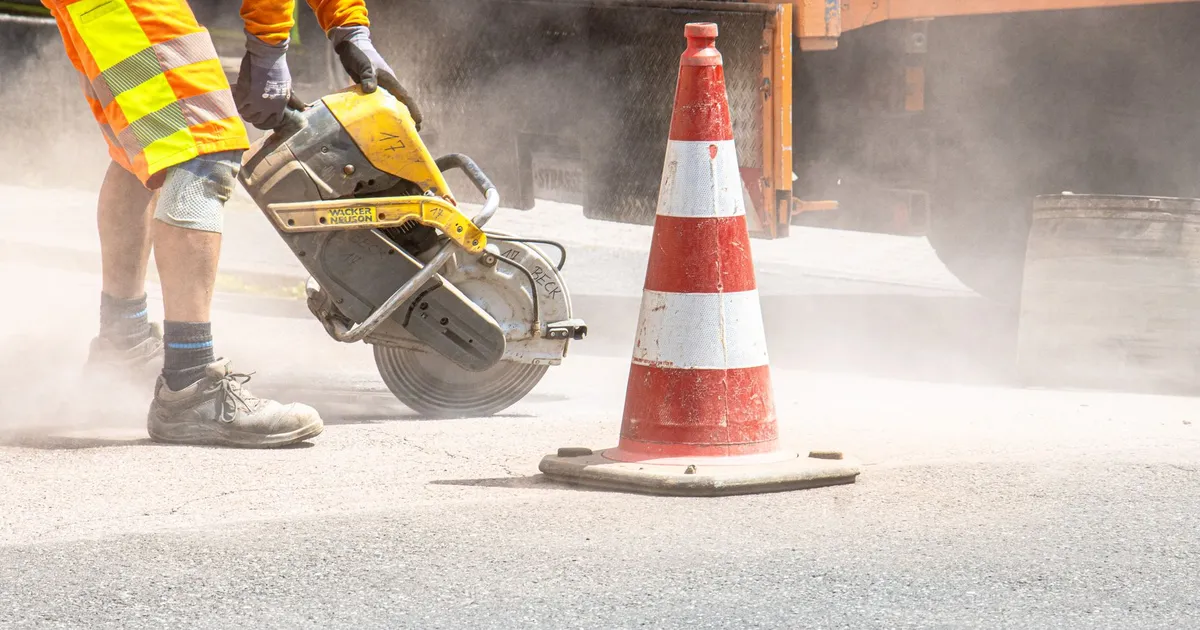
Council chief executive Phil Wilson has given business the clearest measures of success. He wants to “reduce frustration caused by too many cones, too much disruption and projects taking too long”, which means rethinking traffic management, speeding up corridor work and being “more disciplined about what is actually required”.
He also sets out the stakes plainly: “Done well, it unlocks economic opportunity. Done poorly, it wastes time, money and trust.” Every contractor, retailer and logistics manager who has lost a morning to a coned-off lane with nobody working in it should hold him to that.
Freight was already an afterthought
The reform does not solve the freight industry’s main complaint, and it could make it worse. In September 2025, National Road Carriers Association chief executive Justin Tighe-Umbers warned that AT, despite costing $1.5 billion a year, had “very limited expertise in freight”. He said the mayor and councillors would need to be “very clear eyed” about their policy goals.
The volumes are large. Road carried roughly 75% of domestic freight tonne-kilometres in 2023, and heavy vehicle traffic nationally averaged 579,000 movements a day in the year to September 2025, up 55,000 on the year before.
Trucks move from arterials onto local roads to reach the warehouse, the building site and the shop. The arterial is a councillor’s decision. The last kilometre is a local board’s. A board that cuts speed limits, removes loading zones or narrows a collector road to suit residents is making a freight decision, whether or not it thinks of it that way.
Twenty-two bodies, one network
The academic critique deserves a hearing. In October 2025, Massey University’s Professor Imran Muhammad and Dr Fawad Ahmad argued the change risked Auckland slipping “back into the fragmented and politicised arrangements” that amalgamation was meant to end. Their proposed fix was decisions that are “politically supported but professionally informed”, applied across a network of more than 7,500 km of roads.
They have a point, but it cuts both ways. AT’s record on value for money was hardly convincing. The 2024 Government Policy Statement found public transport funding had risen 71% since 2018/19 while patronage fell 23%. Arm’s-length governance did not protect ratepayers from poor returns.
What business should watch
The handover finished a month early with little visible disruption, which is a competent start. The harder tests come next. Watch three things.
First, whether the new Auckland Regional Transport Committee treats freight as a design priority in its 30-year plan, or leaves it to be negotiated later. Second, whether the 21 local boards apply consistent rules on speed, parking and loading, or whether operators end up dealing with a different regime in every suburb. Third, whether Wilson’s promise of fewer cones and faster corridor work shows up in actual project timelines within the next year.
Auckland has handed transport back to people who can be voted out. That improves accountability, but only if voters, and the businesses that depend on moving goods through the city, check the results against Wilson’s own scorecard.
Sources
- 1News: AT no longer runs Auckland’s roads from today – so who does? (2026-09-30)
- Scoop: New era begins for Auckland’s transport system (2026-09-30)
- National Party: New era begins for Auckland’s transport system (2026-09-30)
- NZ Herald: As council CEO, I know the public have qualms with Auckland Transport. This is a new era – Phil Wilson (2026-09-30)
- Scoop: AT reforms must make freight a priority says NRC (2025-09-05)
- Ministry of Transport: Long-term Insights Briefing 2025, Moving people in 2055 (2025)
- Ministry of Transport: Transport Network Performance Report January 2026 (2026-01)
- Massey University: Opinion, Auckland Transport has delivered, but politics… (2025-10-10)
- Ministry of Transport: Government Policy Statement on land transport 2024/25-2033/34 (2024-07-01)
Join the discussion
Add useful context, ask a good question, or challenge an idea — keep it specific and respectful.