

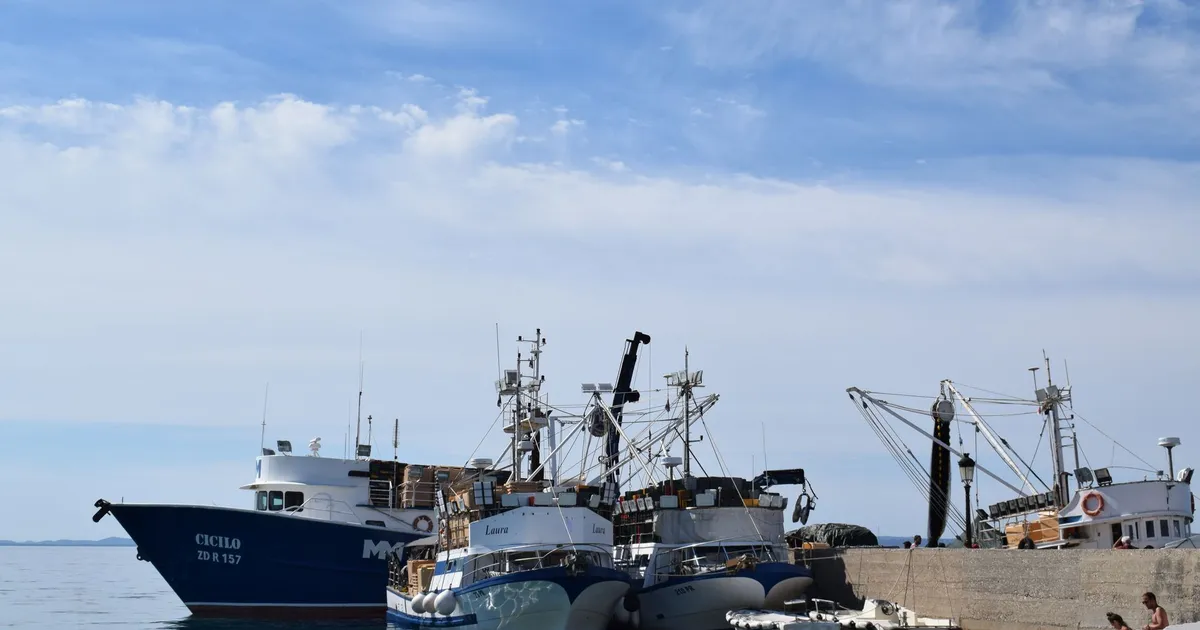
Oceans and Fisheries Minister Shane Jones has done something ministers rarely do when announcing a sustainability cut. He has admitted it will cause economic harm. From 1 October, the commercial catch limit for elephant fish off Canterbury and Otago (ELE 3) falls from 1,150 tonnes to 370 tonnes, a 68% reduction, with Southland’s ELE 5 stock also cut.
The honesty is welcome. The problem is that the system produced a detailed dollar estimate for the small fishery and none for the big one. That imbalance deserves attention, even if the cut itself is probably unavoidable.
The science is hard to argue with
This is not a marginal call. The Fisheries New Zealand review found ELE 3 was very unlikely to be at its target biomass and about as likely as not to be below the soft limit. Fishing mortality has run at 2.4 times the overfishing threshold since 2018, as boats increasingly targeted summer spawning aggregations. A 2024 trawl survey found pre-recruit numbers negligible and total biomass at the lowest point in the entire time series. In Southland, catch per unit of effort has fallen to 21% of its 2008-11 peak.
When the youngest fish have effectively vanished and the spawners are the ones being caught, the stock has no buffer. Business owners who depend on this resource have more to lose from a collapse than from a cut.
Industry blinked first
The most under-reported part of the story is that the sector did not wait to be told. ELE 3 quota holders had already voluntarily shelved part of their catch entitlement before the minister acted. That undercuts any easy narrative of Wellington overreach against a resistant industry.
Seafood New Zealand chief executive Lisa Futschek said in June that the review showed “the fisheries management system working as it should”. She was also blunt about the cost. “The impact this proposed reduction will have on the livelihoods of many in the industry should not be understated,” she said, adding that “catch limits are just one tool in our toolbox.”
That second line matters. A catch limit is the easiest lever for a regulator to pull and the most expensive one for an operator to absorb.
One fishery got a price tag, the other got a shrug
Fisheries NZ’s own paper puts ELE 3’s 2024/25 landed value at $2.12 million, against just $256,000 for ELE 5. Yet only the smaller ELE 5 received explicit modelling, with revenue reductions of $73,000 or $96,000 depending on the option chosen.
No equivalent figure has been published for ELE 3, which is roughly eight times more valuable. Applying the 68% cut to its $2.12 million landed value implies a loss in the order of $1.4 million a year at the wharf, before any knock-on to processors, crew and freight. That is B2B News’s calculation, not an official number, and the fact that we have to do it is the point.
It is not a huge sum nationally. For a handful of South Island inshore operators and the processors that rely on their volume, it is the difference between a viable season and a marginal one. Ministers who concede economic impact should be able to say how much.
The cut may not be the whole fix
Two caveats complicate the picture. First, officials have linked part of Southland’s decline to fish shifting towards Foveaux Strait, possibly because of sea temperature change. If the environment is doing some of the damage, fishers are bearing the full cost of a problem they did not fully cause, and a quota cut alone may not rebuild the stock.
Second, the national picture was already loose. Official statistics show a pre-decision elephant fish TACC of 1,483,700kg against reported commercial catch of 768,519kg. Headline percentage cuts overstate how much behaviour actually has to change in some areas.
Operators have seen this movie before
In 2007-08 and 2008-09, ELE 5’s TACC was cut 70%, then lifted back to 140 tonnes the following year and 170 tonnes by 2012-13 once catch rates improved. Landings then slid again. That cycle of cut, relax, repeat is exactly what the current numbers are the product of.
If the lesson is learned, the government will pair this cut with a clear rebuild plan, published economic modelling for ELE 3, and firm rules on fishing spawning aggregations, so quota owners and processors can plan around a known timeline rather than betting on a quick reversal. If it is not, the industry will treat 2026 as a bad season to wait out, and the fishery will be back here in another decade with even less to protect.
Sources
- Otago Daily Times: Elephant fish catch takes plunge as minister admits there will be economic impact (2026-09-29)
- Fisheries New Zealand: Review of sustainability measures for elephant fish (ELE 3&5) for 2026/27 (2026-06-24)
- RNZ: Minister announces elephant fish catch cuts
- Newsroom: Elephant fish decline linked to fishing practices and environmental changes
- Fisheries New Zealand: Elephant fish (ELE) catch statistics (2026)
- Fisheries Assessment Plenary May 2026 Volume 1: Elephantfish (ELE) (2026-05)
Join the discussion
Add useful context, ask a good question, or challenge an idea — keep it specific and respectful.