

A sector that barely registers
New Zealand exports roughly $64 billion worth of food and fibre a year. Aquaculture’s share of that is less than 1.2%, or around $750 million. For a country with the fourth-largest exclusive economic zone in the world, that is an embarrassing number.
MPI Director-General Ray Smith put it plainly at a closed-door meeting at MPI on 22 September 2026: “We’re big in dairy, we’re big in sheep and beef, horticulture now is bigger than forestry … the aquaculture sector in New Zealand, if you think: we’re surrounded by water, but we barely use it.”
The meeting brought together Fisheries Minister Shane Jones, iwi representatives and chief executives from Sealord, NZ King Salmon and Akaroa King Salmon. The topic: whether New Zealand needs a bespoke aquaculture law purpose-built for open ocean farming, timed to land as the RMA replacement bills pass their final readings this week.
The number that reframes the ambition
The aspiration floated in the room was 450,000 tonnes of exports a year, aimed at the premium market. Current salmon production is about 15,000 tonnes a year. That target implies a roughly 30-fold increase in salmon alone, dwarfing the existing government target of $3 billion in annual revenue by 2035 that was itself called ambitious when set.
Jones was blunt on what it would take. “It will not be hundreds of millions of dollars for what we are talking about, it will be billions,” he said. And billions do not move without certainty.
Why consents are the whole game
The bottleneck is not water, or science, or appetite. It is investor confidence. Jones framed it directly: “No one is going to spend their money unless they’re confident that they’re going to secure the necessary statutory consents, which in itself is impacted by social licence.”
MPI’s Chris Kerr listed what a new statute would need to cover: national standards, proactive spatial planning, development zoning, allocation and licensing, compliance monitoring, onshore infrastructure support and Treaty settlement delivery. His framing was pointed. “This is about building an industry, not administering or regulating the system.”
The government has already moved. In 2024 Jones extended existing coastal permits by 20 years, guaranteeing tenure to at least 2044, something he described as “an extraordinarily unusual thing for a government to do”. The Planning Bill and Natural Environment Bill will exempt offshore projects beyond three nautical miles from some environmental assessments. Even so, the sector and the minister agree it is not enough.
What is already in the water
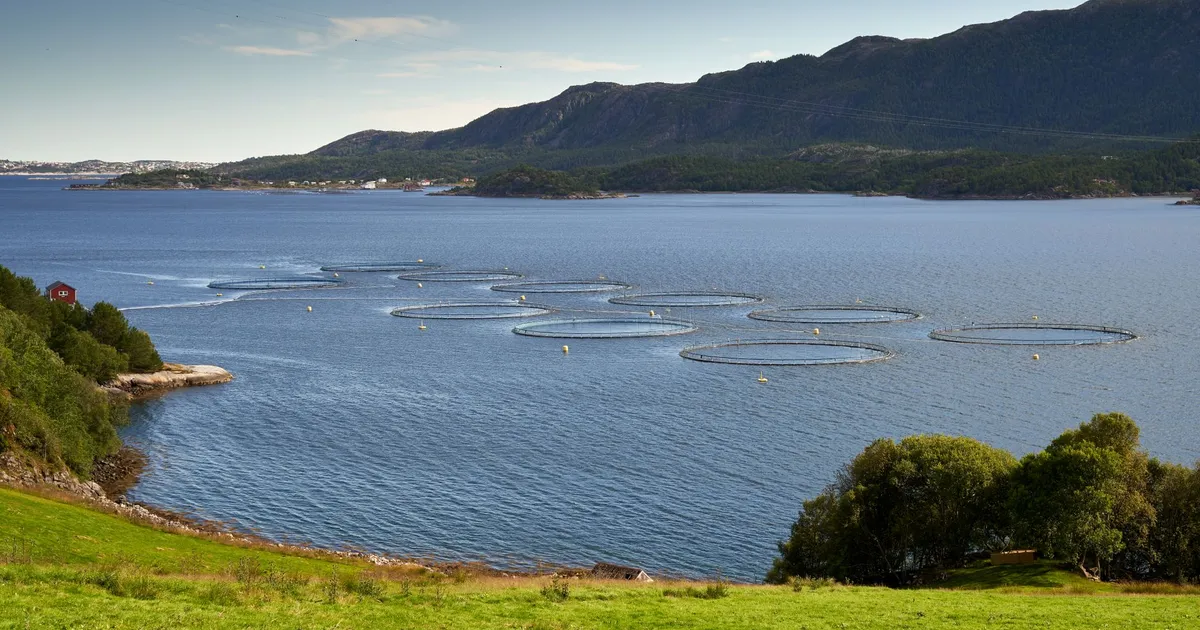
Three projects show the frontier. NZ King Salmon’s Blue Endeavour, the world’s first open-ocean king salmon farm, sits in Cook Strait; the listed company sold 6,582 tonnes in FY25 and booked $210.99 million in revenue, both up double digits. Ngai Tahu Seafood’s Hananui project became the 31st fast-track approval and the first aquaculture project through that pathway in April 2026, targeting 14,400 tonnes a year and 415 to 480 Southland jobs. Hananui was lodged in November 2025 and approved in about five months, against years under the old regime.
The social licence catch
Here is the tension the minister keeps circling. Hananui was previously rejected for ecological harm before fast-track revived it. The approving panel acknowledged an unavoidable risk of sea life entanglement and unknown impacts from discharging feed and antibiotics, but found economic benefits of $498 million to $2 billion over 25 years sufficient to proceed. A bespoke law that is only faster, not more credible on environmental standards, will keep tripping over exactly this problem.
The demand tailwind
MPI’s Kerr made the case for confidence. “There will globally be a structural deficit in supply of protein” as the next 25 years add two billion mouths, he said. He went further, arguing GLP-1 weight-loss drugs mean “there will be a surge in demand for that premium protein, nutrient-dense food” as users eat less but prioritise quality. Industry sources treated that as upside, not the core thesis. Near term, MPI’s December 2025 outlook forecast seafood revenue dipping 3% to $2.2 billion before recovering.
Norway, Iceland and Canada built large industries on dedicated frameworks and proactive spatial planning. New Zealand has the coastline, the capital interest and now the political will. The question is whether it can write a law that gives investors certainty without regulating away the social licence the whole thing rests on. Get that balance wrong and the 30-fold ambition stays a slide in a meeting room.
Sources
- Bespoke aquaculture law floated as weight loss drugs boost farmed fish demand (2026-09-22)
- Minister Shane Jones wants bespoke aquaculture legislation to boost sector amid ‘anxiety’ over land farming limits (2026-09-21)
- New Zealand to ease environmental consent requirements to boost offshore aquaculture (2026-08-26)
- How new fast-track has revived colossal salmon farm once rejected for ecological harm (2026-08-19)
- Open ocean salmon farm Fast-tracked (2026-04)
- New Zealand King Salmon Annual Report FY25 (2025-03)
- Situation and Outlook for Primary Industries (SOPI) – December 2025 (2025-12)
Join the discussion
Add useful context, ask a good question, or challenge an idea — keep it specific and respectful.