

A death that a working system would have stopped
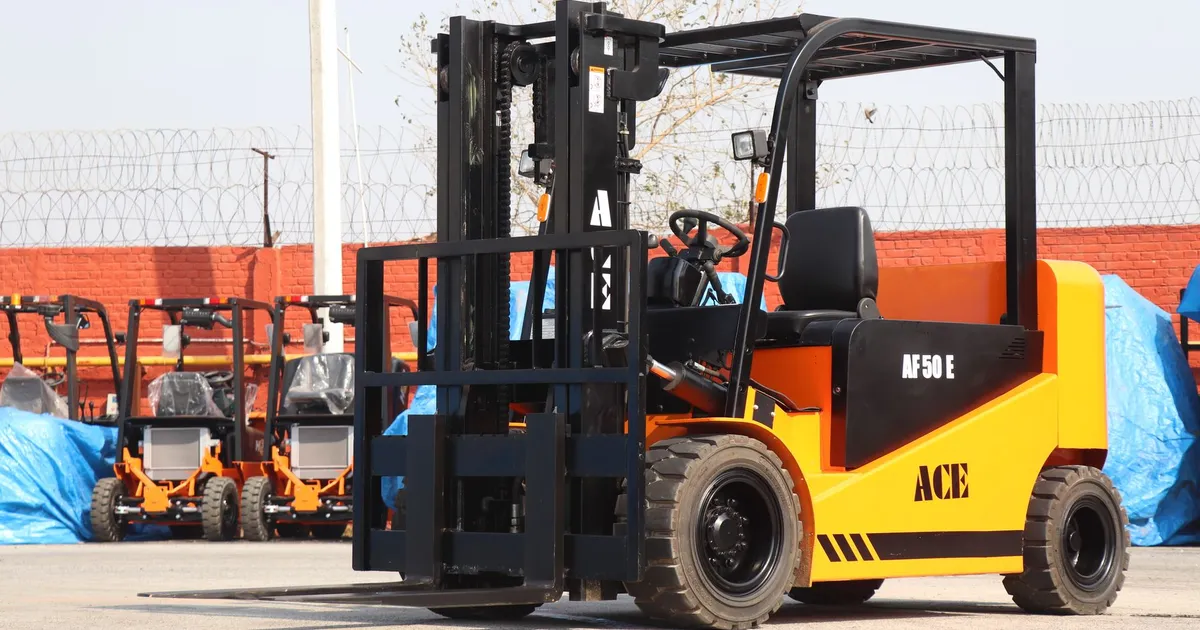
On 28 December 2024, a worker at an Auckland aluminium company’s North Shore warehouse was standing on a raised scissor lift, sliding beams into racking above head height. A colleague on a forklift had lifted the beams into position. Then a third worker, who did not hold a forklift certificate and was not authorised by the company to operate one, drove another forklift past to fetch a rubbish bin. Its mast struck the raised beams, which swung and hit the scissor lift guardrails. The worker fell approximately four metres onto concrete, suffered head and spinal injuries, and died days later in hospital.
A fourth worker saw it coming and shouted a warning. The noise of the forklifts drowned him out. CCTV captured the whole thing.
The company pleaded guilty at North Shore District Court in September 2026. Sentencing is set for February 2027, and the charge under the Health and Safety at Work Act 2015 carries a maximum fine of $1.5 million before any reparations to the family.
Not one failure, a system that was not a system
WorkSafe’s summary of facts does not name a single cause. It describes an operation running on habit. There was no traffic management plan for the site, no barriers or cones keeping forklifts and scissor lifts out of the same space, and no exclusion zone under the raised beams, with CCTV showing workers walking underneath. Safety communication happened verbally, with no written records and no documentation of who attended fortnightly meetings or whether anyone understood them. WorkSafe’s expert described the warehouse as “cluttered, noisy and poorly organised”, and behaviour that day was shaped by a desire to finish early.
WorkSafe’s conclusion is the sentence every director should read twice. The incident stemmed “not from a single point of failure, but from a combination of contributing factors” that suggested safety was not consistently integrated into everyday practice.
Why Gibson changed the maths
This case does not stand alone. It lands directly after the High Court, in March 2026, upheld the conviction of former Ports of Auckland CEO Tony Gibson under the officer due-diligence provisions of the Act, the first such conviction of an officer of a large and complex organisation. What made it striking is that Gibson was, by most measures, engaged. He personally ran 30 staff workshops a year and never imposed resource constraints on safety. The court convicted him regardless, finding a gap between the documented systems and what workers actually did. As the trial judge put it, “a good leader and a conscientious officer may have the best intentions in the world but may still breach that duty”.
The EMA’s Paul Jarvie spelled out the implication in May 2026. “Health and safety is no longer judged on effort or intention; it is judged on effectiveness,” he wrote, adding that boards must move “beyond passive oversight and towards active verification” and test systems under real conditions rather than assume they work.
The scissor lift case is almost a textbook example of what that standard is built to catch. The company held fortnightly safety meetings. It just could not prove anyone attended or understood them. That gap between the appearance of a system and its function is exactly what the court said is no longer a defence.
WorkSafe is not bluffing
Enforcement is active. Just ten days before this guilty plea, an Auckland construction company was fined $38,500 for letting workers continue at height after a WorkSafe prohibition notice, with area manager Parani Wiki warning that a prohibition notice “is not a suggestion”. When the scissor lift charge was first filed in December 2025, WorkSafe regional manager Brad Duggan said falls from height “remain one of the most unforgiving risks in the manufacturing industry”.
The numbers show why it matters. Fatal work injuries have fallen over two decades, with Stats NZ recording 54 fatal work-related claims in 2023, the lowest since the series began. But the running cost is still enormous. In 2025 there were 169,364 new work-related injury claims carrying $1.254 billion in active costs, and manufacturing remains one of the highest-risk sectors.
The six boxes every operator should be ticking
The facts translate into a plain audit. Can you prove, with records, that everyone operating a forklift or elevated platform is certified and authorised? Is there a written traffic management plan for every zone where mobile plant meets people? Are exclusion barriers physically in place, not assumed? Are safety meetings documented with attendance and comprehension? Is there a procedure that stops time pressure overriding controls at day’s end? And, post-Gibson, can a director actually demonstrate those controls work in practice?
The February 2027 sentencing will put a price on a company that failed every one of those tests. The question for anyone running a warehouse or manufacturing floor is which of those boxes they cannot currently tick, and whether they want to find out in a courtroom.
Sources
- Company admits failing to protect worker safety after fatal fall (2026-09-15)
- WorkSafe files charge following worker’s fatal fall from scissor lift (2025-12-17)
- Construction company fined nearly $40k for ignoring WorkSafe notice (2026-09-04)
- High Court rules CEO safety duty extends beyond written policy (2026-04-17)
- What Gibson v Maritime NZ means for business leaders (2026-05-20)
- Injury statistics – work-related claims: 2023, Stats NZ (2024-09-24)
- Injury statistics Q2 2026, ACC (2026-07)
Join the discussion
Add useful context, ask a good question, or challenge an idea — keep it specific and respectful.