

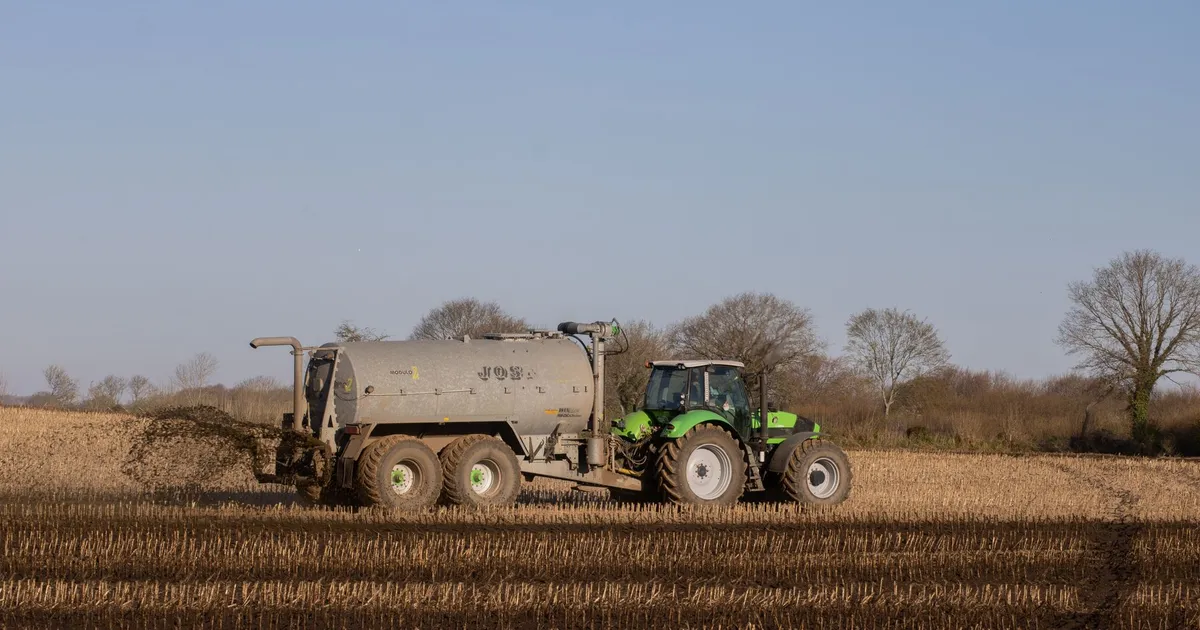
A cost you cannot cut a cheque to fix
There are inflation problems governments can spend their way out of, and there are ones they cannot. The fertiliser-to-food pipeline is firmly in the second category, and a Reserve Bank monetary policy committee member has just put the point on the table.
Hayley Gourley, who sits on the RBNZ committee and runs a small Canterbury herb-seed farm, was among the more inflation-concerned voices at the September 2026 meeting, Newsroom reports, flagging fresh urgency around sustainable alternatives to petroleum-reliant fertilisers as oil prices climb again. The signal matters. When someone with direct agribusiness experience on the rate-setting committee is worried about fertiliser feeding into food prices, it tells you the Bank understands a timeline most coverage has skated over.
The nine-month fuse
Back in March 2026, Reserve Bank Governor Dr Anna Breman warned of “higher headline inflation over the near term, and somewhat weaker growth momentum,” driven by higher petrol and diesel, which make up about 4 percent of the CPI, with fertiliser as a significant secondary factor. Her load-bearing observation was the lag. It could take up to nine months for higher fertiliser prices to fully pass through to supermarket shelves.
Do the arithmetic. The urea price shock hit global markets in late February and early March. Nine months from there lands the full consumer impact in October and November 2026. That is not a risk to monitor. It is already in transit.
How the shock happened
Urea, the world’s most widely used nitrogen fertiliser, is made from natural gas. When the conflict escalating from late February effectively closed the Strait of Hormuz, which carries about a quarter of all seaborne oil plus large volumes of gas and fertiliser, both ends of the chain moved at once. Treasury’s 12 March update put Brent crude at US$99 a barrel, roughly 40 percent above the prior annual average, and estimated sustained near-US$100 oil could add 40 cents a litre to petrol and 0.5 percentage points to inflation.
Urea moved faster. BERL tracked the price jumping from the mid-US$440s per tonne in late February to US$585 by 10 March, a 30 percent rise in roughly two weeks. Gulf producers supplied 36 percent of global urea exports between 2023 and 2025, and New Zealand imported 290,010 tonnes of urea from Saudi Arabia alone in 2024. Our domestic producer runs on the same natural gas feedstock and cannot expand to compensate when gas spikes.
Why spring is the trap
The one buffer New Zealand had was timing. The initial disruption hit in late summer and autumn, when nitrogen application is flexible and farmers could defer without major yield losses. Spring removes that flexibility. Planting demand arrives before the March pass-through has even finished, raising the odds of a second wave of import pricing pressure just as the first is reaching checkouts.
Food prices were already accelerating before any of this. Stats NZ recorded annual food prices up 4.6 percent in the 12 months to January 2026, with meat, poultry and fish up 8.9 percent, all before the fertiliser shock landed.
The 2022 warning nobody should ignore
Mike McIntyre, head of commodities at Jarden, made the comparison that should focus minds. In 2022, he noted in April 2026, consumer inflation ran at 7 to 8 percent while on-farm inflation hit 17 to 18 percent. He called the parallels “striking and worrying,” and warned that lower commodity prices alongside higher input costs create a margin squeeze that “can take many months to fully absorb.”
The cost reality on the ground is blunt. Federated Farmers arable chair David Birkett said in March 2026 that a 50 cent to $1 per litre fuel rise meant “$2000 to $4000 extra a day” during harvest. Ravensdown said it had secured autumn supply and was exploring alternatives in Malaysia, Brunei, Indonesia and parts of Africa, while warning a longer conflict would be a different animal entirely.
What business should do now
The government-industry Kapuni Project, combining wind, renewable electricity and green hydrogen for greener nitrogen, is due to start in 2027. Genuine mitigation, useless for spring 2026. That leaves three levers, all uncomfortable: supply diversification, less fertiliser and lower yields, or absorbing margin compression.
For food processors, retailers and foodservice operators, fresh produce feels it first, within about two months, while processed crops take six to nine. An OCR cut cannot head it off without stoking broader inflation, and Wellington cannot subsidise it away without a fiscal bill. This is a contracting and pricing problem for the next two quarters, and the smart operators are already locking in supply and building the pass-through into their forecasts.
Sources
- Fertiliser costs drive up food prices, warns Reserve Bank decision-maker (2026-09-07)
- Reserve Bank governor Anna Breman warns of higher inflation, lower growth (2026-03-24)
- The Middle East crisis has exposed NZ to a global fertiliser shock. Where is its plan? (2026-04-16)
- War-driven fertiliser shortage risks higher fresh food prices for shoppers (2026-03-09)
- Farmers fear double whammy of rising fuel and fertiliser costs from Middle East conflict (2026-03-11)
- Annual food prices increase 4.6 percent (2026-01)
- Fortnightly Economic Update – 12 March 2026 (2026-03-12)
- A strait in crisis reveals our agricultural vulnerabilities (2026-03-17)
- Rising fertiliser costs threaten to push NZ farm inflation back to 2022 levels (2026-04-01)
Join the discussion
Add useful context, ask a good question, or challenge an idea — keep it specific and respectful.