

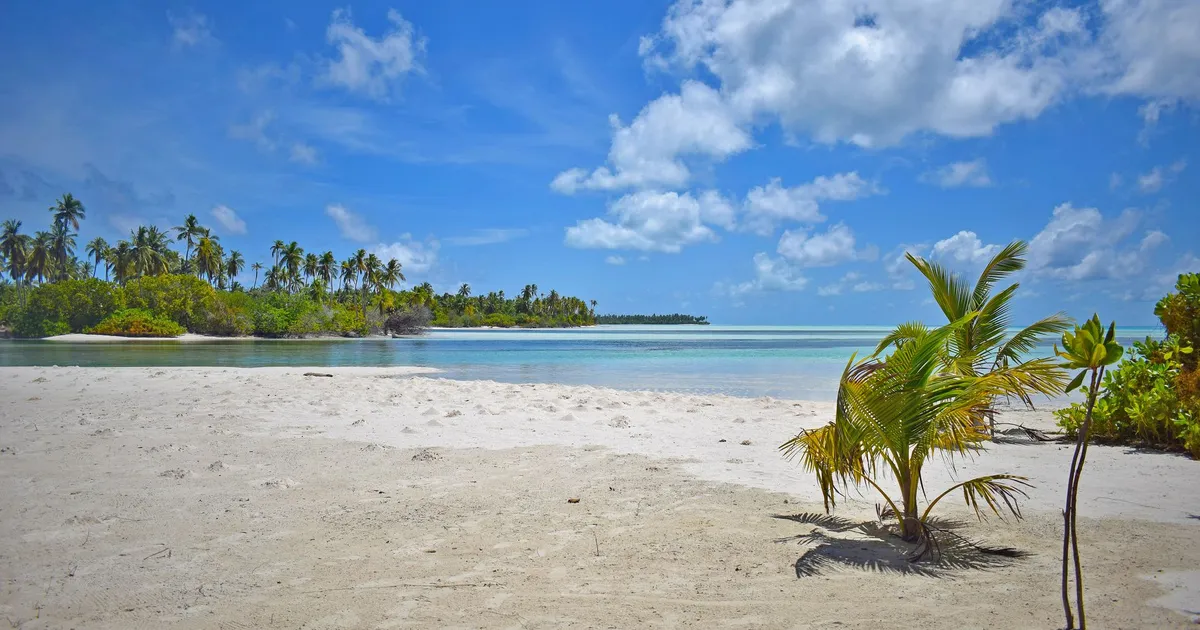
A port with a bigger job than shipping
At the Pacific Islands Forum in Palau on 1 September, New Zealand and the United States announced a US$60 million (NZ$102 million) port development on Penrhyn atoll in the Cook Islands. Washington is putting in US$50 million, Wellington US$10 million, and New Zealand will manage construction. So far it is a letter of intent, not a signed deal.
The official framing is connectivity for a remote atoll, and that lifeline function is genuine. But Penrhyn sits inside a Cook Islands exclusive economic zone estimated to hold 6.7 billion tonnes of polymetallic nodules rich in cobalt, nickel and titanium, the raw material of batteries, power grids and weapons systems. Three companies already hold exploration licences. This is not aid dressed up as strategy. It is strategy priced as a port.
Why the timing gives the game away
US Deputy Secretary of State Christopher Landau said the project builds on the Critical Minerals Framework the Cook Islands signed with the US in February 2026, which “advances Washington’s keen interest in deep sea mineral resources.” The initiative moved fast, possibly because the Trump administration needed to commit federal funding before its fiscal year ends on 30 September.
The location is pointed. Penrhyn had been the subject of rumours of Chinese interest in a deep sea port there, and Cook Islands Prime Minister Mark Brown signed a comprehensive strategic partnership with China in 2025 that strained relations with Wellington. The trilateral venture is a repair job as much as a construction one. Foreign Minister Winston Peters called it a “seminal moment that we are back in the game looking after our part of the world.” New Zealand carries constitutional responsibility for the Cook Islands’ defence and holds military access rights under a recent Defence and Security Declaration.
The template hiding in an MBIE paper
Here is where it stops being a foreign policy story and becomes a business one. In March 2026 New Zealand signed its own non-binding Critical Minerals Framework with the United States. The Cabinet paper is unusually explicit. The US has flagged up to US$200 billion in new critical minerals supply chain investment, New Zealand has ringfenced $80 million from the Regional Investment Fund for mineral projects, and the framework specifically names investment to upgrade export infrastructure on the West Coast, including ports, road and rail. The US will also help map New Zealand’s own mineral resources.
US strategic funding, New Zealand project management, infrastructure that unlocks mineral access. That is the Penrhyn model exactly. The Cook Islands deal is the proof of concept for what Wellington intends to run at home.
What New Zealand wants from its own dirt
The ambition predates the frameworks. A Minerals Strategy for New Zealand to 2040, published in January 2025, targets a lift in mineral exports from $1.46 billion in the year to June 2023 to $3 billion by 2035, with the sector already supporting more than 5,000 regional jobs. It names critical minerals as the growth frontier, citing forecasts that the world will need six times more minerals for low-emissions technology by 2050 than are extracted today.
For construction, engineering, logistics and port services firms, the near-term signal is the West Coast infrastructure spend. The frameworks turn a security posture into a pipeline of civil works, and the money to fund them is now partly American.
The friction that will not go away
The deal is drawing fire. Te Ipukarea Society director Alanna Matamaru Smith said she was “definitely concerned” about a major power pursuing nodules “in a space that we really don’t know too much about.” A Cook Islands landowner told RNZ the project “appears to be connected with a much wider critical mineral and geopolitical agenda.” Critics point to thin public consultation before the letter of intent and question the funding arrangements.
There is also a domestic tell. A 2025 MFAT OIA release on Cook Islands seabed mining withheld material under sections covering New Zealand’s security, defence and international relations, a sign that Wellington-Rarotonga coordination on the seabed is more sensitive than the public record admits.
The rules of Pacific investment are being rewritten in real time. Infrastructure and resource strategy are now the same question, and New Zealand has picked its lane. The next port announcement worth watching may be on the West Coast, not an atoll 1,000km north.
Sources
- NZ and US to build major port on former military base in Cook Islands (2026-09-01)
- US pushes critical minerals agenda in Cook Islands with new Penrhyn port (2026-09-02)
- Penrhyn port upgrade raises transparency and environmental concerns in the Cook Islands (2026-09-04)
- Any port in a geopolitical storm, as Peters encourages US back into Pacific fray (2026-09-02)
- A Minerals Strategy for New Zealand to 2040 (2025-01)
- Cook Islands Seabed Mining Update – Official Information Act Release (2025-04-28)