

The false floor just gave way
A month of relative calm has ended. US forces struck targets in Iran on 1 September 2026, hitting sites on Qeshm Island in the Strait of Hormuz and across Hormozgan province, and Iran responded with missiles and drones the next day. Donald Trump warned that any retaliation would be met with blows at a “much harder and higher level”; Iran’s Armed Forces General Staff promised “crushing and devastating” strikes back.
For New Zealand businesses the relevant number is on the price board, not the battlefield. Crude oil was already up about 7% for the week before the latest strikes, and is now more than 50% higher across 2026 as a whole. This is exactly the scenario Dr Murat Ungor warned about in March 2026, drawing on a century of data to argue that early market calm in geopolitical conflicts is usually a false floor, not a resolution. The month-long lull that just collapsed was precisely that.
Why a strait you’ll never sail through hits your fuel bill
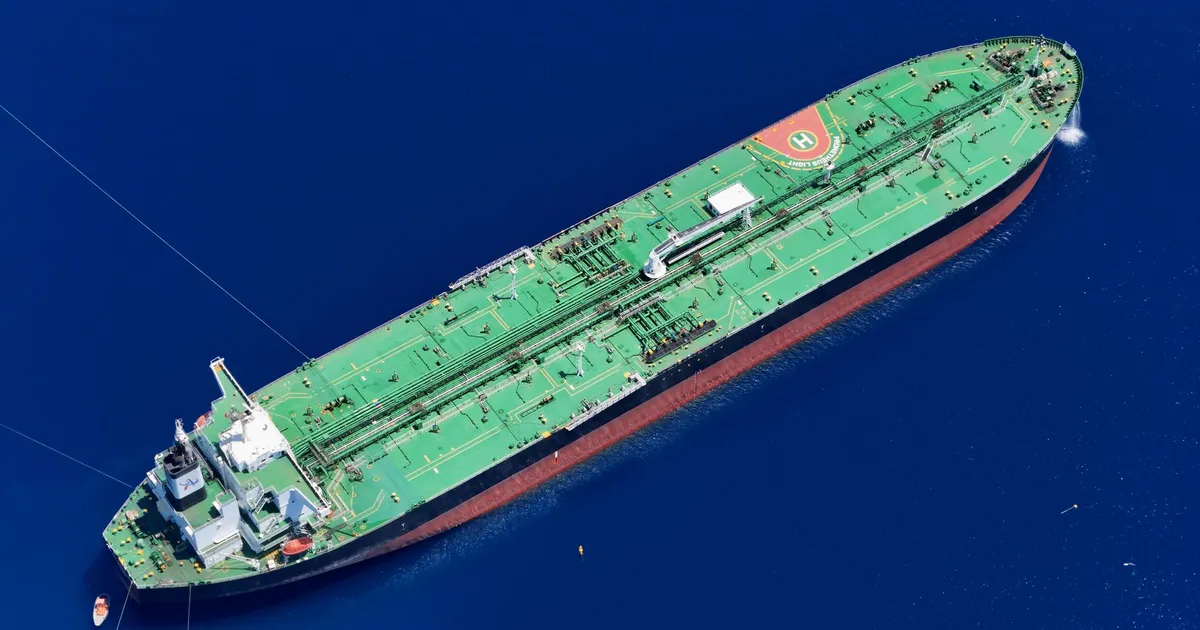
The Strait of Hormuz is a narrow waterway through which 20% of the world’s oil normally flows. During the conflict, only one or two tankers cross daily against a normal rate of around 80.
New Zealand imports no crude directly from the Middle East. Marsden Point became a fuel import terminal in 2022, and refined product now comes from Singapore, South Korea and Japan. But those Asian refineries, which supply 90% of NZ’s petroleum imports, ran on heavy Persian Gulf crude before the conflict. When Gulf crude gets choked, those refineries bid up alternative supply, and the price flows straight through to New Zealand regardless of where the tanker physically loaded.
Diesel is the number that should worry you
The clearest snapshot is the Commerce Commission’s fuel price monitoring report of 23 April 2026. Between late February and 22 April, Brent crude rose 40% to US$102 a barrel. Regular 91 petrol was up 31% at 336 cents a litre. But diesel, the fuel of freight, farming and construction, jumped 92% to 361 cents a litre.
That near-doubling landed in April. Crude has since climbed another 50%-plus and just spiked again, so April was not the peak. Volatility got severe enough that MBIE paused its importer cost and margin series in March 2026 and only resumed it from July, a rare signal of how unusual the market has been.
The freight and insurance stack keeps building
Fuel is one layer. Shipping lines have added war risk surcharges of up to 50% on marine transit insurance, and vessels rerouting around southern Africa add up to 40 days to transit times, burning fuel the whole way. That RNZ reporting also flagged a legal trap worth checking now: some lines invoked force majeure, and events treated as acts of war are typically not covered by standard freight insurance. Any importer relying on off-the-shelf cover should read the policy.
Westpac IQ noted in March 2026 that high insurance costs could stall a quick resumption of transit even after a ceasefire, and modelled that disruption to Iranian production alone could push oil around US$100 a barrel. That figure has now been passed with fighting resumed.
Supply is secure. Prices are not.
Here is the genuinely reassuring part, stated straight. MBIE’s fuel stock update as at 23 August 2026 shows 49.2 days of petrol cover, 44.8 days of diesel and 42.0 days of jet fuel, all above minimum obligations, with forward orders confirmed for three months. A strategic diesel reserve at Marsden Point can be released to importers up to 30 November 2026. In March 2026 the EMA assessed the government’s Fuel Response Plan at Phase 1, Watchful, with escalation considered unlikely.
The distinction that matters for business is simple. Full tanks do not stop fuel, freight and insurance costs rising. New Zealand will not run out of diesel. It will keep paying more for it.
What to reprice this week
Infometrics economist Brad Olsen warned in March 2026 of oil spikes and volatility flowing through energy, shipping insurance and risk-off sentiment. For operators, three things need action now. Any business running a fleet, or buying from suppliers who do, should reprice forward cost assumptions rather than assume April was the top. Fixed-price contracts entered before the conflict that bake in freight, fuel or imported inputs are carrying live margin exposure. And with 22% of NZ fertiliser imports coming from the Persian Gulf, farmers face the squeeze from both ends. The month-long calm let some firms stop watching. The strikes on 1 September are the signal to start again.
Sources
- 1News: US strikes targets in Iran as hostilities flare again (2026-09-01)
- RNZ: What are New Zealand’s global supply chains being disrupted by the US-Iran conflict (2026-03-05)
- MFAT: Trade and economic implications of the Iran conflict (2026-03-02)
- Commerce Commission: Fuel Price Monitoring 23 April 2026 (2026-04-23)
- RNZ: Iran conflict sparks freight chaos
- Westpac IQ: Middle East Conflict, an initial view for Australia and New Zealand (2026-03-03)
- EMA: Fuel supply and the Iran conflict (2026-03-02)
- RNZ: Iran attack sparks warning for KiwiSaver, fuel, inflation (2026-03-02)
- Newsroom: Iran conflict’s economic knock likely just the beginning (2026-03-30)
Join the discussion
Add useful context, ask a good question, or challenge an idea — keep it specific and respectful.