

From consent to concrete
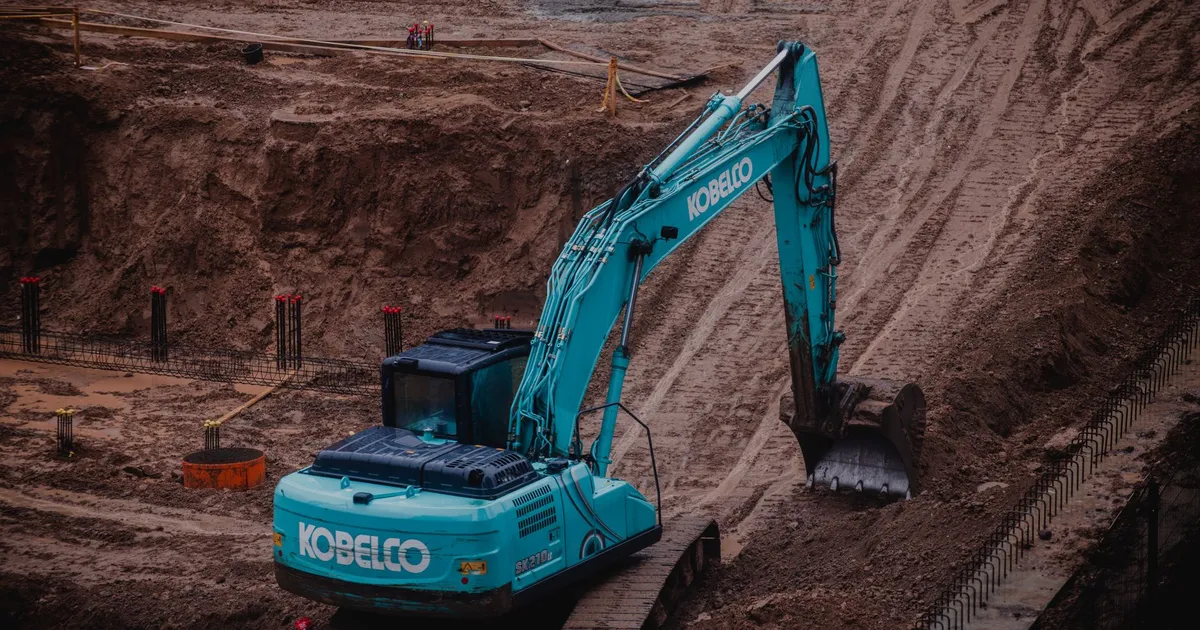
Up to now, the Southland data centre story has lived in fast-track applications, resource consents and glossy economic projections. That changed this week. Datagrid began horizontal earthworks on its 49-hectare Makarewa site on Tuesday 19 August, with HEB Construction, a subsidiary of VINCI Construction, building a new access road to State Highway 98 and a six-metre bund to shield neighbours from noise. The foundation platform, cable landing station and power substation are due for completion by the end of 2026.
Datagrid NZ chief executive Rémi Galasso is not underselling it. He says the project will be “not just the largest data centre project in New Zealand, but also one of the most sustainable data centre projects of that scale in the Asia Pacific”, and that New Zealand has “all the ingredients to be a world champion in this industry.”
The trigger for the diggers was money. Mercury Energy paid $53 million for a 12.7% stake in Datagrid, which Mercury chief executive Stew Hamilton described as “seeding the first part of the construction phase.” That is real capital from a serious domestic energy company, and it de-risks the immediate groundwork. But it is an equity stake in the development company, not a contracted power supply. That distinction is the whole story.
The scale is genuinely enormous
The numbers explain why this matters beyond Southland. Phase one runs at 280MW, with full buildout at 1GW, which would make Datagrid New Zealand’s single largest electricity user, consuming almost double what the Tiwai Point smelter draws. Six data halls will sit across 9.5 hectares, connected via a dedicated 360MVA substation to the 220kV transmission line between Manapouri and Tiwai.
The project is costed at roughly NZ$3.5 billion, rising to $5 billion at full buildout. At phase one alone, the facility would increase New Zealand’s total compute capacity by 65%. New Zealand currently has over 80 data centres, almost all small co-location facilities clustered in Auckland and Wellington. None are hyperscale. None are in the South Island. This is a step change, not an addition.
The real prize is exporting electrons
The most under-appreciated part of this project is not the building. It is what an anchor customer of this size does to New Zealand’s stranded renewable advantage.
New Zealand generates 82 to 85% of its electricity from renewables, mostly hydro, and has the capacity to build more. It hasn’t, because demand has been flat. No major power plant has been built since the Clyde Dam in 1992. A customer needing 280MW to 1GW is exactly the demand signal that could unstick that investment cycle.
For global hyperscalers with net-zero obligations, the pitch is compelling. Running these workloads on New Zealand’s grid rather than a coal-heavy one could cut emissions equivalent to taking almost half a million cars off the road. In effect, New Zealand starts exporting renewable energy by hosting other countries’ most power-hungry computing. That is a genuine competitive edge, not a marketing line.
The connectivity piece makes it viable
A cheap shed with a power socket is not a compute hub. The enabler is the Tasman Ring submarine cable landing at Oreti Beach, due operational in 2027, carrying 540 terabits per second and cutting trans-Tasman latency by up to 35%. For latency-sensitive AI workloads, that is what makes Southland a serious location rather than a remote curiosity. It also extends high-capacity resilience to the South Island, reducing reliance on the Cook Strait cables.
Where this could still fall over
The power question is unresolved and it is the biggest commercial risk. Back in 2020, Meridian agreed in principle to supply 100MW from Manapouri, but no formal contract was ever signed and Meridian raised concerns in 2023. The substation is being built to connect the grid, but the generation contracts that fill it at full scale remain publicly unconfirmed. There are also legitimate questions about whether the new load could push up power bills for everyone else.
There is a capability gap too. Mark Laurence, chief executive of Ten Past Tomorrow, warned in March 2026 that New Zealand risks hosting the compute but exporting the value, because “we’re still a nation that’s using AI to change the tone of an email” while others redesign whole workflows.
Community opposition is real and organised, with hundreds packing a Southland Sustainable Resource Coalition meeting in July over water use and noise. Datagrid has been consented to take up to 220 million litres of groundwater a year, about 8.5% of the zone’s discretionary allocation, and Galasso argues Southland’s cool climate makes actual consumption “very low, much smaller than a dairy farm”.
The diggers moving is a genuine milestone, and the renewable export thesis is the most interesting industrial opportunity the lower South Island has had in a generation. But until a power purchase agreement for the full load is signed, the $3.5 billion bet is still a bet.
Sources
- Datagrid begins work on Southland site, completion expected this year (2026-08-18)
- Datagrid boss fronts on water use, noise, jobs, funding and construction start date (2026-08-17)
- From dairy to data, the $3.5 billion bet on Southland (2026-03-16)
- Why this AI data centre might be New Zealand’s most important climate project (2026-05-15)
- ‘AI illiterate’: NZ at risk of being left behind as data centre plans move forward (2026-03-15)
- Fears new data centre could bump up power bills (2026-03-17)