

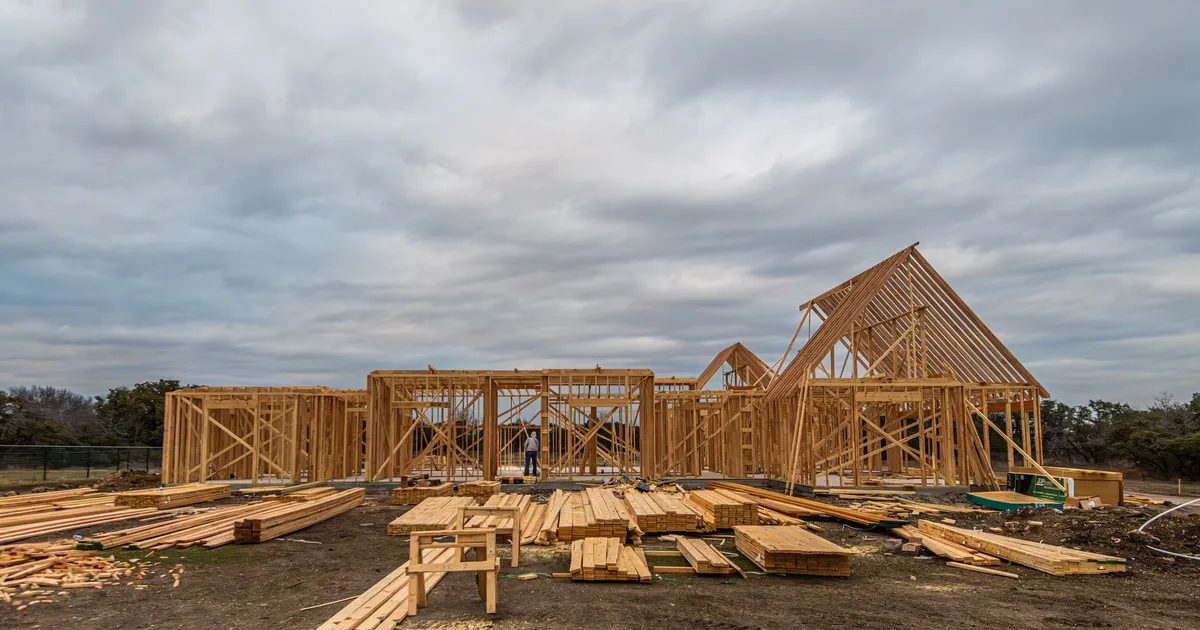
The document that makes cheap houses possible
Most people building a house have never heard of NZ3604. But the 450-page standard for timber-framed construction is the reason a builder can put up a standard home without hiring an engineer to calculate every beam and joist from scratch. It specifies beam sizes, eaves construction and roughly a thousand other details, and it is the reference point when a defective building ends up in dispute.
It is also 15 years old and finally being reviewed. The trouble, as RNZ reported on 17 August, is that the engineers who would improve it say they have been effectively shut out of the process, and have protested directly to ministers.
That matters to anyone in the construction supply chain. In the year ended December 2025, 36,619 new homes were consented, up 9 percent, and $31 billion of building work was put in place. NZ3604 is the off-the-shelf compliance pathway for a large slice of that.
Two pages at a time, no download
Standards NZ has shifted the draft from a downloadable PDF to a digital viewer that shows only two pages at once and blocks downloading. National manager Malcolm MacMillan said the move helps mitigate the risk of draft material being circulated and used when it may differ from the final published content, especially for large and complex standards. A secondary concern is protecting the intellectual property from AI scraping, which Engineering NZ’s Richard Templer said he sympathised with.
The engineers’ verdict is blunt. Structural engineer John Scarry, who has been an expert witness in earthquake-repair disputes, said colleagues who use the current version constantly wanted to review the draft, and as soon as they saw the format, they knew it wasn’t going to work. His warning cuts to why this is a consumer issue as much as a technical one: omissions and confusing clauses can have enormous impact on consumers downstream when something goes wrong.
The review relies on volunteers. Engineers say the format squanders that goodwill, missing out on thousands of free hours of engineers who would happily review it if it were opened up and made easy. The predicted result is a standard with a whole bunch of errors that won’t be that useful, forcing detailed design anyway. Standards NZ says it has made accessibility tweaks and expects concerns to fade with familiarity. Engineers say the tweaks fall short. The same access complaint has surfaced over NZ3404, the equivalent standard for steel-framed houses.
The real problem is money
The access row is a symptom. Since Standards NZ was absorbed into MBIE in 2016, it has run on a fully user-pays model, and that model does not work. Templer said there is insufficient funding to cover the process, so it takes a long time, uses a lot of volunteer time, and standards just get older and older.
The economics are a trap. Firms already pay a realistic rate, but there aren’t enough companies buying to make the equation work, and raising the price would just drive buyers away. Fees rose 12.5 percent in the past year, with some firms paying more than $20,000 a year for the full catalogue. Around 500 joint Australia-NZ standards have been severed since 2016 because New Zealand cannot afford its share of update costs.
In June 2025, Engineering NZ warned that accessing standards was prohibitively expensive, pushing small firms to use outdated documents or forgo them entirely, with some standards unreviewed since the 1990s against a best-practice cycle of five to seven years. Templer put the stakes plainly that month, saying poor quality standards can risk public safety, and we don’t want to see another leaky building crisis. The absurd extreme, reported by BusinessDesk in June 2025, is the copper tube standard for water and gas that has not been updated since 1976, before plumbed fridges and underfloor heating existed.
Reform stopped at the Building Code
The government has done the visible work. In July 2025, Building and Construction Minister Chris Penk paused major Building Code changes and moved to a predictable three-year update cycle, the first due in 2028, to bring stability so the sector can plan. MBIE also published Building Product Specifications covering 130 product standards, opening the door to US and European products.
None of that fixes Standards NZ. The NZ3604 review sits with Commerce and Consumer Affairs Minister Cameron Brewer, not Penk. Scarry and Langford have written to Brewer; Templer has met him. The response so far is understanding but no solution, with ministers trying to find a fix in a fiscally constrained environment.
What it means for builders
The consent pipeline is holding up. In Q1 2026, 94.5 percent of applications were processed within statutory timeframes at a median of nine working days. That efficiency counts for little if the design step upstream gets slower and dearer. An error-prone NZ3604 pushes projects toward bespoke detailed design, adding engineering fees before a spade hits the ground, and small firms that cannot absorb $20,000-plus in standards costs get squeezed hardest. In August 2025 the RMBA welcomed the reforms but noted they were only pieces of a larger puzzle. The engine room of affordable timber-frame construction is running on volunteer fumes, and until the funding model is fixed, the consent numbers will not translate into homes built cheaply.
Sources
- Engineers annoyed by hold over house building standard (2026-08-17)
- Underfunding of Standards NZ could risk public safety: Engineering body (2025-06-11)
- Archaic standards system ‘stifling innovation and growth’, engineers say (2025-06-16)
- Government hits pause on building code changes (2025-07-27)
- Building New Zealand: Focus on the construction industry (2025-12)
- Standards system in need of urgent overhaul (2025-06-11)
- Real progress, practical steps and more to come (2025-08-06)
Join the discussion
Add useful context, ask a good question, or challenge an idea — keep it specific and respectful.