

The exposure comes first, the beetles second
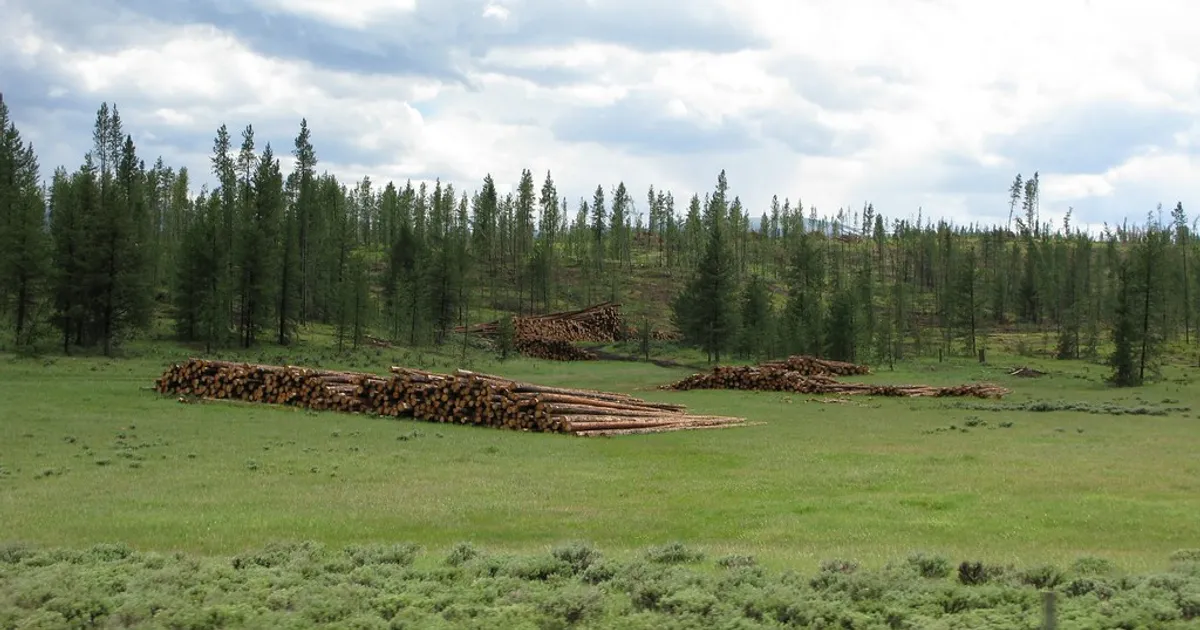
Start with the number. Forestry earns New Zealand $5.89 billion in annual export revenue, split between $3.13 billion from logs and $2.76 billion from other forest products. It contributes $3.6 billion to GDP and supports 42,000 jobs. Almost all of it rests on one species. Of the 1.79 million hectares of planted production forest, 91% is radiata pine.
A monoculture on that scale is efficient right up until it isn’t. Concentrate a national export earner in a single species and you concentrate the risk. If one pathogen adapted to radiata pine established here, the damage would be systemic, not a patch of dying trees in one region. That is the structural vulnerability sitting underneath the tidy MPI statistics, and it is why a piece of research about tiny beetles is really a productivity and export-risk story.
The map that didn’t exist
Here is the detail that turns routine science news into a business concern. New Zealand does not hold a prior inventory of beetles and their associated fungi. Post-border biosecurity depends on knowing what is already here, because you cannot recognise a new incursion without a baseline to measure it against. Without one, a damaging fungus could establish and spread before anyone confirmed it was new.
Since 2024, teams at the Bioeconomy Science Institute Maiangi Taiao, working across Lincoln, Rotorua, Ruakura, Auckland and Motueka, have been trapping bark and ambrosia beetles and analysing what they carry, the first systematic attempt to build that picture. The work is funded by Better Border Biosecurity and Zespri.
The two beetle types behave differently. Ambrosia beetles cultivate specific fungi as food and carry them deliberately; bark beetles pick up a mixed assortment as they tunnel. Both breed fast, which means their fungal passengers can scale quickly. Most of what has turned up so far is benign, but the programme has already flagged species with the potential to disrupt plantation forestry, horticulture and native ecosystems if conditions change or new beetles arrive.
Why the fungi, not the beetles, do the harm
Task lead Darryl Herron put the point plainly. “It’s often these fungi that cause the greatest harm,” he told the NZ Herald on 13 August 2026. “Some fungal species block a tree’s ability to move water and nutrients, weaken natural defences or accelerate disease, particularly when trees are already stressed by drought, age or harvesting activity.”
The research, he said, is about getting ahead of that. “Our focus is understanding what risks exist here before those impacts occur. If we know which beetles can carry damaging fungi and where they’re moving, we can respond faster and reduce the risk to forests and export markets.”
The threat isn’t hypothetical
There is a live precedent across the Tasman. Farmers Weekly reported in April 2026 that a fungus already established in Australia could have devastating effects on the New Zealand avocado industry if it arrived. The programme was partly prompted by Hawaii, where beetle-carried fungi caused documented tree damage. These are real-world outcomes in comparable agricultural systems, not thought experiments.
The entry pathway is stubbornly hard to close. Bark and ambrosia beetles arrive in wood packaging and untreated wood products, and the sheer volume of global trade means the border is never fully sealed. Zespri’s co-funding is a signal in itself. The kiwifruit sector, which sits within a horticulture industry that out-earns forestry, treats orchard-level beetle-fungus risk as a present commercial concern.
What it means for exporters
A newly identified threat would need to be assessed and could be added to MPI’s phytosanitary requirements, layering compliance costs onto exporters before any actual incursion. That is the near-term friction. The larger point is that harvest volumes are forecast to stay high, with export revenue projected at $6.39 billion for 2026 as forests planted decades ago reach maturity. The value at risk is rising, not falling.
The research itself is good news. New Zealand is building an early-warning system before the crisis rather than after it, which is exactly how post-border biosecurity should work. But it also confirms the country has been running a multi-billion-dollar monoculture without the map it needed. Closing that gap now is the smart move. The uncomfortable question is why it took until 2024 to start.
Sources
- NZ Herald: Beetle-borne fungi pose biosecurity risk to forests and orchards (2026-08-13)
- Farmers Weekly: Research shines light on beetles that ferry bad fungi (2026-04-27)
- Rural News Group: NZ Study Tracks Beetles Carrying Fungi Across Ecosystems (2026-04-22)
- MPI: Forestry and wood processing data
- FOA Facts and Figures – Forest Processing Industry 2023-2024 (2024-12)
Join the discussion
Add useful context, ask a good question, or challenge an idea — keep it specific and respectful.