

The virus that turns a marketing edge into a liability
New Zealand recorded its first confirmed H5N1 detection on 15 July 2026, a brown skua found dead on Petone Beach in Wellington. Biosecurity Minister Andrew Hoggard confirmed there was no evidence yet of transmission between wild birds or into poultry. But he also warned that if the virus reaches a commercial chicken shed, mortality rates could run between 95 and 100 percent.
For egg producers, the maths is brutal in a different way. Free-range farming is built entirely on outdoor access. The moment biosecurity forces birds inside, the thing you are selling stops existing.
Forty percent of the flock, all of the premium
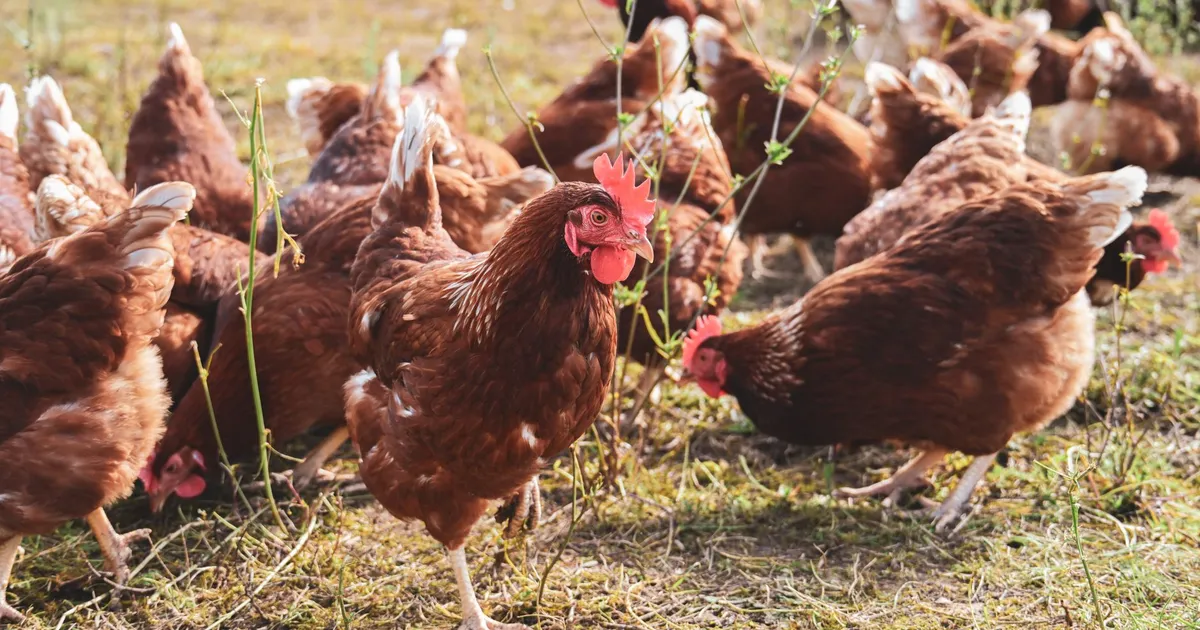
New Zealand’s laying flock runs to four million hens across 170 farms. Roughly 40 percent of that flock is free-range, about 1.6 million hens whose entire commercial value rests on being able to go outside.
That outdoor access is not a slogan. The Animal Welfare Act sets a minimum standard of four square metres of outdoor space per hen for free-range classification. Free-range eggs command a substantial price premium over barn or caged product, and that premium is the whole business case. A biosecurity housing order eliminates the access, and with it the justification for the price.
South Auckland free-range farmer Carl Ebbers is already restricting movement of vehicles, people and animals on and off his Patumahoe property. His fear is plain: “I just hope that we’re not in the situation of Europe and parts of Australia where the free-range producers have been asked to keep their chickens inside.”
Where it gets legally sharp
This is the part that should worry any business owner in the sector. If birds are locked inside, selling their eggs as ‘free-range’ likely breaches the Fair Trading Act’s ban on misleading representations. Newsroom’s June 2026 reporting confirmed the point directly: farmers bringing birds inside would typically be unable to sell eggs as free-range without breaching the Act.
The Commerce Commission has offered a lifeline, but a thin one. In April 2025 it signalled it would exercise discretion not to enforce during an initial emergency period. That is a meaningful concession, but it is discretionary policy, not a legal safe harbour, and it carries a time limit. Lean on it too hard and producers are exposed the moment the Commission’s patience runs out.
The duration is the danger. The UK allowed free-range status to be retained only if birds were housed for no more than 12 weeks. In other countries, lockdowns have typically lasted around five months, well past that threshold. ‘Temporary’ is doing a lot of work in the industry’s plan.
The stickers and the pre-empted backlash
The Poultry Industry Association has a contingency ready. Executive director Fiona MacMillan said keeping laying hens indoors reduces exposure to infected wild birds and their droppings, and that any housing would be temporary. The association has a communication plan ready, including stickers on all egg and meat chicken packaging telling consumers birds have been housed for their own welfare.
It is a smart pre-emption of consumer anger. Whether it survives contact with a five-month lockdown, and whether shoppers keep paying a premium for eggs from hens that never see daylight, is another question entirely.
The tools aren’t finished
Here is the uncomfortable timing. MPI proposed six regulations to manage HPAI H5N1 in poultry, covering biosecurity control programmes, record-keeping, audits and penalties. Consultation closed in November 2025 and a submissions summary landed in April 2026. The regulations are not yet law. The legal machinery for a mandatory housing order is still being drafted at exactly the moment it may be needed.
New Zealand had more warning than almost anyone. H5N1 clade 2.3.4.4b swept the northern hemisphere from 2020 and reached the Antarctic Peninsula in early 2024. MPI’s 2025 risk assessment concluded that if the virus arrived via migratory birds, transmission to wild birds would likely occur across most regions, with outdoor birds facing the highest exposure. That isolation bought time, and the time was spent on consultation and drafting rather than finished law.
For now the detection remains limited to a single seabird with no poultry link, and DOC is vaccinating around 300 core breeding birds from endangered species. But the question for egg producers is no longer whether to prepare. It is whether the preparation is legally robust enough to survive the housing order that may be coming, and how long the market will keep paying premium prices for a product that, on paper, no longer exists.
Sources
- Bird flu lockdowns threaten NZ’s free-range egg industry – Newsroom (2026-07-15)
- Looming chicken lockdown: How H5N1’s arrival will affect NZ free-range farming – Newsroom (2026-06-24)
- The H5N1 strain of bird flu has been confirmed in NZ. What now? – RNZ (2026-07-15)
- Deadly bird flu confirmed in New Zealand. Here’s what you need to know – Stuff (2026-07-15)
- Proposed regulations for managing high pathogenicity avian influenza H5N1 in poultry – MPI (2026-04-15)
- High Pathogenicity Avian Influenza H5N1 Assessment of Risk to New Zealand – MPI (2025-06)
- Govt explores ordering hens indoors but still selling eggs as free-range – Newsroom (2025-03-10)
- Killer bird flu now just a short flight away from NZ – Newsroom (2026-07-09)