

A planning mandate with no funding mandate
The Climate Change Response Amendment Bill, introduced to Parliament on 15 July 2026, requires councils to produce 30-year adaptation plans for high-risk communities. Climate Change Minister Simon Watts said councils would for the first time be required by law to plan how high-risk communities will prepare for climate change impacts. What the Bill does not do is settle who pays. Cost-sharing decisions have been explicitly deferred to the next term of government.
That is the whole problem in a sentence. Councils are being handed a legal obligation to plan, cost, and time a programme of coastal and flood defences without any confirmed source of money to deliver it. Local Government NZ president Rehette Stoltz put it plainly in June 2026, warning that councils are being asked to carry a national problem on local balance sheets and need “durable co-funding.”
The numbers councils are being asked to plan around
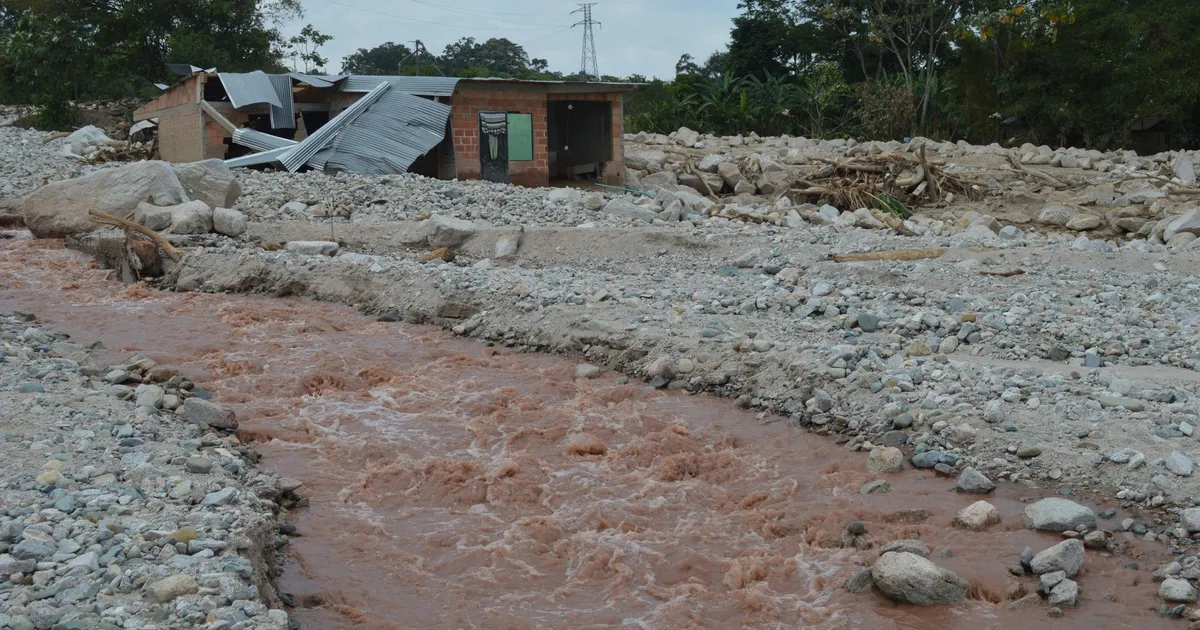
The scale is not abstract. 750,000 New Zealanders are already exposed to major flood risk, and that figure rises with further warming. The average annual cost of infrastructure damage from flooding is already $471 million and could climb 43 to 53 percent by 2075. Cyclone Gabrielle and the 2023 Auckland Anniversary floods carried a combined estimated cost of $14.5 billion.
The most damning statistic is about how New Zealand has spent its money to date. Since 2010, just 3 percent of hazard-related spending has gone to reducing risk before disaster strikes. The other 97 percent went to cleaning up afterwards. As of October 2025, 219,000 homes worth a collective $190 billion sat in coastal and inland flood zones, with over 1,000 homes expected to suffer major damage totalling $900 million over the next 25 years.
The insurance market has already stopped waiting
Insurers are not going to sit on their hands until the next government finds its chequebook. Dwelling insurance has risen 61.6 percent over the past five years, a January 2026 Cabinet paper found, making it a leading driver of cost-of-living pressure.
Then on 9 July 2026, IAG, the country’s largest insurer, published a report describing New Zealand’s approach to natural hazard risk as “ad hoc and piecemeal” and warning it would permanently constrain the economy if nothing changed. IAG chief executive Phil Gibson acknowledged the government’s fiscal constraints but was blunt about the cost of dither: “delay, half-measures and political caution will cost us in the long run.” The report identified 42 gaps requiring attention over 15 years, including no national risk-reduction plan and no framework for relocating communities.
Why the planning alone moves markets
Here is the part property owners need to understand. The planning process itself will shift markets before a single defence is built. Regional councils will identify high-priority areas through the RMA spatial planning process, and city and district councils will then produce adaptation plans covering flood and coastal hazards first. Those plans must include “high-level cost estimates” and how costs would be funded, with plans for the highest-priority areas due within five years of a spatial plan being adopted.
Once a community is formally designated high-priority, the consequences arrive fast. Environmental law specialist Mike Wakefield warned in April 2026 that formally identifying high-risk zones without resolving them may feed insurer concerns about whether to continue providing cover in parts of the country. He also cautioned that without funding sorted, the plans risk gathering dust. For homeowners in designated zones, that designation is likely to hit insurability, mortgage availability and resale value. For developers, projects near high-priority zones face tighter scrutiny.
The affordability squeeze cuts both ways
Watts wrote to councils in July 2026 warning against “unnecessary gold-plating” and told them not to use the most extreme warming scenarios as their base case. His line: “councils should plan for climate risks, but they must also plan for affordability.” It is a sensible instinct on rates pressure, but it also risks producing systematically conservative plans that understate real exposure.
The funding question is not new. A four-page National Adaptation Framework released in October 2025 was built around cost-sharing but did not answer who pays. The government’s own Independent Reference Group recommended a beneficiary-pays model, advice IAG independently echoed. The Bill still leaves it unresolved. Councils get the obligation now and the money question next term, and every ratepayer, developer and property owner in a flood zone will be paying for that gap in the meantime.
Sources
- Government to require councils to make climate adaptation plans (2026-07-15)
- ‘Ad hoc and piecemeal’: Insurer IAG slams govt’s approach to natural hazards in new report (2026-07-09)
- ‘Urgency’ needed over climate adaptation funding, Insurance Council says (2026-04-20)
- Cabinet Paper ECO-26-SUB-0003: Insurance Affordability and the review of Natural Hazards Insurance Act financial settings (2026-01-28)
- Long-awaited climate adaptation plan leaves ‘who pays’ unanswered (2025-10-16)