

A cost line breweries want gone
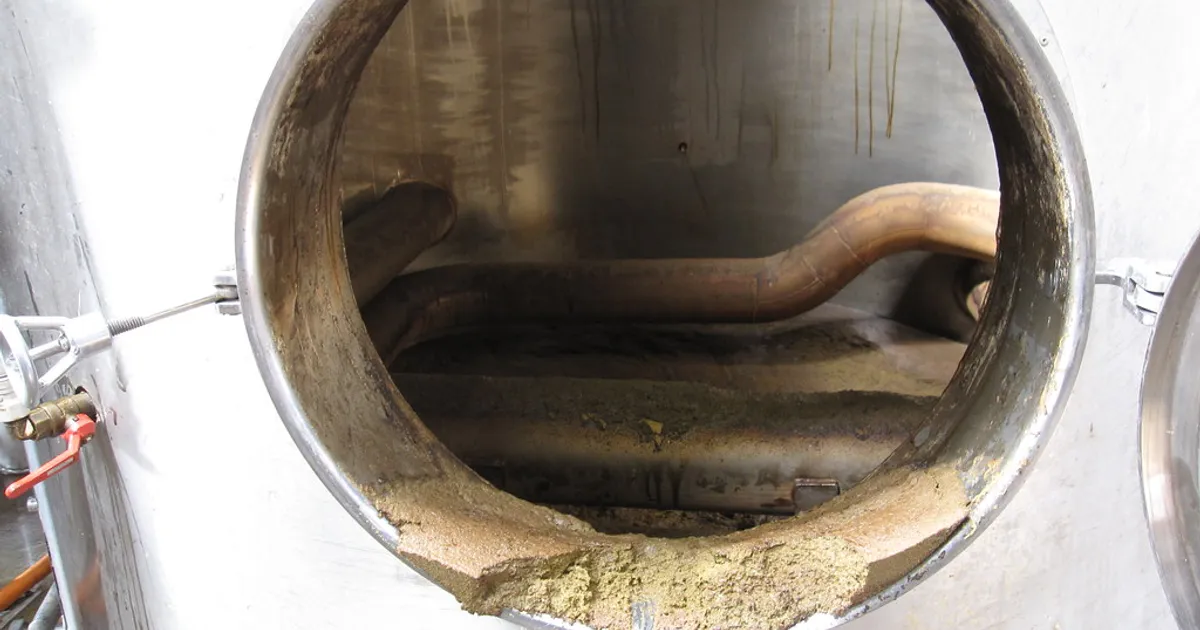
Spent grain is brewing’s inconvenient byproduct. It makes up about 85% of brewery waste, it spoils within hours, and it is wet, heavy and hard to compost. Breweries face a stark choice: arrange same-day collection or watch it rot. Most of it, unsurprisingly, ends up buried.
The numbers are not trivial. New Zealand sends 13,700 tonnes of brewery waste to landfill every year, generating carbon emissions roughly equivalent to 3,300 petrol cars driven for a year. For breweries, it is a pure cost with no upside beyond selling scraps cheaply as animal feed.
That is the problem a 10-person University of Canterbury student team, working under the name NanoBrew, has set out to flip. Their bet is that this waste stream is not rubbish at all, but raw material for nanocellulose, a natural fibre with a global market valued in the billions.
Why nanocellulose is the prize
Nanocellulose is cellulose broken down to nanoscale fibres, and its properties are the reason companies pay a premium for it. As NanoBrew team member Jade Wilson told RNZ, it is “very strong, it’s very flexible, and that means it can be used in a range of really exciting applications from biodegradable plastic alternatives to cosmetics to electronic circuit boards”.
The global nanocellulose market is valued in the billions of dollars, spanning packaging, medical devices, electronics and petroleum-plastic substitutes. And there is a ready-made local pipeline: at UC, School of Product Design researchers Dr Ali Nazmi and Dr Hossein Zadeh are already developing nanocellulose products including wound dressings, oil remediation materials and cosmetic formulations. In other words, if NanoBrew can produce the material, someone down the hall already wants it.
The process is the interesting part
What makes this more than a feel-good student project is the biochemistry. The team uses enzymes to break down spent grain and extract the fibre. “What we’re doing is we’re just using these little proteins called enzymes to break down the grains and get that valuable nanocellulose,” Wilson said.
The design goal is a bioreactor, essentially a large vat where bacteria produce enzymes that break down the grain. Crucially, the team plans to use two specialised enzymes, including an ancestral endoglucanase reconstructed by computer that is more thermally stable than naturally occurring versions. That detail matters: it signals a process being designed for industrial robustness, not just a lab bench.
The work is part of the international iGEM synthetic biology competition, with results due in October 2026 and a presentation at the Paris jamboree in November.
The emissions maths that gives this legs
Organic waste is a disproportionate emissions problem. The Ministry for the Environment reported in 2024 that 93.3% of waste sector emissions were biogenic methane, largely from decomposing organic material, with a warming effect 28 times greater than CO2. The April 2026 greenhouse gas inventory snapshot showed the waste sector managed only a 0.5% emissions decrease between 2023 and 2024, as population growth kept pushing volumes up.
Spent grain is exactly the kind of target that moves the needle. It is concentrated, predictable and already aggregated at source, which means diverting it does not require any household to change behaviour. That is a cleaner emissions win than most compostable-waste initiatives.
Feedstock at industrial scale
The reason this is commercially interesting rather than marginal is volume. In 2022, NZIER valued New Zealand’s brewing industry at $3.3 billion.pdf), with New Zealanders drinking over 296 million litres of beer in the year to September 2022. A byproduct stream of 13,700 tonnes a year is not a niche curiosity. It is a consistent, large-volume feedstock that already exists.
The honest caveat is that NanoBrew is at lab-testing stage, and the gap between a competition proof-of-concept and a commercial bioreactor is significant. New Zealand would also be entering a competitive global market. This is opportunity, not a done deal.
But the structure of the play is what should interest business readers. There is no subsidy dependency here, no government mandate driving it. It is biochemistry applied to a waste stream that breweries currently pay to remove. If the enzymatic process works at scale, brewing waste stops being a disposal cost and becomes a revenue line, and whoever moves first, brewer, materials manufacturer or biotech, is positioned to supply a market measured in billions. That is the version of the circular economy that pays for itself.
Sources
- Uni students look to turn beer waste into potentially billion-dollar material (2026-07-15)
- Beer today, face cream tomorrow – the billion-dollar secret hiding in brewery waste (NZ Herald) (2026-07-15)
- UC students eye billion-dollar use for beer waste (2026-07-14)
- Beer today, face cream tomorrow – the billion-dollar secret hiding in brewery waste (Newstalk ZB) (2026-07-15)
- Waste sector emissions – Ministry for the Environment (2024-05-08)
- New Zealand’s Greenhouse Gas Inventory 1990-2024: Snapshot (2026-04)
- Brewing in New Zealand – NZIER (2022-12-20)