

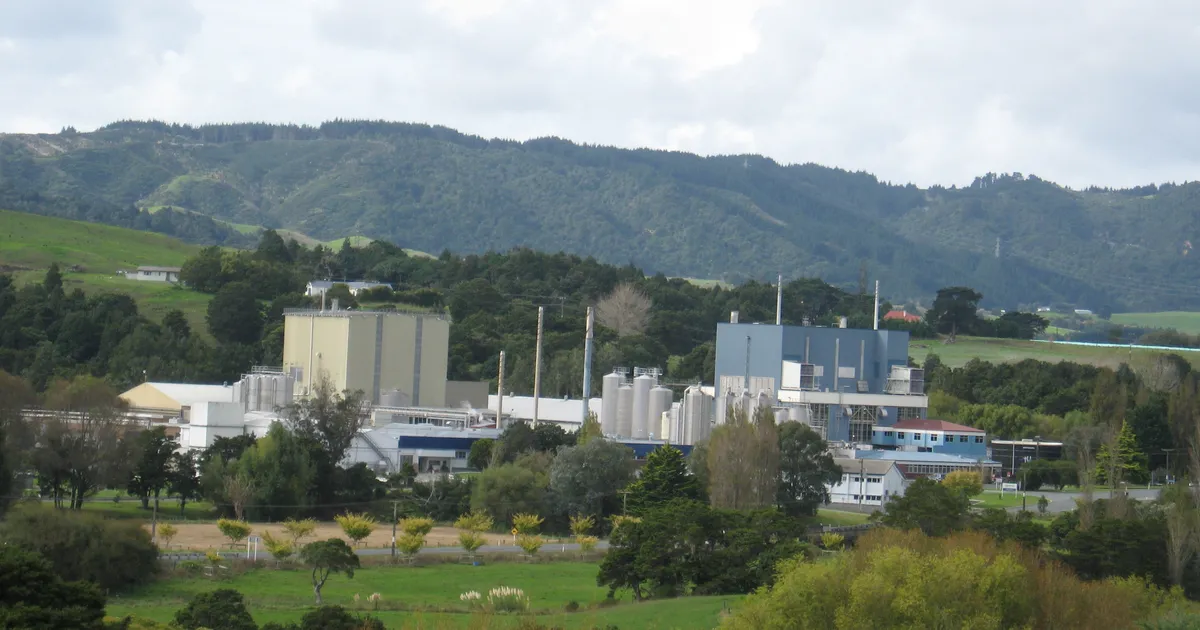
Fonterra has spent decades being told that the money is at the consumer end, where brands command loyalty and margin. In March 2026 it completed the $4.22 billion sale of its Mainland Group consumer business to French dairy giant Lactalis, handing over Anchor, Mainland and Kapiti across Australia, New Zealand and international markets. Farmer shareholders backed the deal with 98.85% voting in favour, well above the 75% threshold.
The sale funded a $3.2 billion capital return at $2.00 per share, with the average farmer pocketing roughly $400,000 tax-free. But the strategic question is bigger than the cheque. Fonterra kept Greater China and the Anchor Food Professionals brand, and it is now placing its growth bet not on supermarket shelves but on China’s professional kitchens.
The opening move was a cream at a bakery show
The first concrete signal came in June 2026 at Bakery China, the country’s largest trade show, where Fonterra took a prime pavilion directly opposite rival Yili Group. There it unveiled Anchor Essence Cream, a whipping cream for foodservice operators and the first NZ dairy product to carry the government-backed FernMark Grass-Fed logo.
Fonterra’s president of global foodservice, Teh-han Chow, said the product was designed around a clean label philosophy and that New Zealand provenance and grass-fed production really matter in this market. The target is chefs, bakeries, cafes and restaurant chains, with dairy cream increasingly displacing plant-based alternatives as Chinese consumers trade up. It is a B2B route to the middle-class consumer that sidesteps a retail environment dominated by domestic players.
The numbers say this is not a side bet
Foodservice is already a serious business. Global foodservice revenue hit $6.4 billion in FY2025 with an operating profit of $340 million, and Greater China is the engine. Group-wide, Fonterra reported FY2025 revenue of $26 billion, up 15%, with operating profit of $1.73 billion. The 2024/25 Farmgate Milk Price landed at $10.16 per kgMS, pushing $15.3 billion out to farmers.
The December 2025 Q3 update kept the momentum going, with year-to-date operating profit of $1.8 billion and full-year guidance lifted to 60-70 cents per share. The opening 2026/27 milk price forecast is $9.75 per kgMS. The number to watch is the target of returning earnings to FY25 levels by FY28, without the Mainland contribution that just walked out the door.
Why China and why kitchens
China is New Zealand’s largest single dairy market at roughly 35% of export volume, and with Fonterra accounting for around 77% of national milk production, its choices set the sector’s direction. Executives argue that while China’s population growth is slowing, the wealthier middle class keeps expanding and there is plenty of that population Fonterra has not accessed yet.
This is a technical services play, not a commodity dump. Fonterra runs six application centres across China where its chefs develop recipes alongside customers, embedding the company in their product development. A Food Navigator Asia analysis in April 2026 noted local application centres and UHT cream plant construction are central to the strategy, and that for incoming CEO Richard Allen, the real work begins now.
The eggs-in-one-basket problem
Not everyone is convinced. In August 2025, Lincoln University professor Alan Renwick warned Fonterra was putting its eggs in one basket and moving away from a diversified business. His structural point is hard to dismiss. When you sell ingredients, he said, it is much easier to be substituted than when you are at the consumer end where you have brand loyalty. A buyer can swap cream suppliers without their customers ever noticing; a shopper cannot so easily abandon a brand they trust.
Fonterra’s answer is that grass-fed New Zealand provenance, now formalised through the FernMark logo, is differentiation Chinese domestic producers cannot easily copy. Whether that holds up as well as brand equity is the unresolved question, and the Food Navigator Asia view framed it bluntly as whether Fonterra can turn sharper focus into sustained execution.
For farmers who just banked the dividend, the verdict comes at FY28. If foodservice and ingredients can replace what Mainland delivered, the sale looks like clean strategic discipline. If the cream gets commoditised, they will have traded durable brands for a harder fight, with the bulk of the country’s milk riding on the outcome.
Sources
- Fonterra’s high-stakes bet on foodservice growth in China after $4.2b brand sale to Lactalis (2026-06-24)
- Fonterra debuts FernMark grass-fed Anchor cream at Bakery China (2026-06-24)
- Fonterra bets big on protein after its $4.2b Mainland sale as global demand surges (2026-06-24)
- Milking it: Fonterra completes $4.22 billion sale of its consumer business to Lactalis (2026-03-31)
- Fonterra reports continued strong performance in FY25 (2025-09)
- Sustained performance in Q3 as Fonterra executes on strategy, announces 2026/27 Farmgate Milk Price (2025-12)
- Expert warns Fonterra putting ‘eggs in one basket’ with billion-dollar sale (2025-08-22)
- Fonterra strategy: what CEO Richard Allen should focus on next (2026-04-21)
- Dairy and Products Annual – New Zealand (2025-08)