

The world’s farm, someone else’s bakery
New Zealand will ship $64.3 billion worth of food and fibre to the world in the year to June 2026, with dairy alone heading for a record $28.6 billion. Food and fibre now accounts for 82.9% of all goods exports. No developed economy on earth is more specialised in feeding other people.
Yet in 2023, the country imported 697,000 tonnes of wheat and flour. In most years, 100% of that imported wheat comes from Australia. The North Island, home to 80% of the population, has virtually no domestic flour supply chain. From breakfast cereal to sandwich bread to pasta, the staple grain underpinning daily meals arrives by ship from a single trading partner.
That is not a farming curiosity. It is a supply-chain concentration risk sitting underneath every food manufacturer, commercial baker, and supermarket in the country.
Canterbury grows wheat nobody can mill up north
New Zealand does grow wheat, primarily in Canterbury. But as analyst Keith Rankin wrote in May 2026, the domestic crop “mostly becomes animal feed” because the North Island lacks milling capacity and inter-island shipping is prohibitively expensive.
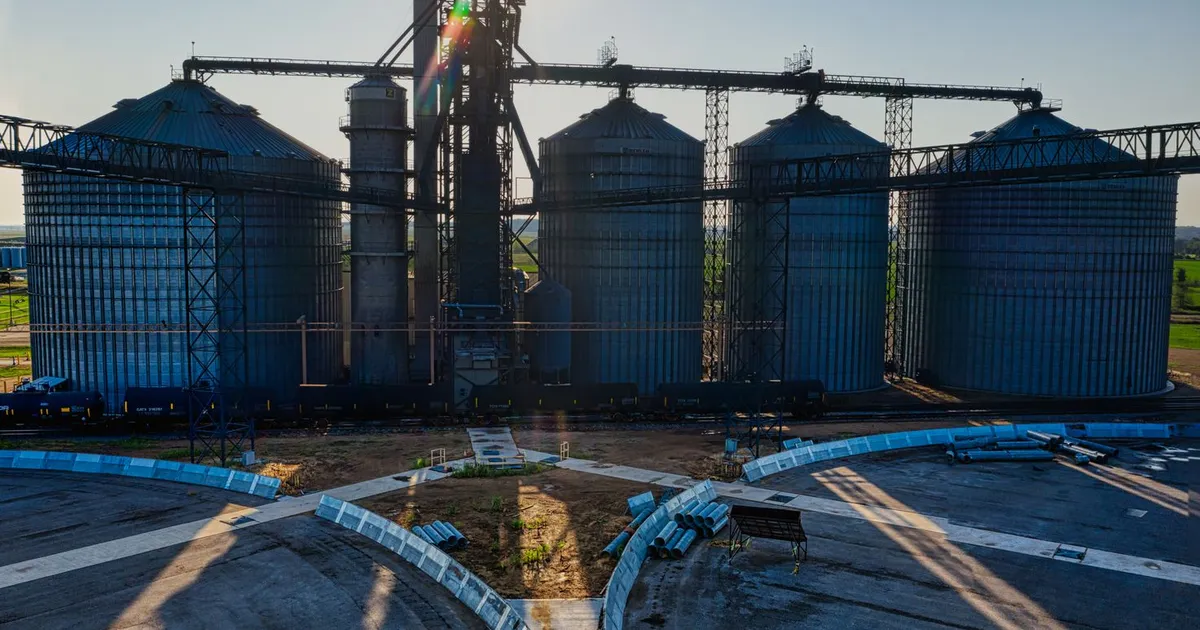
The infrastructure deficit is self-reinforcing. In a July 2025 investigation, The Spinoff reported that silos, grain elevators, and mills in the North Island had been mothballed as cheaper Australian imports made domestic processing uneconomic. Without throughput, no one invests in new capacity. Without capacity, there is no throughput.
Cook Strait is the physical chokepoint. In 2025, Angela Clifford, CEO of food advocacy collective Eat New Zealand, described the strait as acting “like a toll road”, noting that ferry companies have “commercial incentives to make money, not enable New Zealand products to get to the other side.” Bulk Australian grain arriving at Northport or Tauranga by large vessel simply undercuts South Island grain shipped domestically.
A shrinking domestic base with flat prospects
The arable sector is not filling the gap. It is contracting. The December 2025 AFIC economic assessment found the industry produced 2.3 million tonnes of grains, maize silage, and seeds in 2024, generating direct sales of $1.2 billion and supporting 2,886 full-time equivalents. Arable exports reached $345 million in 2024, but vegetable seeds, not food grains, account for 36% of that figure. AFIC forecasts only modest growth to $370 million by 2029 as global oversupply keeps prices suppressed.
Meanwhile, today’s Stats NZ trade data shows annual goods imports running at $84.2 billion against $81.0 billion in exports, a $3.2 billion deficit. The grain dependency is a microcosm of a broader structural pattern: export premium product, import cheap staples, and hope the supply lines hold.
One drought away from a crisis
Rankin framed the exposure bluntly in his May 2026 analysis: “New Zealand is almost completely dependent on four things for its survival in the contemporary world. Imported wheat, rice, and refined fuel. And ships.”
A single Australian drought, an export restriction, or a port disruption on the eastern seaboard would flow into North Island flour supply within weeks. New Zealand has no meaningful coastal shipping network that could serve as a domestic distribution fallback. In April 2026, Rankin identified a dual-shock scenario in which the export model faces “sudden and simultaneous supply and demand shocks” because farming depends on imported fuel and fertiliser while export earnings depend on global demand for luxury foods, not staples.
A May 2026 Scoop commentary went further, arguing that New Zealand should establish a store of rice for food security and that any transition toward domestic staple production would take years, meaning the window to act is now.
What this means for business
For food manufacturers and commercial bakers in the North Island, the message is straightforward: your flour supply chain has a single point of failure, no domestic backup, and no buffer stock. Any disruption to Australian grain exports or trans-Tasman shipping translates directly into input cost spikes or outright shortages.
For millers and grain traders, investing in North Island capacity remains uneconomic while Cook Strait logistics go unaddressed. For retailers who watched butter prices spike when global dairy demand surged, wheat is next in line if a supply shock hits.
The economic logic of specialisation is sound. New Zealand should export what it produces best. But an economy that generates $64 billion feeding the world while depending on a single foreign source for its own bread has not priced in the risk. The question is whether anyone acts before a crisis forces the calculation.
Sources
- Situation and Outlook for Primary Industries (SOPI) – December 2025 (2025-12)
- The Spinoff: Aotearoa is a great place to grow wheat. So why do we import so much flour? (2025-07-01)
- Keith Rankin Analysis – New Zealand’s Dependence: Wheat, Rice, Fuel, Ships (2026-05-05)
- Keith Rankin Analysis – Marooned in the Pacific Ocean: Famine Down-Under? (2026-04-20)
- AFIC Economic Impact Assessment – December 2025 (2025-12)
- Stats NZ: Overseas merchandise trade March 2026 (2026-06-20)
- Scoop: New Zealand’s Dependence: Wheat, Rice, Fuel, Ships (2026-05)