

The numbers everyone agrees on
New Zealand’s consumer price index hit 3.1% annually in the March 2026 quarter, already above the Reserve Bank’s 1-3% target band. The June quarter will be materially worse. Treasury’s Budget Economic and Fiscal Update forecasts CPI at 4.0%. The RBNZ’s own April projection pencils in 4.2%. ASB senior economist Mark Smith puts his number at 4.3%. Infometrics is the most pessimistic, forecasting a peak of 4.8%.
The range is 4.0 to 4.8%. There is no credible forecast below 4%. The inflation fight that many businesses assumed was winding down has reversed course entirely.
Fuel lit the fuse
The trigger is the Iran conflict and the effective closure of the Strait of Hormuz. Stats NZ spokesperson Nicola Growden confirmed the scale: “In the two months since February 2026, petrol has increased 33.6 percent and diesel has increased 94.9 percent.”
The Selected Price Indexes for April 2026 put it in sharper terms: petrol up 12.6% in a single month and 30.1% annually, diesel up 36.6% in a single month and 91.3% annually. Average petrol now exceeds $3.30 a litre. Treasury estimates higher fuel costs alone add approximately one percentage point to headline annual CPI.
Infometrics chief executive Brad Olsen called the fuel price rises “off the scale”, adding that the speed caught firms before they could recover the higher costs.
The grocery pipeline is still filling
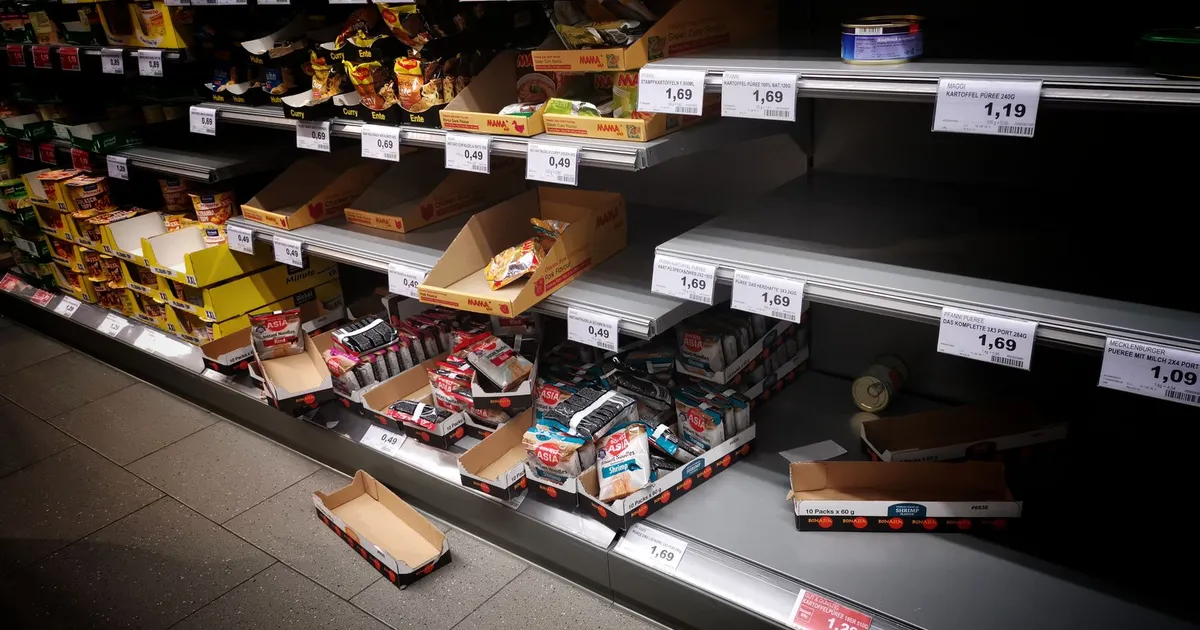
Here is the detail most coverage is missing. The Infometrics-Foodstuffs Grocery Supplier Cost Index for April 2026 showed supplier costs up just 2.0% annually, actually a slowdown from recent months. That sounds benign until you understand the index largely reflects orders placed before the conflict escalated.
Olsen was explicit about what comes next: “Given usual lead times for cost changes to flow through supply chains, more of the immediate direct impacts are expected to show through over the next few months.” The sequencing matters. Fuel costs hit first, then plastics and packaging, then fertiliser, each with its own lag. Infometrics describes “multiple cost channels undergoing adjustments” that will ripple through for several quarters.
Even at the current modest level, over 2,200 products increased in cost from March to April. Seafood supplier costs rose 4.9% annually. Produce costs climbed 2.5%. These numbers will look quaint by September.
Blaming supermarkets is politically convenient and economically wrong
The Grocery Commissioner has warned supermarkets not to use the conflict as cover for margin expansion. Consumer NZ has renewed calls for an excessive pricing regime. The framing is predictable: grocers as the villain.
But supermarkets are a transmission mechanism, not the source of the shock. For every dollar on-shelf, roughly two-thirds goes to suppliers. When those suppliers face higher freight, fuel, packaging, and fertiliser costs, the maths flows one way. The Grocery Code may prevent egregious margin-padding, but it cannot repeal the price of diesel. Directing public anger at checkout prices while ignoring the geopolitical cause is a distraction businesses cannot afford.
The rate cut era just ended
The inflation reversal kills the interest rate outlook that many firms were banking on. The RBNZ held the OCR at 2.25% in April, but the easing cycle is over. Infometrics forecasts three OCR hikes in 2026 starting July, with the rate reaching 4% by mid-2027. Mark Smith forecasts the OCR ending 2026 at 3.25%.
For businesses with variable-rate debt or upcoming refinancing, the window for cheap money has slammed shut.
Costs were already elevated before the war started
The fuel shock is landing on a cost base that was already stressed. The March 2026 CPI data shows electricity up 12.5% annually, the single largest contributor to the 12-month figure. Local authority rates rose 8.8%. Meat and poultry were already up 8.6%. These are structurally embedded, non-tradeable costs that do not ease when global commodity prices moderate.
Meanwhile, Infometrics has revised GDP growth down from 2.5% to 1.3% for 2026 and cut household spending growth to just 0.8%. That is the worst combination available: rising costs meeting falling demand.
What businesses should be doing now
Any firm that set 2026 pricing on the assumption of easing inflation needs to revisit those models immediately. The grocery supply chain shock has not yet arrived at the checkout, but it is loaded and moving. Wage pressure will intensify as workers who accepted modest increases in 2025 see inflation back above 4%. Businesses with significant freight exposure should be reviewing supplier contracts for fuel surcharge clauses before they appear on invoices.
The political class will spend the next quarter blaming supermarkets. Businesses that want to survive the squeeze should spend it repricing.
Sources
- Stats NZ: Consumers price index: March 2026 quarter (2026)
- Stats NZ: Selected price indexes: April 2026 (2026-05)
- Treasury: Budget Economic and Fiscal Update 2026 (2026-05-28)
- Infometrics: Iran War set to deliver higher inflation and interest rates despite weaker economy (2026-04)
- Infometrics: Costs from grocery suppliers to supermarkets increase 2.0%pa in April (2026-05)
- Scoop: ‘Never Seen Anything Like It’: Fuel Prices Rocket Upwards, Food Stays Flat (2026-05)