

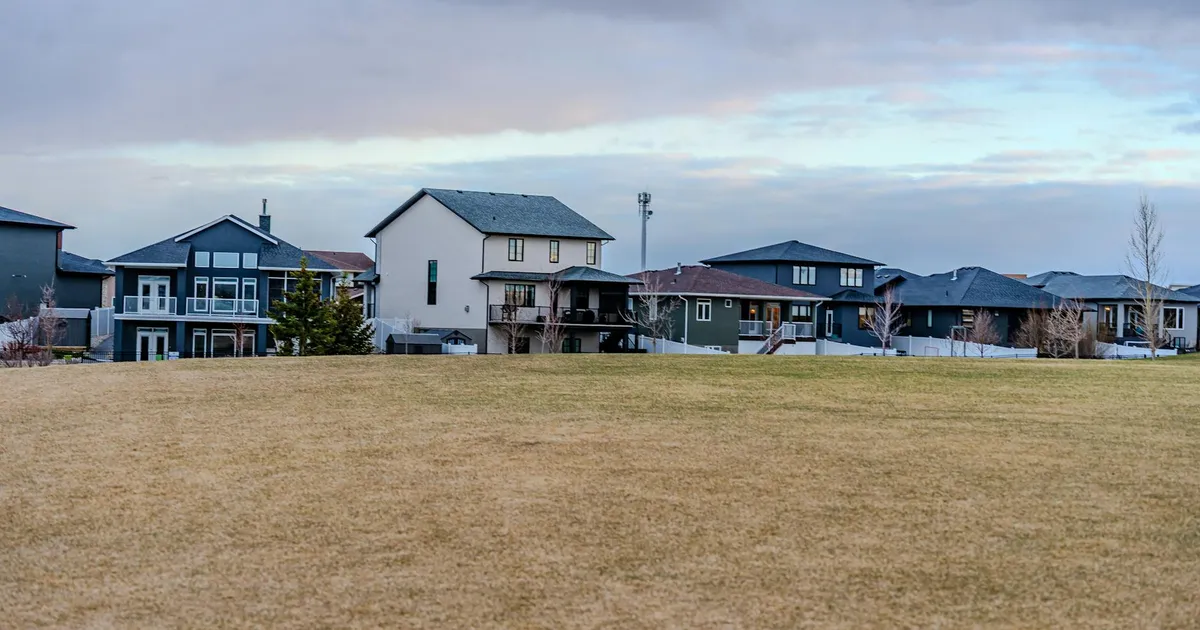
A project three decades in the making finally has momentum
While consent volumes have dropped, financing costs have squeezed apartment pipelines, and developers across Auckland and Wellington have shelved or scaled back projects, Hamilton’s southern corridor is pushing ahead with what amounts to one of the largest greenfield housing developments in the country.
The project, which has been in planning for more than 30 years, is designed to deliver a $500 million mixed-use community housing approximately 20,000 residents. It includes residential, commercial, and infrastructure components, positioning it as a self-contained suburb rather than another dormitory bolted onto an existing road network.
That it has survived three decades of planning cycles, council changes, and shifting national policy frameworks and still attracted serious capital is the real story. In New Zealand’s planning environment, most projects of this ambition die in consenting.
The national backdrop makes Hamilton an outlier
New Zealand’s construction sector has been in retreat. Building consent data from Stats NZ has shown a sustained decline from the pandemic-era peaks, with multi-unit consents in Auckland particularly hard hit. Rising interest rates through 2023 and 2024 choked off financing for medium-density projects, and the pipeline of apartments and townhouses that was supposed to ease the housing crisis has thinned considerably.
Regional centres, however, have told a different story. Lower land costs, simpler consenting paths, and population growth driven by both domestic migration and affordability pressures have kept greenfield economics viable in places like Hamilton, Tauranga, and the wider Waikato.
Hamilton itself has been one of the fastest-growing cities in New Zealand for the better part of a decade. Its proximity to Auckland, combined with materially lower house prices, has made it a magnet for families and businesses priced out of the Supercity. A development designed for 20,000 people is not speculative in that context. It is responding to demand that already exists.
Greenfield is winning the policy argument by default
The previous Labour government’s urban development agenda leaned heavily on intensification. The Medium Density Residential Standards and the National Policy Statement on Urban Development were designed to push growth upward rather than outward, particularly in Auckland, Wellington, Hamilton, and Tauranga.
The current government has taken a more permissive approach to greenfield expansion, recognising that intensification alone was not delivering the volume of housing the country needs. That policy shift has practical consequences. When the regulatory path is clearer for greenfield, capital follows. Hamilton’s southern expansion is exhibit A.
This is not an argument against density. It is an observation that when you let the market signal where it wants to build, and remove enough of the regulatory friction to let it happen, large-scale projects find funding even in a contracting sector. The centre-right instinct that planning regimes should enable rather than dictate development patterns has a $500 million proof point sitting on Hamilton’s southern boundary.
What 20,000 new residents mean for business
A community of 20,000 people is not just a construction project. It is a demand generator across virtually every consumer-facing sector.
Retail, healthcare, education, childcare, professional services, hospitality, and logistics businesses all follow population. The commercial component of the development signals that planners expect a local services economy to emerge alongside the residential build, rather than funnelling all economic activity back into Hamilton’s existing CBD.
For construction and civil engineering firms, the project represents years of sustained work in roading, water infrastructure, and building. For building materials suppliers, it is a volume anchor in a market where order books have thinned. For service businesses considering expansion into the Waikato, it is a signal about where the next pocket of concentrated demand will form.
Hamilton City Council and Waikato Regional Council hold the detailed planning and consenting records that will determine the exact timeline and staging. Businesses looking to position early should be watching those consent registers closely.
The question nobody has answered yet
The missing piece is infrastructure funding. A development of this scale requires roads, water, wastewater, and stormwater systems that cost hundreds of millions before a single house generates rates revenue. Who pays, and when, will determine whether the project delivers on its promise or becomes another cautionary tale about ambition outrunning fiscal reality.
Hamilton’s earlier Peacocke development, also on the city’s southern edge, required Crown infrastructure funding to proceed. Whether the same model applies here, or whether development contributions and council debt carry the load, is the fiscal question that should matter most to ratepayers and investors alike.
Half a billion dollars of private capital is a vote of confidence. But confidence needs pipes, roads, and a funding model that does not leave ratepayers holding the risk. That is the conversation Hamilton needs to have next.
Sources
- RNZ: Hamilton’s $500m southern expansion shows where housing growth is still happening
- Interest.co.nz: Property section – Regional Growth Trends
- Beehive: Government releases on housing and greenfield development
- Hamilton City Council: Development plans and consents
- Waikato Regional Council: Regional planning data