

A town that cannot absorb the hit
Kaitāia is not Auckland. When two timber mills in the Far North face possible closure and roughly 200 jobs hang in the balance, the damage radiates through every corner of the local economy. The Far North District sits among New Zealand’s most deprived territorial authority areas, with unemployment consistently running above the national average and an economic base so narrow that forestry, agriculture, and tourism account for most of the paid work available.
Lose 200 manufacturing jobs here and you do not just lose 200 pay packets. You lose the mechanic who services the trucks, the cafe that feeds the shift workers, and the families whose kids attend the local school. The multiplier effects in a regional town are savage in a way that a spreadsheet in Wellington never quite captures.
Logs leave, value stays offshore
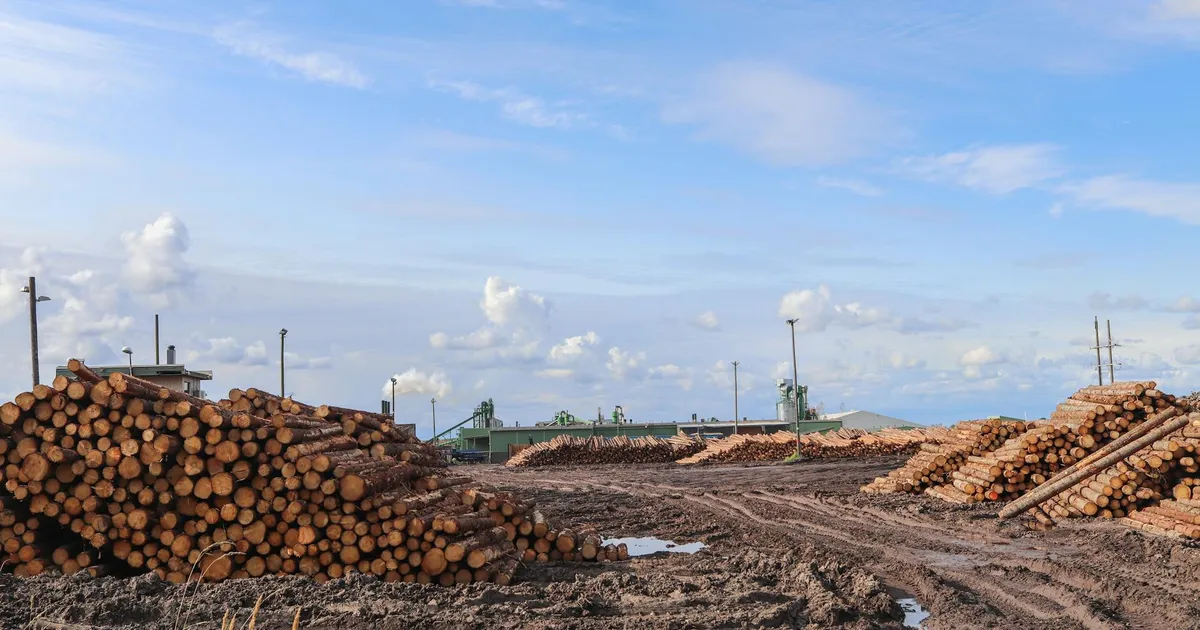
Here is the fact that should make every business owner uncomfortable. New Zealand’s forest harvest has been running at or near record levels, yet domestic processing plants keep closing. The economics at the firm level are simple: exporting raw logs to China requires less capital, lower operating costs, and carries less risk than running a sawmill. But the aggregate effect is that New Zealand captures a fraction of the potential value from its forest estate.
Industry groups have long argued that the country is exporting jobs along with its timber. Every unprocessed log that leaves a Northland port represents wages, margin, and economic activity that accrues to someone else’s economy. The Kaitāia closures are not an aberration. They are the logical endpoint of a system that has never seriously tried to tilt the incentives toward domestic processing.
Energy costs are the proximate killer
Sawmilling is energy-intensive, and New Zealand’s industrial electricity prices have been a persistent drag on manufacturing competitiveness. Industry bodies have repeatedly pointed out that New Zealand manufacturers pay more for power than their Australian counterparts, a gap that compounds every other cost disadvantage.
The government’s energy agenda, focused on consenting reform and renewable generation targets, has not yet translated into cheaper power for industrial users. For a timber mill in Kaitāia running kilns and saws around the clock, the electricity bill is not a line item to optimise. It is the difference between viability and closure. Until energy policy is evaluated partly on what it delivers for manufacturers, not just households, the structural squeeze will continue.
No strategy, just sympathy
New Zealand does not have a national manufacturing strategy. Not a lapsed one, not a draft one. It simply does not exist. The current National-led coalition has prioritised deregulation, fiscal consolidation, and infrastructure investment, all defensible priorities, but none of them amount to a coherent framework for keeping manufacturing alive in the regions.
Previous Labour governments talked about value-add in the primary sector but never translated the aspiration into durable policy settings. The result is a pattern so familiar it barely registers as news: a mill closes, a minister expresses concern, a regional development fund dispenses modest retraining money, and nothing structural changes.
This is not an argument for subsidising uneconomic operations. It is an argument for creating conditions in which manufacturing can be economic. Cheaper energy through genuine supply-side reform. Long-term wood supply certainty for processors so they can justify capital investment. Procurement settings that do not systematically favour imported processed timber over the domestic product.
The fiscal feedback loop Wellington ignores
There is a fiscally conservative case for acting, not just a social one. Every closure in a place like Kaitāia increases benefit dependency, reduces local tax revenue, and increases demand for central government transfers. The Northland Regional Council has tracked these dynamics for years. Letting regional manufacturing atrophy does not save the government money. It shifts the cost from industry policy to welfare spending, which is harder to reverse and delivers worse outcomes.
Each closure also reduces the critical mass of processing infrastructure. Skilled workers leave, supply chains fragment, and the cost of restarting or building new capacity climbs. The sector is not in a temporary trough waiting for the cycle to turn. It is structurally shrinking, and every year of inaction raises the eventual price of reversal.
What happens next is probably nothing
The most likely outcome for Kaitāia is the standard playbook: short-term transition support, expressions of regional solidarity, and no change to the underlying settings. The logs will keep leaving. The mills will keep closing. And the next time it happens, in Kawerau or Whakatāne or wherever the economics tip next, the same people will express the same surprise.
A government that describes itself as pro-business and pro-growth should be able to articulate what it wants from New Zealand’s manufacturing sector and what it is prepared to do about energy costs, resource access, and procurement to get there. Two hundred jobs in Kaitāia are waiting for an answer that is not coming.