

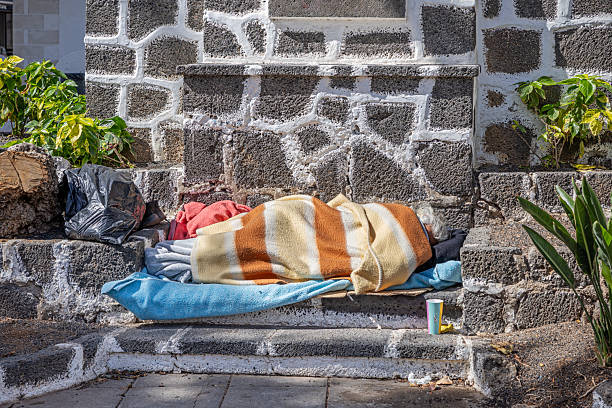
A Community Housing Aotearoa report warns that homelessness has hit record levels, with a lack of affordable housing worsening the situation.
Chief executive Paul Gilberd said New Zealand already has the “programmes and capacity” to end homelessness, provided there is sufficient political will to achieve it.
“We can solve it as a nation here in New Zealand,” he said.
“It really is a political choice.”
While Gilberd welcomed the government’s steps toward social housing reform, he said politicians must be “far more bold” in tackling the housing crisis.
The organisation is calling for 3,000 new social and affordable homes to be built annually over the next decade.
“There are some very, very significant gaps which people fall through when they’re navigating their way around the complexity of different systems and different agencies.”
“If we just worked together better and started closing some of those gaps, that would deliver really tremendous outcomes.”
“What we really need to do is get inside the minds of the people in Treasury and question that philosophical position that they seem to have that it’s a bad idea to borrow money to build houses to house our people,” he said.
“We say it’s the best investment you can possibly make.”
“You not only have an asset on your balance sheet, which, if you need the cash back, you can sell; it’s reasonably liquid, but you also have an asset with a use value of 10, 20, or 50 years where you are adequately housing all our people. That saves us as taxpayers billions of dollars on corrections, on health, on mental health and all the goodness that comes from people having a safe, warm, accessible home.”
Community Housing Aotearoa’s report says homelessness could also be reduced through earlier intervention, including preventing people from being discharged from hospitals, prisons, and psychiatric care into homelessness without housing arrangements in place.
The report has also found that Māori made up 28.8% of people experiencing homelessness, despite accounting for 17.1% of the population. Pacific peoples represented 22.6% of those experiencing homelessness, compared with about 8% of the population.
Gilberd said there is no one-size-fits-all solution and called for more tailored, locally led housing responses, including Māori- and Pacific-led approaches.
The report also highlighted the number of young people experiencing homelessness, noting that more than half of those affected are under the age of 24.
Gilbert said that, while the findings were confronting, the sector remains optimistic that homelessness can be reduced.
“We’re never going to give up, not until everybody’s housed,” he added.