

A vote about maps, not planning theory
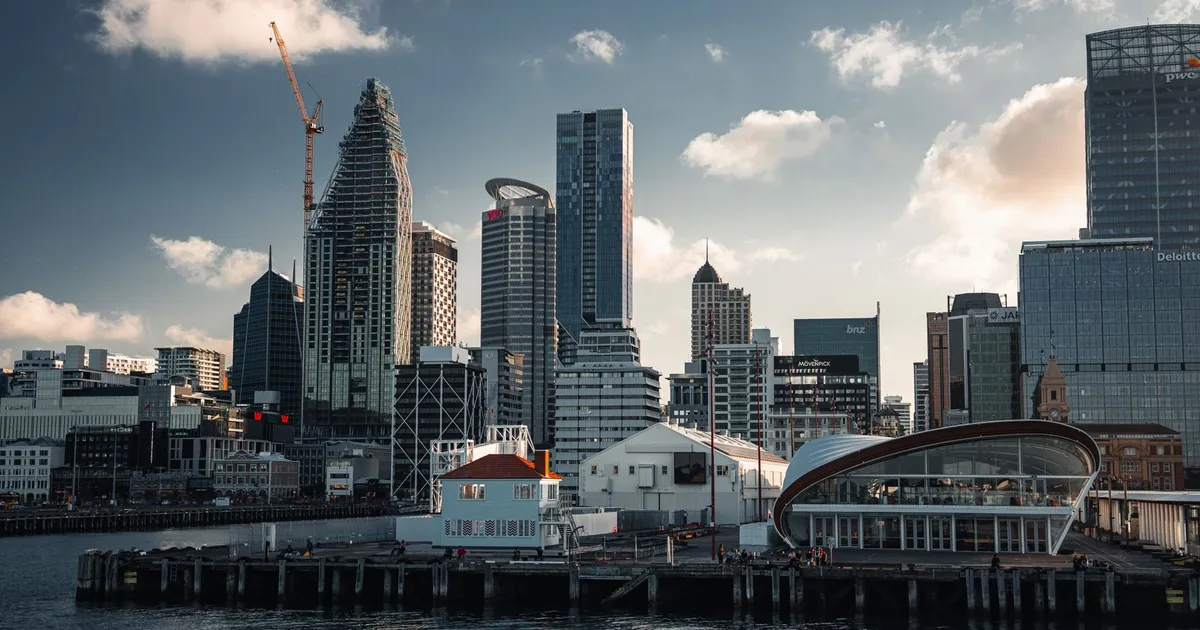
Strip away the five-year fight over character streets and heritage villas, and the Plan Change 120 (PC120) vote on 21 July 2026 comes down to one thing every developer and infrastructure investor should be reading closely. It decides where land value, construction capacity and future housing supply will be allowed to concentrate in New Zealand’s largest city.
The answer is a compromise. About 85% of Auckland’s urban land area now falls outside the new density rules. The remaining 15%, concentrated along rapid transit corridors and within a 10km radius of the city centre, becomes the designated zone for Auckland’s next building cycle.
Richard Hills, chairman of Auckland Council’s Policy, Planning and Development Committee, framed it as certainty over perfection. “We’ve spent five years in this washing machine,” he told RNZ. “People absolutely need clarity about where they can and cannot build in their community.”
Where the towers actually go
The compromise proposal permits 10 to 15 storeys for some areas within 10km of the city centre and at inner train stations along the Western, Eastern and Southern rail lines. Six storeys are allowed within walking distance of rapid transit, town centres and the busiest bus routes. The 14 hubs sitting more than 10km out are capped at six storeys, down from earlier proposals, and small local centres are removed from six-storey requirements entirely.
Hills was blunt about the geographic targeting, saying the council was “largely landing in the place where we’re doing all the legal requirements but adding density to that six-storey development around frequent transport corridors, the really busy bus routes heading into the city.”
The postcodes that just gained value
The redistribution effect is what matters for capital allocation. While PC120 shows a marginal city-wide capacity change, the council’s October 2025 technical report shows the central isthmus soaking up the upside. The Albert-Eden local board area gains a 60% increase in housing capacity. Waitematā gains 26%, Maungakiekie-Tāmaki 25%.
The commercial signal is sharper still. Business zones in Franklin jump 176%, Albert-Eden 43% and Ōrākei 42%, pointing squarely at commercial-to-residential conversion opportunities in the inner ring. If you own developable land in those areas, the council has just told you your ceiling went up.
The $3.2 billion left on the table
Going conservative has a price, and the council put a number on it. Its own analysis estimated the most intensive scenario would deliver $3.9 billion in economic benefit over a decade, against $700 million for the least intensive. The compromise sits between those poles, meaning Auckland has chosen to forgo a substantial share of a $3.2 billion gap in exchange for fewer disrupted suburbs.
Staff’s preferred option would still enable 1.5 million to 1.7 million homes, clearing the Government’s revised minimum of 1.4 million. That minimum has itself been walked back hard. A Cabinet document from February 2026 shows the original mandate exceeded 2 million dwellings before being cut to 1.6 million, then trimmed again to 1.4 million.
Why waiting may no longer be an option
The sharpest risk for the property sector is legal, not political. NBR reported a developer’s concern that the partial withdrawal process cannot be legally restored once enacted. If correct, the 85% of Auckland placed outside the rules is not parked for later, it is excluded from this cycle. That flips the calculus for outer-suburban landowners from wait-and-see to this-is-your-ceiling.
Not everyone is unhappy. Connor Sharp, campaign manager for advocacy group Greater Auckland, called it “a decent enough compromise” that keeps intensification within the isthmus. Sally Hughes, chairwoman of the Character Coalition, was “really disappointed” that special character suburbs inside the 10km zone will not escape intensification, and has signalled a fight at the Independent Hearings Panel.
What happens next
The vote gives directional certainty, but final rules are still roughly a year away. New hybrid planning rules go out for public consultation in August 2026, with a council decision hoped for by mid-2027, and the proposal first heads to the Independent Hearings Panel. For developers weighing capital, the question is whether the directional signal is strong enough to move on now. Given the irreversibility concern hanging over the 15% zone, sitting on the sidelines may be the riskiest position of all.
Sources
- ‘People just need certainty’: Councillors to vote on controversial housing density plan (2026-07-21)
- Auckland planning future: The battle for tall towers versus suburban quiet (2026-07-20)
- Auckland Council votes: Most of city to avoid sweeping plan changes, but billions of dollars could be lost (2026-07-21)
- Housing Capacity Modelling Report: Auckland Council Technical Report PC120 (2025-10)
- Resource Management (Auckland Housing) Amendment Bill: Approval for Introduction (2026-02-16)