

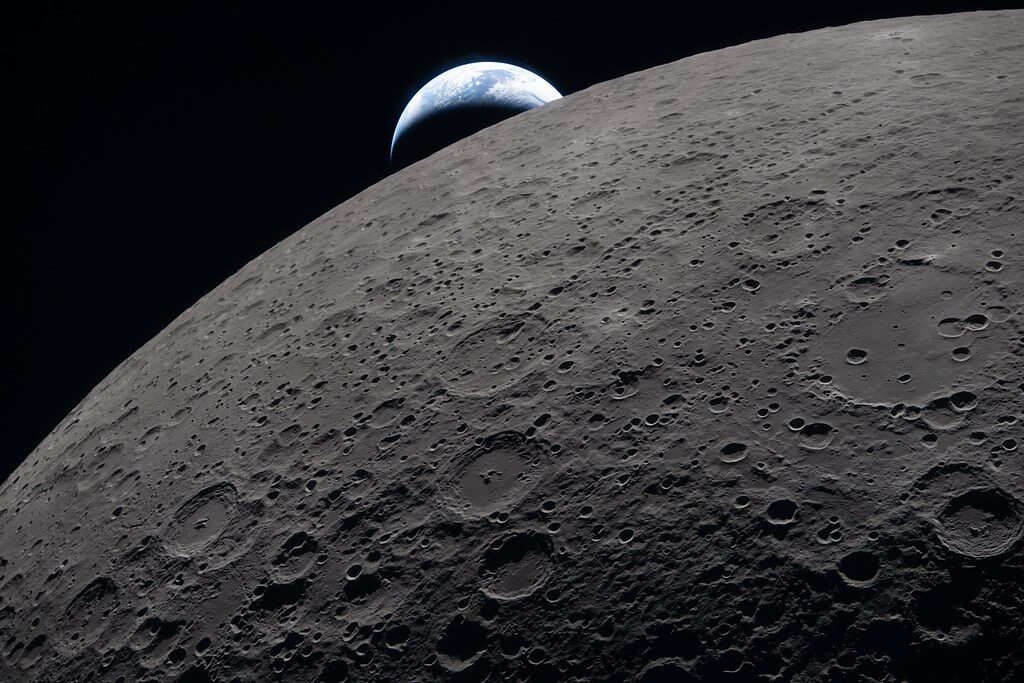
NASA has detailed the next phase of its plan to establish a lasting base on the Moon, as the United States seeks to return astronauts to the lunar surface while China advances its own crewed lunar ambitions.
The agency wants to send robotic landers, hopping drones, rovers, scientific instruments, and power systems to the Moon before people arrive. These machines are expected to survey difficult terrain, deliver cargo, test landing technologies, and prepare the ground for future crews near the lunar south pole.
Several private companies have been selected to support the effort, including Blue Origin, the space company founded by Amazon’s Jeff Bezos, as well as Intuitive Machines and Astrobotic. NASA said the technology will help build the foundations for a base that could support scientific research, resource exploration, and future missions to Mars.
NASA administrator Jared Isaacman said on Tuesday that the announcements mean the U.S. will “never give up the Moon again.”
The renewed push comes amid growing pressure from China, which aims to land astronauts on the Moon by 2030. Beijing has continued to expand its space programme through missions to its Tiangong space station, including the launch of Shenzhou-23 on Monday.
NASA’s plan begins with an uncrewed exploration phase expected to last until 2029. Carlos García-Galán, the Moon Base programme executive, said the agency intends to carry out 25 launches and deliver about four metric tonnes of cargo to the lunar surface during that period.
Blue Origin’s Endurance lander is being developed for precise landings and autonomous navigation, while Astrobotic’s Griffin-1 lander is expected to target Nobile Crater near the south pole. The region is considered valuable because frozen water there could potentially be turned into drinking water, oxygen, or rocket fuel.
By 2032, NASA hopes to have power facilities, long-range rovers, and “semi-permanent” housing for astronauts. However, experts say the schedule remains uncertain because NASA still needs a reliable system to land humans safely.
“It would not surprise me at all if China gets there first,” Dr Simeon Barber, lunar scientist at Open University, told BBC News, citing NASA’s setbacks in securing a craft that can land humans on the Moon.
“The limiting step is getting the astronauts down onto the surface,” said Dr Barber.
“It sounds to me like [NASA] feel they’re in a position where they have to start saying they’ve got plans. So I think there’s a lot of political drive behind this,” he says.