

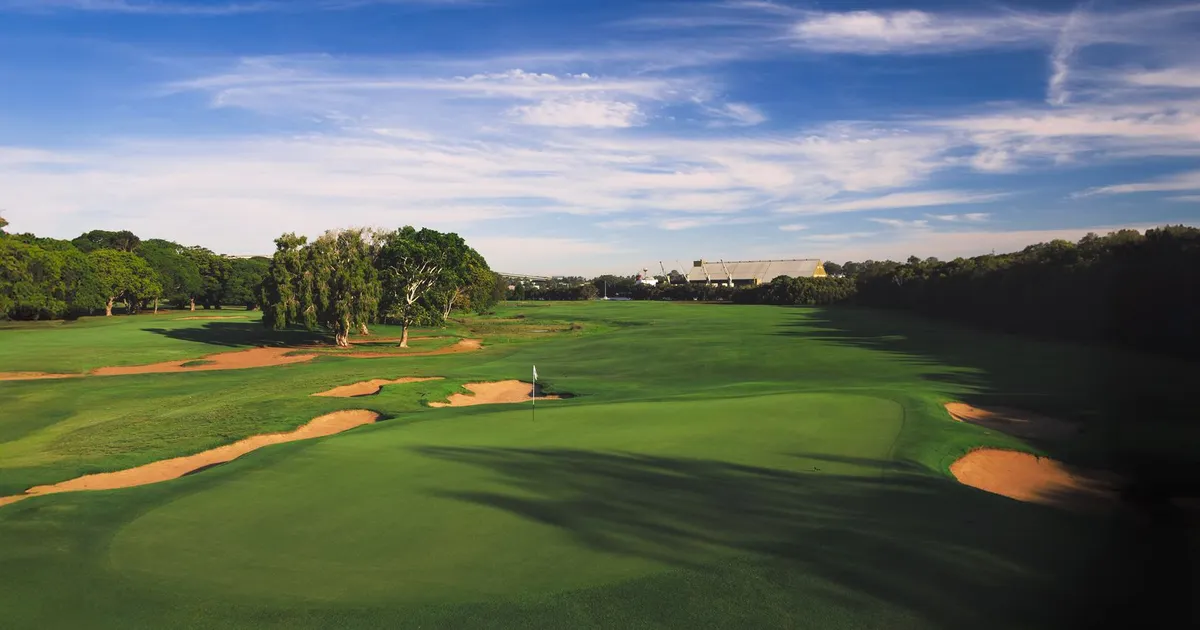
When a Christchurch townhouse developer can pick up 77.66 hectares of partially zoned land in a growth corridor for a reported $6 to $7 million, the question is not whether the deal was smart. It is what kind of market produces that price.
Wolfbrook Property Group’s acquisition of the Pegasus Golf Course, marketed by Bayleys as a mortgagee tender closing in April, is the clearest illustration yet of how brutally parts of the New Zealand land market are being repriced. The site sits 25 minutes north of Christchurch with 18,000 vehicles a day passing it. It includes a clubhouse, driving range, pro shop, gym, bar, cafe, and tennis courts. It sold for less than many Auckland houses.
A debt pile nobody could outrun
Pegasus Golf Ltd entered voluntary liquidation on 6 March 2026 owing approximately $8.8 million to creditors, including more than $6 million to secured lenders, over $2.25 million in related party loans, and Inland Revenue arrears. The course opened in 2009, hosted the NZPGA Championship, and changed hands in 2018 when Auckland businessman Xiangming (Sam) Huo purchased it through Sports and Education Corporation Ltd with visions of a five-star resort, luxury hotel, spa, hot pools, and helipad. None of it materialised. By 2024 the course was back on the market and attracting no buyers.
Bayleys national director Wayne Keene described the listing as offering a compelling combination of income, land-hold scale and future flexibility that would resonate with offshore investors. No offshore investor closed. A local developer did, at a price that reflects the absence of competing bids.
Golf Management+Marketing director Mike Godinet, speaking on NewstalkZB, argued that frustration should be aimed at previous owners who mismanaged the property, not Wolfbrook. That is commercially accurate. The price reflects years of failed stewardship, a thin buyer pool, and a liquidator who needed to close.
Construction and hospitality are feeding the fire
The Pegasus deal sits at the intersection of the two hardest-hit sectors in New Zealand’s liquidation wave. Centrix data reported by RNZ shows 3,023 company liquidations in the year to March 2026. March alone recorded 286 liquidations and 308 insolvencies, the worst March since 2015. Construction led all sectors with 768 firms liquidated in the past year, while hospitality recorded 399 liquidations, up 49% year-on-year.
A golf resort with an $8.8 million debt pile and failed luxury ambitions is a hospitality and leisure asset with construction-linked development upside. It is, in other words, the exact kind of asset this cycle is producing at distressed prices.
The rezoning gamble is where the real money sits
Only 5.86 hectares of the 77.66-hectare site is currently zoned for accommodation and tourism. Wolfbrook’s housing proposal covers the entire site, meaning the bulk of the value upside is contingent on rezoning that has not been applied for, let alone granted.
Two pathways exist. A private plan change under the Resource Management Act would involve full public process, submissions, and Environment Court appeal rights. The Fast-track Approvals Act offers truncated public input and no merits appeal. The NZ Initiative’s December 2025 analysis of competitive urban land markets found the planning framework “preserves the conditions under which scarcity rents can persist” with no statutory trigger for releasing new land and no price-signal test for diagnosing scarcity. That structure concentrates rezoning upside in the hands of developers who can navigate the system.
For Pegasus residents, the stakes are personal. Homeowners paid premiums for golf course frontage that may be replaced by townhouse rooflines. That is a lesson in how planning-dependent property values can evaporate when the amenity underpinning them is not legally protected.
More of these deals are coming
The uncomfortable reality for anyone watching this market is that the Pegasus deal is not an outlier. It is a template. Rising liquidations, forced sellers who cannot wait, thin buyer pools, and well-capitalised developers who can execute quickly on assets that passive investors or community groups cannot touch.
At roughly $80,000 per hectare for strategic land in a growth corridor, the price did not reflect the site’s potential. It reflected the seller’s desperation. As long as the liquidation wave continues, and the data suggests it is accelerating, more assets will change hands under the same conditions. The question for business owners is not whether these deals exist. It is whether they are positioned to be the buyer or the seller.
Sources
- Klaut Media: Cannibalising Pegasus – How a 77-hectare slice of a championship course becomes a land bank
- OneRoof: Rare shot at golf course, resort in Canterbury (2026-03)
- FoGolf: New Zealand’s Pegasus Golf Club Enters Liquidation (2026-03-06)
- NewstalkZB: Mike Godinet on Pegasus Golf Course being bought by housing developers
- RNZ: Worst March month for liquidations in 11 years (2026-05)
- NZ Initiative: Competitive Urban Land Markets and the Planning Bill 2025 (2025-12-09)