

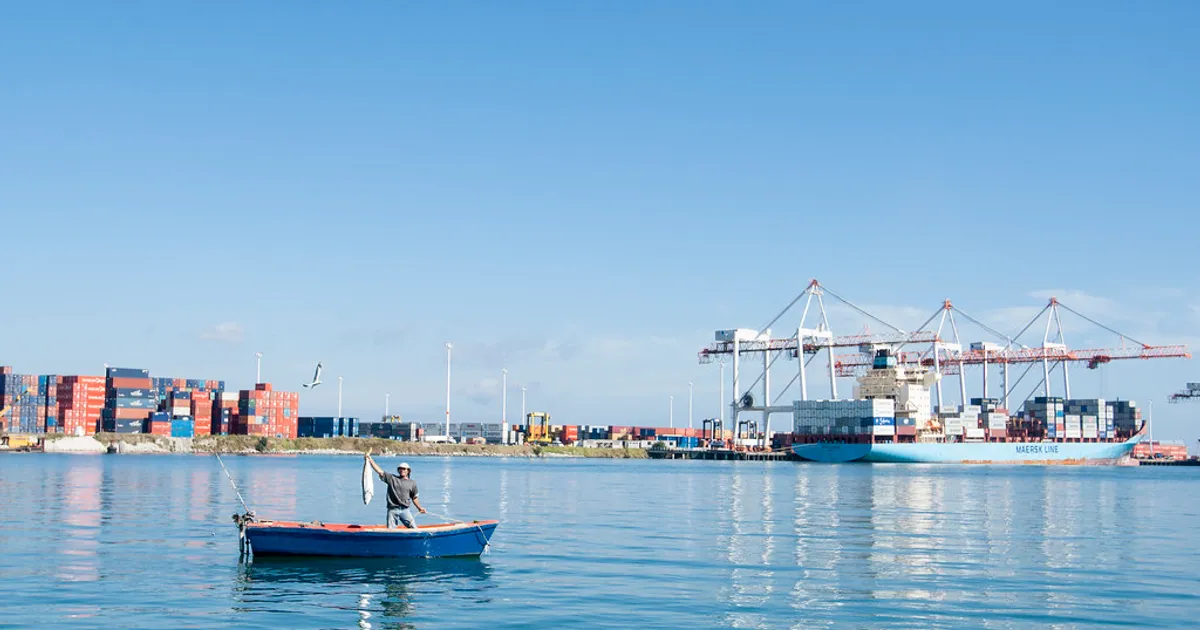
The port that can’t say yes
Port of Tauranga handles more than half of New Zealand’s exports by value and 40 percent of all container trade. There is no close second. So when the port disclosed in August 2025 that it had declined a proposed new shipping service to the Americas because it physically could not fit another vessel at its berths, the implications rippled well beyond the Bay of Plenty.
That service would have delivered an estimated $65 million to $90 million per year in international freight savings to New Zealand importers and exporters. Not the port’s revenue. Money that would have stayed in the pockets of businesses shipping real product, through lower rates and better competition on trade lanes. Instead, it walked.
Board chairperson Julia Hoare did not mince words: “The ongoing delays in obtaining a resource consent for the Stella Passage development are extremely frustrating and are reaching crisis point as the port is forced to turn away shipping services due to a lack of berth capacity.”
Record profits disguise a physical ceiling
The FY25 numbers look excellent on paper. Revenue climbed 11.3 percent to $464.7 million, container volumes rose 5.3 percent to 1.2 million TEUs, and reported NPAT hit $173.4 million, up 90.8 percent (though that included a one-off $49.2 million gain from the Northport sale).
But the operational reality behind those numbers is grim. Only 55 percent of vessels arrived on their agreed schedule in FY25. Nearly half of all ships running late disrupts crane operations, compounds container yard congestion, and degrades the service that shipping lines expect from a major port. Lines operating on tight global schedules have limited patience for ports that routinely run behind.
Kiwifruit keeps pushing against a wall that won’t move
The pressure is not easing. Kiwifruit exports through the port surged 30.9 percent in FY25, with over 190 million trays exported. That drove refrigerated container volumes to a record 245,151 TEUs, up 19.8 percent, straining the port’s plug-in capacity for reefer containers.
The 2025 kiwifruit crop hit approximately 213 million tray equivalents, another record. And volumes are expected to grow more than 2 percent annually through 2029. The industry’s growth trajectory is set. The infrastructure to support it is not.
The fast-track tripped over its own drafting
The Stella Passage container terminal extension has been in the consenting process since 2018, now in its seventh year. The project was included in the regional coastal environment plan three decades ago. In February 2024, the NZ Herald reported the project cost had already ballooned from $68.5 million to more than $90 million purely due to regulatory delays.
The Environment Court approved the development in December 2024 under the Fast-track Approvals Act. Then a judicial review found a legislative drafting error in the fast-track application, halting the expansion again. The government’s flagship infrastructure acceleration tool, applied to the country’s most critical export port, was derailed by the government’s own legislative drafting. That is not a small irony.
As of August 2025, capital dredging was expected to commence in FY26 and complete by mid-2027. But the berth extension itself remains in the consenting queue.
What every delay actually costs
A report cited in August 2025 found the new container wharf could deliver $485 million to $749 million in annual economic earnings by 2032. Every year of delay is a year that value goes unrealised.
Back in 2022, the Infrastructure Commission identified the port’s situation as symptomatic of a national problem. Infrastructure providers were spending $1.3 billion annually on consents, with processing times up 150 percent since 2014. The commission described the constraints as “severe.”
In February 2024, then-CEO Leonard Sampson put it plainly: “We have no spare berth capacity. There’s no room for new shipping services to America and Europe. That means less choice for New Zealand exporters and importers.” Cargo owners’ council chair Mike Knowles called it “a train crash in slow motion.”
Fifteen months later, the port confirmed the train had arrived. The consenting system designed to protect the environment is now actively damaging the economy. And the fast-track regime designed to fix that system cannot even get its own legislation right. Until the berths are built, every exporter shipping through Tauranga is paying for it.
Sources
- Port of Tauranga delivers strong financial performance amid growing capacity constraints (2025-08-29)
- Tauranga port boss fumes over expansion delays as net profit soars (2025-08-29)
- Port of Tauranga at capacity ‘crisis point’ as trade goes begging (2025-08-29)
- Port of Tauranga Integrated Annual Report 2025 (2025)
- Port of Tauranga Analysts Presentation August 2025 (2025-08-29)
- Port of Tauranga runs out of container berth space as extension bid drags on (2024-02-29)
- Port of Tauranga profit surges, but frustrated by Stella Passage delay (2025-08-29)
- Tauranga port’s frustration a sign of severe constraints on infrastructure providers: commission (2022)