

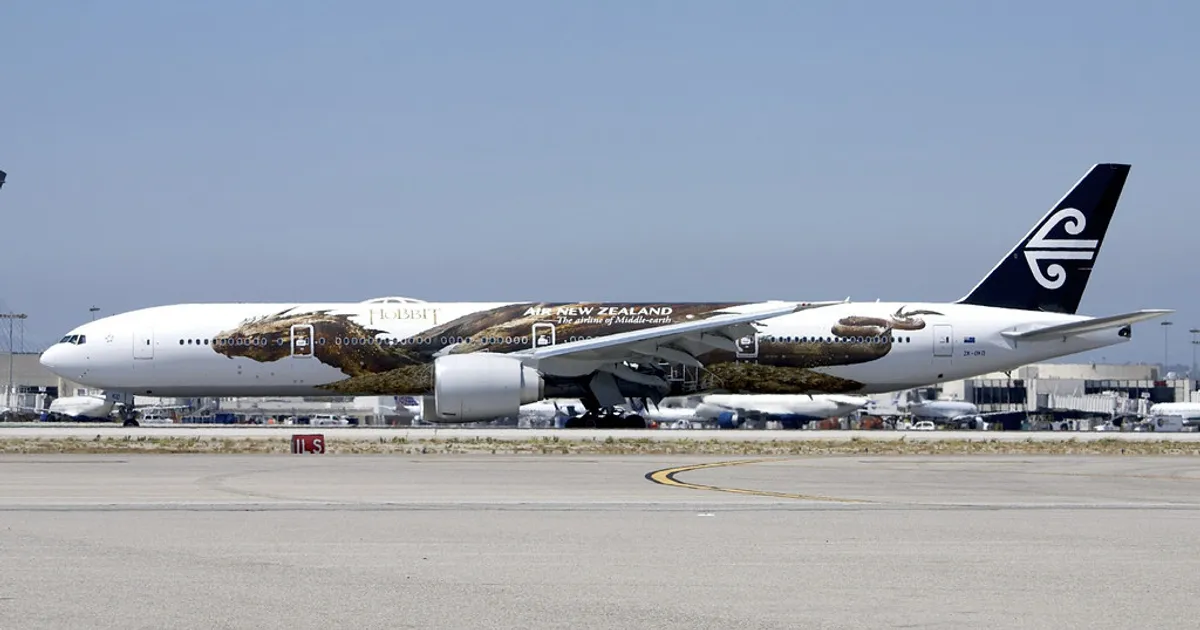
From $126 million profit to a $427 million loss in twelve months
A year ago Air New Zealand was banking $126 million in net profit. Now Craigs Investment Partners forecasts a $427 million loss for FY26, and analyst Wade Gardiner warns cumulative losses could reach $665 million by mid-2027 if conditions persist. That is not a speed bump. It is the kind of deterioration that forces structural decisions about routes, capital and ultimately the Crown’s 51% shareholding.
The temptation is to blame oil. Jet fuel is obviously the headline villain, but the airline’s own numbers tell a more uncomfortable story about a cost base that was already growing faster than revenue before a single barrel of crude crossed $100.
The cracks were visible before Iran
Air New Zealand’s half-year result to December 2025 delivered a $40 million net loss against a $106 million profit in the prior corresponding period. Revenue edged up just over 1% to $3.44 billion, while operating expenditure surged 8% to $3.1 billion. Up to eight aircraft sat grounded by global engine maintenance delays, costing an estimated $90 million in lost earnings beyond the $55 million in compensation received.
Non-fuel cost inflation added $75 million in H1 alone, driven by higher mandated passenger levies, engineering costs and airport landing charges. In FY25, non-fuel operating cost inflation had already hit $235 million. These are not market costs the airline can negotiate down. They are imposed by government agencies and council-owned airports, and the airline has warned explicitly about the “future trajectory and potential for further increases” that threaten regional connectivity.
Then the fuel shock turned a problem into a crisis
When Air NZ issued H2 guidance in February, it assumed jet fuel at US$85 per barrel. The Iran conflict pushed Brent crude above US$100, adding roughly US$2 million ($3.4 million NZD) a day to the fuel bill. Gardiner estimates the conflict has cost $221 million since it began, and total fuel costs could land 25% higher than FY25.
The airline has cut capacity by roughly 5% and nudged fares higher, but Gardiner is blunt: those moves “likely had a small impact given the scale of fuel cost increases.” Meanwhile, hedging at current prices risks locking in pain if the conflict resolves. Don’t hedge and the exposure stays wide open. Air NZ is making a geopolitical bet either way.
Regional routes are the first casualty, long-haul could be next
The capacity cuts are not falling where you would expect. New Zealand Airports Association CEO Billie Moore made an important observation today: if this were purely about fuel exposure, “we’d see more cuts to long haul rather than some of these regional routes”. Nelson has already lost 140 flights between Nelson and main centres in May and June, hitting both residents and Nelson City Council’s airport investment.
The implication is that the fuel crisis is providing cover for a broader network rationalisation that was already overdue. But Moore warns worse may come: “If this starts to get worse, we’d expect to see more of a focus on some of those heavier jet fuel routes like long haul, like some of those routes to the US potentially.”
AIANZ CEO Simon Wallace reinforced the point in March: higher fares “will flow through to the cost of domestic airfares”, and there won’t be a sudden decrease even when hostilities end because hedging positions and contract structures create lag.
What this means for every business that books a flight
CEO Nikhil Ravishankar is framing this as a reset, with the airline “undertaking a comprehensive review of all aspects of the business” aimed at returning to sustained profitability. New 787 deliveries promise widebody capacity growth of 20-25% over two years, but growing capacity into a loss-making cost structure just burns cash faster.
Air NZ holds $1.3 billion in liquidity, which buys time but not solutions. If losses track toward the $665 million cumulative figure Gardiner models, an equity raise becomes a live question, and the Crown’s 51% stake means taxpayers are first in line.
For business owners the practical takeaways are clear. Corporate travel budgets need resetting upward. Regional connectivity is being quietly dismantled. Tourism operators face fewer seats at higher prices for the foreseeable future. And the regulatory cost regime, from passenger levies to airport charges, that helped create this fragility will keep compounding unless someone in Wellington decides airline viability matters more than the next fee increase.
Sources
- Craigs forecasts Air NZ will lose about $665 million by mid-2027 (2026-05-13)
- Fuel crisis: Air NZ long-haul flight cuts could be next, aviation boss (2026-05-13)
- Air NZ forecast to lose $427m as jet fuel costs soar (2026-05-05)
- Air NZ losses could top $200m as fuel costs surge (2026-03-26)
- Air New Zealand swings to half-year loss amid severe fleet disruption (2026-02-26)
- Air New Zealand posts multi-million dollar first-half loss (2026-02-26)
- Air New Zealand loses $40m in six months, says reset needed to tackle soaring costs (2026-02-26)
- Air New Zealand announces 2026 interim result and provides full year guidance (2026-02)
- AIANZ: Cost pressures likely to affect domestic airfares (2026-03-07)
- Air New Zealand announces 2025 financial result (2025-08-28)