

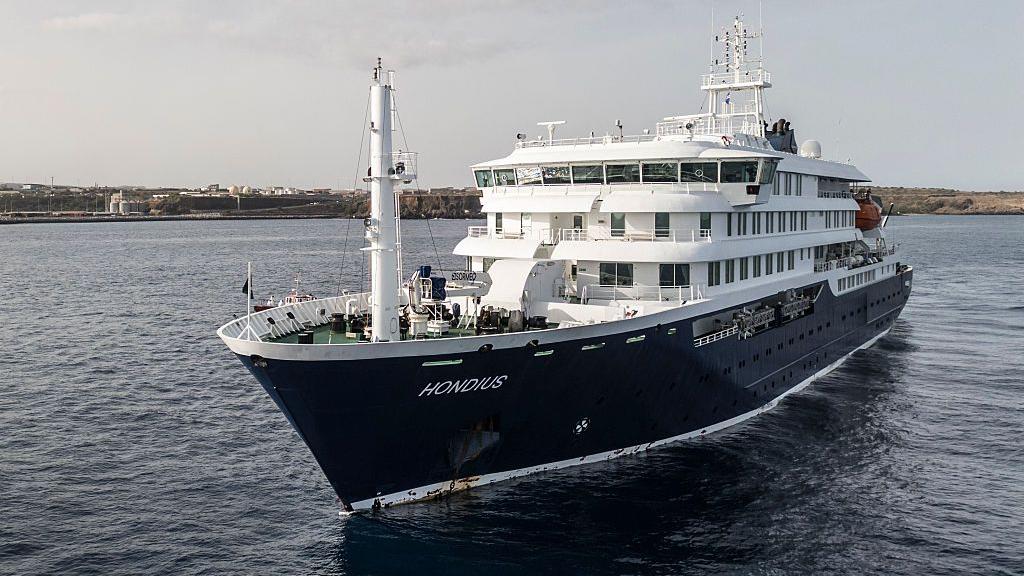
The last passengers have now disembarked from a cruise ship linked to a hantavirus outbreak, as health authorities continue to confirm new infections and monitor cases across several countries following a large-scale international evacuation effort.
The MV Hondius has left Tenerife bound for the Netherlands after its final six passengers, four Australians, one Briton and one New Zealander, left the vessel alongside remaining crew members. Their departure brings to a close a phased evacuation that has seen more than 90 passengers repatriated in recent days.
Health officials have confirmed three deaths among people who travelled on the ship, with two of those fatalities linked to hantavirus infection.
Authorities also reported new confirmed cases among passengers who had already returned home. An American citizen and a French national have both tested positive after leaving the vessel. The World Health Organization has confirmed seven cases connected to the ship, with two further suspected infections still under investigation.
Spain’s health ministry said a Spanish national quarantining in Madrid after evacuation returned a preliminary positive test on Monday, adding to concerns over continued spread among those who disembarked.
In the United States, health officials said a second passenger on a repatriation flight developed mild symptoms consistent with infection. The individuals were transported in biocontainment units “out of an abundance of caution,” according to the U.S. Department of Health and Human Services.
French Health Minister Stéphanie Rist said a woman isolating in Paris is in a worsening condition, with contact tracing identifying 22 close contacts linked to her case. Two British nationals who tested positive are currently receiving treatment in the Netherlands and South Africa.
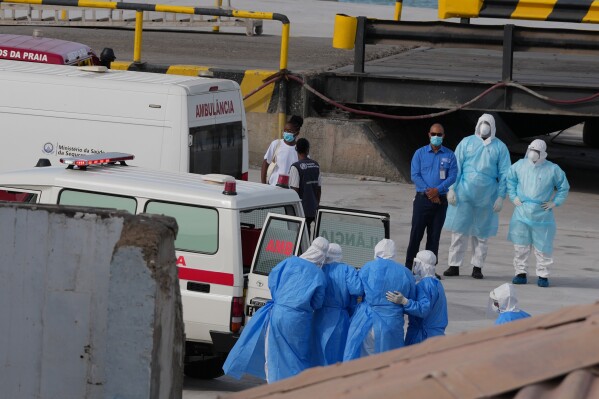
Hantaviruses are typically carried by rodents, although the Andes strain can spread between humans in limited circumstances. The World Health Organization believes exposure may have occurred in South America. Symptoms can include fever, fatigue, muscle pain, vomiting, diarrhoea, and breathing difficulties. Despite the cluster of cases, officials continue to say the overall risk of wider transmission remains low.
As of Monday evening, operator Oceanwide Expeditions said 27 people remained on board the MV Hondius, including 25 crew members and two medical staff from several nationalities, including the Philippines, the Netherlands, Ukraine, Russia, and Poland. Ukraine’s foreign ministry said its citizens would assist with the vessel’s transfer and undergo quarantine on arrival.
Repatriation efforts have taken place across multiple countries. Twenty British passengers flown to Manchester were taken to Arrowe Park Hospital for isolation, while 14 Spaniards were placed under quarantine in Madrid. In the United States, 17 citizens were sent for medical assessment in Nebraska, while others have returned home and are being monitored.
The World Health Organization warned that deviations from its recommended 42-day isolation period could carry risks, although U.S. health officials have stressed that human-to-human transmission is rare and should not be treated like Covid-19.
The outbreak has been linked to earlier deaths on board, including an elderly Dutch passenger in April and two women later confirmed to have had the virus. The MV Hondius had departed Argentina on 1 April carrying 147 passengers and crew from 23 countries before the situation escalated into an international health response.